¿Qué se sabe del accidente que involucró a Michelle Zepeda, la famosa “chica del clima”?
La conductora Michelle Zepeda, conocida por presentar el pronóstico del tiempo en N+ Guadalajara, se convirtió en tendencia tras reportarse su presunta participación en un accidente automovilístico ocurrido en Guadalajara, Jalisco.
Los hechos se registraron durante las primeras horas del jueves 17 de septiembre en el cruce de la avenida Enrique Díaz de León y Juárez Vallarta, uno de los puntos más transitados de la ciudad.
De acuerdo con los reportes preliminares, en el percance estuvieron involucradas una camioneta y una motocicleta, lo que provocó una intensa movilización de cuerpos de emergencia y autoridades locales.
Michelle Zepeda, empleada de televisa del canal 4, presentadora del pronóstico del tiempo del noticiero matutino de N+ Guadalajara, fue detenida tras verse involucrada en un accidente vial donde murió un motociclista. El hecho ocurrió alrededor de las 5:00 de la mañana, en pic.twitter.com/7mYlvMiEsQ
¿Por qué detuvieron a Michelle Zepeda, la famosa “chica del clima”, tras el accidente en Guadalajara?
Tras el choque, paramédicos y elementos de emergencia acudieron al lugar para brindar atención a las personas involucradas en el accidente vial registrado en Guadalajara.
Lamentablemente, poco después se confirmó que el conductor de la motocicleta perdió la vida a consecuencia de las lesiones sufridas durante el impacto, situación que cambió por completo el rumbo de la investigación.
Por este motivo, Michelle Zepeda fue trasladada inicialmente para recibir atención médica y posteriormente quedó a disposición del Ministerio Público, instancia encargada de determinar las circunstancias en las que ocurrió el percance.
¿Cuál es la situación legal de Michelle Zepeda, la famosa “chica del clima”, tras la muerte del motociclista?
Hasta el momento no existe una resolución definitiva sobre el caso ni se han difundido conclusiones oficiales respecto a la responsabilidad de los involucrados en el accidente.
Las autoridades continúan reuniendo evidencia, peritajes y testimonios para esclarecer cómo ocurrió el choque que terminó con la muerte del motociclista y que colocó a Michelle Zepeda en el centro de la atención mediática.
Por ahora, la conductora permanece vinculada a las investigaciones correspondientes, mientras el Ministerio Público analiza toda la información disponible para determinar los pasos legales a seguir.
Following a breakout season in Utah, Keyonte George is signing a five-year extension with the Jazz.
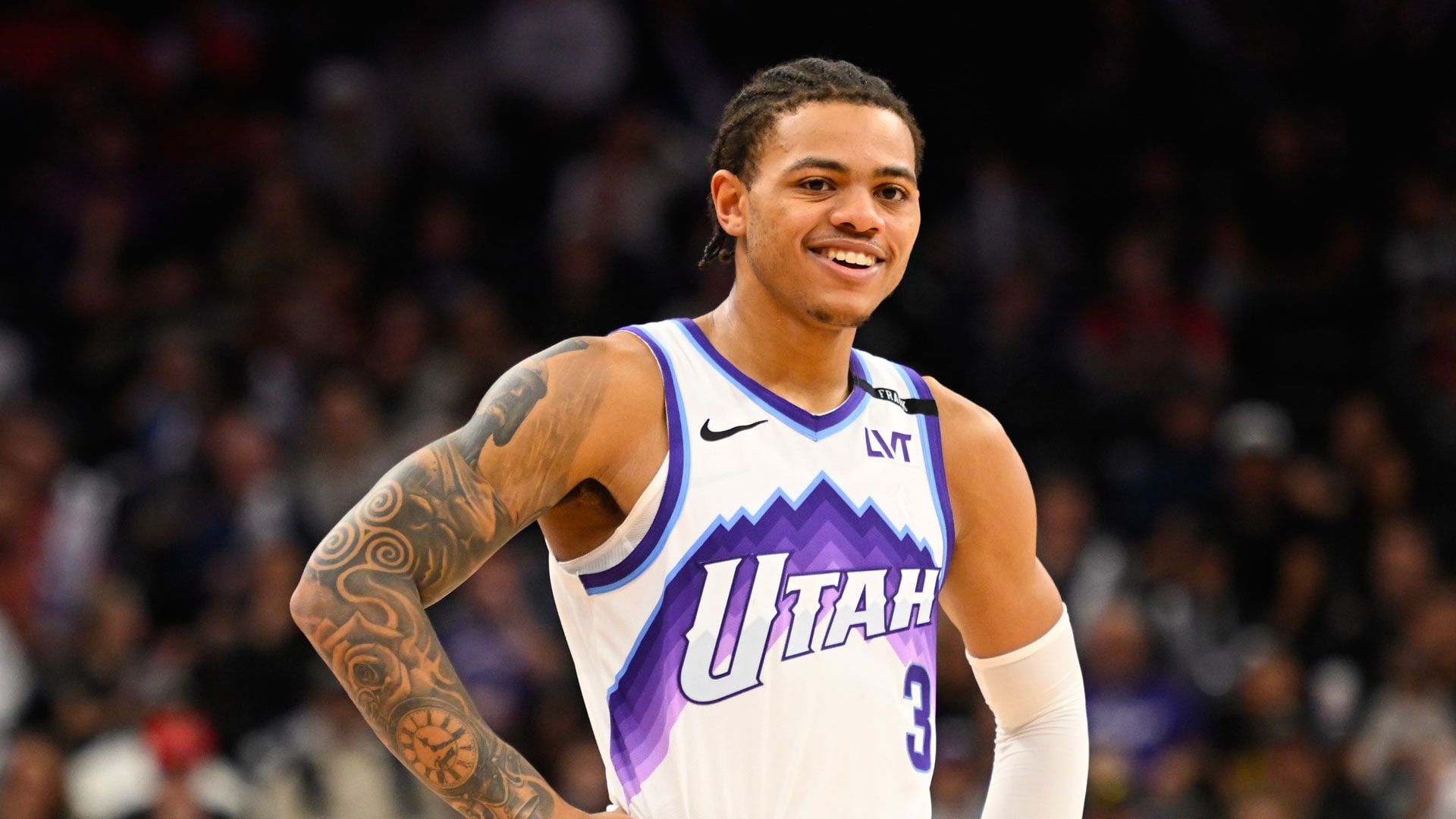
The Utah Jazz are locking in key pieces for the future. The Jazz and guard Keyonte George agreed to a five-year, $157.5 million rookie extension on Friday. The deal was first reported by ESPN’s Shams Charania and was made official by the team later on in the day. The extension comes after a breakout season for George, the No. 16 pick from the 2023 NBA Draft.
The 22-year-old George set career highs in multiple categories in 2025-26, averaging 23.6 points, 6.1 assists and 1.1 steals while shooting 45.6% from the field and 37.1% from deep, all career-best marks. He has increased his scoring and assist numbers across each of the first three seasons of his NBA career.
Securing a long-term deal with George ensures the Jazz continue to build on a strong collection of talent on the roster. George will be joined by 2026 No. 2 pick Darryn Peterson in the backcourt this season on a team that also features 2025 No. 5 pick Ace Bailey, former All-Star Lauri Markkanen and recent trade acquisition and former Kia Defensive Player of the Year Jaren Jackson Jr.
Nikola Jokić and Victor Wembanyama continue to battle for No. 1 overall player in all fantasy formats.
With the start of the preseason just two weeks away, NBA basketball is rapidly approaching. Along with it comes fantasy basketball. Below are RotoWire’s top 150 players for category leagues, with short analysis for each.
Round 1
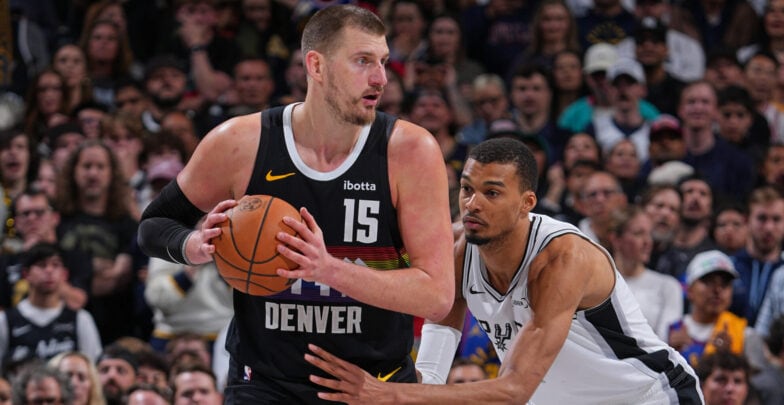
Nikola Jokić, Denver Nuggets — There is no hole in the profile. Elite field-goal percentage on enormous volume, a free-throw line he actually helps you in, 3s at a workable clip, and top-of-the-league rebounds and assists with real steal totals attached.
Victor Wembanyama, San Antonio Spurs — The blocks are the single most valuable individual category asset in fantasy, and he pairs them with the rare combination of 3s and rebounds.
Shai Gilgeous-Alexander, Oklahoma City Thunder — Better here than in points leagues by a wide margin. Elite field-goal percentage for a guard, elite free-throw percentage on massive attempt volume, and a steal rate that plays.
Luka Dončić, Los Angeles Lakers — With LeBron James in Philadelphia, the usage goes up and so does everything that comes with it. The counting stats and 3-point volume are first-round quality; the field-goal percentage drag and the league-leading turnover totals are what separate him from the three names above.
Cade Cunningham, Detroit Pistons — Massive assist volume and good rebounding for a guard, plus 3s. The turnovers are punishing in this format, and the field-goal percentage has never been a strength. But he’s still young enough for things to improve.
Jayson Tatum, Boston Celtics — A year removed from the Achilles tear and back as Boston’s clear No. 1 with Brown gone. Tatum is one of the most well-rounded options you can get in the first round, opening up different types of team builds.
Anthony Edwards, Minnesota Timberwolves — One of the league’s best combinations of 3-point volume and free-throw accuracy from a high-usage scorer, with steals on top. Swapping Naz Reid and Julius Randle for LaMelo Ball should mean cleaner looks but a lower assist rate for Edwards.
Giannis Antetokounmpo, Miami Heat — The classic category-league puzzle. Elite field-goal percentage, elite blocks, elite steals, elite rebounds, and a free-throw percentage plus 3-point total that force you to punt or pair carefully. Build the roster around the punt and he’s better than this rank would suggest.
Jalen Johnson, Atlanta Hawks — Steals and blocks from a forward who also puts up 20/10/6 on good efficiency. The free-throw line is the weak spot and the turnovers are up with the playmaking load. Games played have also been a question mark.
Tyrese Maxey, Philadelphia 76ers — 3s at volume, a strong free-throw percentage and a sneaky-useful steal rate. The concern is that Jaylen Brown and LeBron James arriving trims the usage, and possibly minutes. Efficiency should improve with the easier looks, which partly offsets it.
Cooper Flagg, Dallas Mavericks — Produced an excellent rookie season, setting up a potential sophomore breakout into stardom. Steals and blocks from a forward, improving efficiency, and Kyrie Irving’s return should raise the quality of his shots without eating many of them.
Tyrese Haliburton, Indiana Pacers — An elite assist-to-turnover ratio, which is worth a lot in category leagues, plus 3-point volume and an excellent free-throw percentage. The offense is built for him, but coming off an Achilles injury creates downside risk.
Round 2
Scottie Barnes, Toronto Raptors — Steals and blocks from a forward with rebounds and assists is perfect for category leagues. The free-throw percentage and the low 3-point volume are the drags, and swapping Brandon Ingram for Kawhi Leonard trims the usage further.
Donovan Mitchell, Cleveland Cavaliers — 3-point volume, a reliable free-throw percentage and better steal totals than he gets credit for. James Harden handles the playmaking, so the assists stay modest. Durable and predictable.
Karl-Anthony Towns, New York Knicks — Elite free-throw shooting from a center, good field-goal percentage, 3-point volume and 12 rebounds. His lack of blocks from the center position is something managers may need to rectify later in a draft.
Kevin Durant, Houston Rockets — Still one of the cleanest efficiency lines in basketball, both from the field and the line, with 3s and about a block a game. He turns 38 at the end of the month, so rest days are the risk, but the per-game category profile gives him first-round upside.
Stephen Curry, Golden State Warriors — Much better here than in points formats. League-leading 3-point volume, a free-throw percentage near the top of the league and a real steal rate. Age and games played are a concern.
Jamal Murray, Denver Nuggets — 3s, strong free-throw shooting and a career-best field-goal percentage next to Jokić. Assists at volume with manageable turnovers. One of the safest roles in the NBA.
Alperen Sengun, Houston Rockets — Field-goal percentage, rebounds, assists and steals from the center spot, coming off career-high playmaking. The turnovers are heavy and he gives you nothing from 3, which is what keeps him behind Towns here.
Amen Thompson, Houston Rockets — Steals and blocks in combination from a wing is close to unique, and the field-goal percentage is strong. You are punting 3s and free-throw percentage to roster him, so plan the build around it.
Trae Young, Washington Wizards — Assists, 3s and free-throw percentage at elite levels with a useful steal rate. The field-goal percentage and the turnovers have to be leaned into or worked around.
Austin Reaves, Los Angeles Lakers — Elite free-throw shooting on high-attempt volume, 3s and secondary playmaking with James gone. The turnovers climb with the usage, but four of the nine categories are clear positives.
LaMelo Ball, Minnesota Timberwolves — 3-point volume near the top of the league plus steals and assists. The field-goal percentage and turnovers are negatives, and now there’s a question of how much the offense runs through Edwards instead. Games played is still a question.
Chet Holmgren, Oklahoma City Thunder — A category-league player. Blocks and 3s from a center, with a solid field-goal percentage and a free-throw line he helps you in. The raw counting totals are ordinary, which matters much less here compared to points formats.
Round 3
Josh Giddey, Chicago Bulls — Rebounds, assists and steals from a guard, with his 3-point shooting finally landing. The turnovers are the tax on a nightly triple-double threat running the offense.
James Harden, Cleveland Cavaliers — 3s at volume, free-throw attempts at a good rate, assists and steals. The field-goal percentage and turnovers are both negatives, so he’s a build-around rather than a plug-in.
Devin Booker, Phoenix Suns — A down shooting year means he’s discounted. He’s still Phoenix’s primary creator with strong free-throw shooting, decent 3-point volume and assists. Positive regression on the field-goal percentage is the upside case.
Anthony Davis, Washington Wizards — Twenty games last year. When he plays, it’s a first-round category line: field-goal percentage, double-digit boards, blocks and steals together. Pair him with durable pieces and take the swing.
Kawhi Leonard, Toronto Raptors — Is still capable of MVP-level two-way numbers. A clean bill of health last season cuts against a decade of evidence, and Toronto’s depth gives him easy reasons to pull back on minutes and usage.
Trey Murphy III, New Orleans Pelicans — A major category riser. High-volume 3-point shooting at a good clip, strong free-throw percentage and low turnovers. Dejounte Murray’s return trims the usage, but the shooting profile is exactly what this format pays for.
Evan Mobley, Cleveland Cavaliers — Blocks, steals and rebounds with an ordinarily strong field-goal percentage. Last year’s shooting slump is the reason he’s here rather than a round earlier, and a bounce-back is reasonable.
Jalen Brunson, New York Knicks — Excellent from the field and the line for a high-usage guard, with 3s and assists at volume. Zero blocks and modest steals mean you need defensive stats elsewhere.
Domantas Sabonis, Sacramento Kings — Field-goal percentage, huge rebounding and center-position assists. No blocks and heavy turnovers are the two holes. With Russell Westbrook retired and DeMar DeRozan in Denver, the usage should climb back toward his peak.
Derrick White, Boston Celtics — One of the format’s signature assets. 3s and blocks and steals in the same line, plus a strong free-throw percentage and low turnovers. Fewer shots with Tatum back and Paul George added, but the category shape is unaffected.
Lauri Markkanen, Utah Jazz — 3-point volume, a very good free-throw percentage and rebounds from a forward. Utah’s win-now additions should improve his availability while costing him shots. Low steals, blocks and assists caps his upside.
Bam Adebayo, Miami Heat — A well-rounded line from the center position. The addition of Giannis Antetokounmpo could mean fewer boards but more 3-pointers.
Round 4
Jalen Williams, Oklahoma City Thunder — Balanced and efficient two-way statline. Wrist surgery and a hamstring problem wrecked last season, but he’s still OKC’s No. 2 option.
Walker Kessler, Los Angeles Lakers — Has been providing strong traditional big-man stats, and that’s not expected to change now that he’s in Los Angeles rather than Utah. Easy lobs from Luka Dončić give him strong field-goal percentage potential.
Deni Avdija, Portland Trail Blazers — An All-Star breakout with 3s, rebounds and playmaking from a forward. The field-goal percentage and turnovers are the drags, and the Ja Morant and Damian Lillard additions threaten his touches.
Kyrie Irving, Dallas Mavericks — A strong category-league riser. Elite field-goal and free-throw percentages, 3-point volume, steals and one of the lowest turnover rates among high-usage guards. Coming off an ACL tear at 34, which is creating a discount.
Jaren Jackson Jr., Utah Jazz — Blocks and 3s from a big, with an unusually good free-throw percentage for the position. The field-goal percentage and the foul trouble are the recurring problems.
Jalen Duren, Detroit Pistons — Elite field-goal percentage and a nightly double-double, with the free-throw line improving from a very low base. Blocks are thinner than you’d want and there are no 3s. Low variance, low ceiling.
Brandon Miller, Charlotte Hornets — Charlotte’s most likely usage winner after the LaMelo trade, with 3-point volume as the main category contribution. The field-goal percentage needs to come with the shot increase for the upside case to pay off.
Jaylen Brown, Philadelphia 76ers — He should be Philadelphia’s second scoring option given Joel Embiid’s absences and LeBron’s likely load management. He’s typically been better in points leagues, however.
Kon Knueppel, Charlotte Hornets — A second-year leap candidate whose calling card is what this format rewards: efficient shooting from the field and the line with 3-point volume. Will be handed some of Charlotte’s vacated usage.
Onyeka Okongwu, Atlanta Hawks — Field-goal percentage, rebounds and blocks from an entrenched starter playing 32 minutes. The new 3-point range is a meaningful category-league addition rather than a curiosity.
Desmond Bane, Orlando Magic — High-volume 3-point shooting at a strong clip, good free-throw percentage, steals and low turnovers. Role cemented as Orlando’s No. 3 option.
Paolo Banchero, Orlando Magic — He’s a stat-sheet stuffer, but the field-goal percentage is mediocre, the free-throw line is inconsistent, the steals and blocks are thin and the turnovers are heavy.
Round 5
Donovan Clingan, Portland Trail Blazers — Blocks and field-goal percentage with a double-double baseline in 27.2 minutes as a sophomore. Portland’s frontcourt is his to claim, and more minutes would create more upside.
Nickeil Alexander-Walker, Atlanta Hawks — The Most Improved Player award came from a 3-and-D profile, and 3-and-D is worth a lot in category leagues. 3s, steals and clean efficiency in a defined role.
Darius Garland, Los Angeles Clippers — Excellent free-throw percentage, 3-point volume and assists as the clear lead playmaker in LA. Recent injury issues create some downside risk.
Dejounte Murray, New Orleans Pelicans — Steals in bulk plus rebounds and assists from a guard. Back from an Achilles tear into 30-plus minutes.
LeBron James, Philadelphia 76ers — At his age, still a nightly triple-double threat on strong efficiency. But what will his minutes, role and games played actually look like?
Pascal Siakam, Indiana Pacers — Good field-goal percentage, low turnovers for his usage and reliable steals. Haliburton’s return means fewer possessions but the efficiency should hold. Dependable, unexciting category inventory.
Keyonte George, Utah Jazz — Coming off a breakout season where he produced All-Star level numbers. But will all the new additions cut his usage significantly?
Dyson Daniels, Atlanta Hawks — The steals are still the point even after last year’s historic total didn’t repeat. Solid field-goal percentage. No 3s and a weak free-throw line.
OG Anunoby, New York Knicks — A premier mid-round 3-and-D pick in this format. 3s, steals, blocks, a good field-goal percentage and almost no turnovers from a low-usage wing.
Cameron Boozer, Memphis Grizzlies — The best-positioned rookie on the board and the market is climbing toward him. The caution is that rookie inefficiency and turnovers are charged at full price here, which is not true in points formats.
Kel’el Ware, Milwaukee Bucks — Blocks, field-goal percentage, rebounds and a bit of stretch shooting from a big. On a rebuilding Milwaukee team, the minutes should come.
Matas Buzelis, Chicago Bulls — Coming off a sophomore breakout and still has the potential for both more minutes and development. Provides strong two-way stats as a forward.
Round 6
Joel Embiid, Philadelphia 76ers — Elite free-throw shooting on heavy attempts, blocks and a strong field-goal percentage. When he plays he wins categories outright. Philadelphia’s upgrades mean fewer minutes but less reason to push him. High-variance swing.
Franz Wagner, Orlando Magic — Provides 22/5/5 when healthy. The free-throw percentage and 3-point accuracy have both been erratic. Combined with injuries, that creates a discount relative to his potential.
Stephon Castle, San Antonio Spurs — A category-league faller. His two weaknesses, shooting efficiency and turnovers, are the two things this format punishes hardest. The steals and assists are positives, though.
Tyler Herro, Milwaukee Bucks — 3-point volume and an excellent free-throw percentage, now with the highest usage of his career as a lead playmaker. That also means the most turnovers of his career, and he gives you nothing defensively.
Michael Porter Jr., Brooklyn Nets — 3-point volume at a high clip, good field-goal percentage, rebounds and very few turnovers. Randle’s arrival costs him shots, but the efficiency profile is a clean category fit.
Ivica Zubac, Indiana Pacers — Zubac provides solid center stats and should get great looks from Haliburton. A lack of consistent shot-blocking drops him to a mid-round player relative to other bigs.
Julius Randle, Brooklyn Nets — Rebounds, assists and a good free-throw percentage, likely leading Brooklyn in combined points and assists. However, there isn’t much for defensive production.
Ryan Rollins, Milwaukee Bucks — Steals, 3s and efficient shooting in last year’s breakout, which came with Antetokounmpo out. Herro is in town and Porter Jr. and Brayden Burries are competing for the same minutes, which makes the role murky.
Zach Edey, Memphis Grizzlies — Excellent per-minute rebounding, blocks and field-goal percentage, coming off a lost season with a foot injury. A 30-minute role would mean he crushes this ranking.
De’Aaron Fox, San Antonio Spurs — Dealt with injuries, though still provided solid point-guard stats. Castle and Harper have eaten into the usage, but Fox is still a bounce-back candidate.
Damian Lillard, Portland Trail Blazers — Elite free-throw percentage and 3-point volume even in decline, which keeps him relevant here longer than in points formats. The bigger questions are the combination of age, injury and role in a crowded Portland backcourt.
Rudy Gobert, Minnesota Timberwolves — Gobert doesn’t put up the volume numbers he used to, but he’s been durable and his role is extremely secure.
Round 7
Alex Sarr, Washington Wizards — Blocks and stretch shooting are both category assets, which makes him more interesting here than in points formats. But a reshaped roster means fewer opportunities for the third-year big.
Naz Reid, Charlotte Hornets — 3s, blocks and a good field-goal percentage from a big who should finally clear 30 minutes as a starting power forward.
Mikal Bridges, New York Knicks — The most durable player in basketball, which compounds over 82 games. 3s, steals, a good field-goal percentage and almost no turnovers.
Paul George, Boston Celtics — Absences have piled up for George recently, and he’s not getting any younger. But his stats translate well to fantasy, as a low-turnover 3-and-D player who can create when needed.
Brandon Ingram, Los Angeles Clippers — A clear top-two option in LA after the Kawhi swap. He can easily provide 25/5/5, but modest 3-and-D contributions bring his category league value down.
Jaden McDaniels, Minnesota Timberwolves — Steals and blocks together from a forward with a solid field-goal percentage and improving 3-point shooting. LaMelo running the offense should make the looks easier.
Payton Pritchard, Boston Celtics — 3-point volume that rivals starters, a strong free-throw percentage and almost no turnovers. Tatum’s return and George’s arrival mean fewer shots, but the shooting categories are what you’re buying and they don’t need volume the way points leagues do.
Ausar Thompson, Detroit Pistons — One of the best steal-plus-block combinations in the NBA on a per-minute basis. Shooting outside of the paint is a concern, but there’s higher upside than this just on the potential for a bigger workload.
Ja Morant, Portland Trail Blazers — Morant is walking into a situation where he is no longer the franchise player, giving his role some cloudiness it didn’t have previously. He’s also struggled to stay healthy.
Immanuel Quickley, Toronto Raptors — Provides typical point guard stats in a stable role, though there’s no lack of other offensive options in Toronto. A safe floor, but not much of a ceiling.
Jarrett Allen, Cleveland Cavaliers — Minutes and production have been on the decline, but he’s still a nightly efficient double-double threat.
Zion Williamson, New Orleans Pelicans — A category faller. Elite field-goal percentage is the primary driver, but it’s paired with a poor free-throw line, no 3s and heavy turnovers. Sixty-two games last year is encouraging but not the norm.
Round 8
VJ Edgecombe, Philadelphia 76ers — Steals and 3-point volume from a sophomore with secure minutes. Philadelphia’s offseason makes a big usage leap unlikely, but the category contributions don’t require one.
Coby White, Charlotte Hornets — 3-point volume and a good free-throw percentage as the unambiguous starting point guard in Charlotte.
Myles Turner, Milwaukee Bucks — Blocks and 3s from a center with a strong free-throw percentage is a premium category identity, which makes him a clear riser relative to points formats. A rough first year in Milwaukee and an unsettled roster are the reasons drafters are split.
Dylan Harper, San Antonio Spurs — A playoff breakout at 22.6 minutes as a rookie, with steals and good efficiency for a first-year guard. San Antonio’s backcourt logjam is the obstacle.
Ty Jerome, Memphis Grizzlies — Outstanding efficiency from the field and the line with 3-point volume and very few turnovers, all in 15 healthy games last year. The talent is obvious but the minutes projection is a guess.
Jalen Suggs, Orlando Magic — A defense-first floor general whose stats translate well to category formats. Staying healthy is the biggest hurdle.
Derik Queen, New Orleans Pelicans — Eighty-one games as a rookie with good field-goal percentage, rebounds and passing for a big. The turnovers are heavy. New Orleans’ frontcourt minutes are the only obstacle.
Norman Powell, Chicago Bulls — Two straight 20-point seasons on excellent efficiency from the field, the line and behind the arc. That shooting package plays in category leagues, even though he contributes little else.
Caleb Wilson, Chicago Bulls — The rookie is expected to start and play 30 minutes, and he has the tools to fill steals and blocks. Rookie shooting percentages are a cost in this format, unlike in points leagues.
Josh Hart, New York Knicks — Rebounds, assists and steals from a wing, with his new 3-point accuracy now a category asset. The free-throw line is a weak spot, and the minutes dipped last year.
Isaiah Hartenstein, Oklahoma City Thunder — Field-goal percentage, rebounds, assists and steals from a center. Calf issues and Oklahoma City’s depth are the limits, but the well-rounded line fills gaps.
Nicolas Claxton, Chicago Bulls — Elite field-goal percentage, blocks and steals. The free-throw percentage is among the worst at the position and there are no 3s. Chicago acquired him to play him, which is the case for the minutes to rise.
Round 9
Jabari Smith Jr., Houston Rockets — Finding shots behind Durant, Sengun, Thompson and VanVleet is the ceiling problem, but Smith has a high floor as a role player.
AJ Dybantsa, Washington Wizards — A category faller. The No. 1 pick’s self-creation is real, but efficiency could be a first-year issue. Usage competition with Young and Davis compounds it.
Day’Ron Sharpe, Brooklyn Nets — Elite rebounding rate, efficient interior scoring and useful steals for a big. Expected to start at center. The free-throw line and the historical minutes cap are the risks.
Miles Bridges, Phoenix Suns — 3s and a good free-throw percentage from a secure starting forward, third in line behind Booker and Green. The defensive stats are thin and the role is modest.
Ayo Dosunmu, Minnesota Timberwolves — Good field-goal percentage and steals with scoring and assists in an expanded role. Earned a five-year deal.
Andrew Wiggins, Miami Heat — A quietly useful category line: 3s, steals, blocks and a fine field-goal percentage as the third option behind Antetokounmpo and Adebayo.
Collin Murray-Boyles, Toronto Raptors — Steals, blocks and a strong field-goal percentage from a versatile forward. No 3s and a shaky free-throw line. The question is how many minutes exist for him.
Fred VanVleet, Houston Rockets — 3s at volume, a good free-throw percentage, steals and assists. He’s a 32-year-old guard coming off a torn ACL into a crowded backcourt.
Keegan Murray, Sacramento Kings — 3s, a decent field-goal percentage, blocks and very low turnovers from a forward. Twenty-three games last year. A healthy season during Sacramento’s rebuild should mean shots.
Cedric Coward, Memphis Grizzlies — Sophomore breakout candidate with efficient 3-point shooting and steals, and more minutes coming on a young Memphis roster.
Kristaps Porziņģis, Golden State Warriors — Should demolish this ranking on a per-game basis, but he’s cleared 65 games twice in his career.
John Collins, Detroit Pistons — Replacing Tobias Harris should mean more minutes and touches than he had with the Clippers.
Round 10
Neemias Queta, Boston Celtics — Field-goal percentage, rebounds and blocks in a breakout season, now sharing the position with Mitchell Robinson. The minutes risk is the reason for the discount.
Kevin Porter Jr., Milwaukee Bucks — Assists and 3s with career-best numbers in 38 games. Milwaukee then added Herro and Burries while Rollins kept improving, so Porter Jr.’s role is murky.
Khaman Maluach, Phoenix Suns — With Mark Williams out a chunk of the season, Maluach has a real path to the starting job after an impressive Summer League. Speculative, but a double-double with two blocks is a live outcome.
Toumani Camara, Portland Trail Blazers — A significant category riser. Steals, blocks, 3s and a solid field-goal percentage from a starting 3-and-D forward is close to the ideal late-round roster filler.
Darryn Peterson, Utah Jazz — The No. 2 pick starting at shooting guard means volume, but how much volume is there on a revamped Jazz roster? However, a reliable 3-pointer means his floor is fairly high.
Ajay Mitchell, Oklahoma City Thunder — Efficient from the field and the line in line for more usage after Oklahoma City’s wing exodus. Sixth Man candidate with starter upside.
Cason Wallace, Oklahoma City Thunder — A steals specialist who also shoots 3s at a good clip with a strong field-goal percentage and minimal turnovers. Thin offensively, which matters less in category formats. One of the better late-round category values.
Zach LaVine, Sacramento Kings — He’s missed 108 games in three years and could be traded into a smaller role, but for now, LaVine is a candidate to lead Sacramento in scoring and do it efficiently.
Peyton Watson, Cleveland Cavaliers — A breakout 3-and-D wing who now has a starting job. Usage will be hard to come by, but the category contributions don’t need much of it.
CJ McCollum, Atlanta Hawks — 3s, good percentages from the field and the line, and low turnovers in a defined backcourt role. Steady rather than interesting.
Brandin Podziemski, Golden State Warriors — Can provide well-rounded numbers from the shooting guard spot, and is coming off a career year. After Curry, the offense is mostly open for the taking, and Podziemski could step up.
Jalen Green, Phoenix Suns — A clear category faller. He scores in bursts on poor field-goal percentage with little defensive production, which is the profile this format treats worst.
Round 11
Jusuf Nurkić, Utah Jazz — Rebounds and assists from the center spot, likely starting again with Kessler in Los Angeles. He might not close games, though, and has had issues staying healthy.
Kyshawn George, Washington Wizards — Broke out as a two-way threat in Year 2. Washington’s roster got much busier, which makes the role hard to project.
RJ Barrett, Toronto Raptors — A category faller. A nightly 20-point scorer with a weak free-throw percentage, few 3s, and almost no defensive stats. Very little of what he does registers here.
Jaime Jaquez Jr., Milwaukee Bucks — Well-rounded offensive line in a breakout last season, with the inside track on forward minutes in a wide-open rotation. The lack of 3s is the limiter.
Jakob Poeltl, Toronto Raptors — Quality big-man stat profile. A back issue limited him to 46 games and 25 minutes last year.
Egor Dëmin, Brooklyn Nets — 3-point volume and assists as a rookie, offset by poor interior finishing that tanks the field-goal percentage. Mikel Brown Jr., Randle and Porter Jr. could all be ahead of him in the pecking order.
Reed Sheppard, Houston Rockets — Houston added Marcus Smart and got VanVleet back, so the path to minutes narrowed for Sheppard. His stats translate in category formats, though.
Maxime Raynaud, Sacramento Kings — Had a strong end to last season, but he’s stuck behind a healthy Sabonis, which caps everything.
Saddiq Bey, New Orleans Pelicans — Coming off a career year and just inked a brand-new contract extension. However, New Orleans has a long line of players competing for the same possessions.
Sandro Mamukelashvili, Los Angeles Lakers — Efficient per-minute producer with sixth-man upside on a Lakers team with sketchy frontcourt depth.
Anthony Black, Orlando Magic — With Orlando healthy, the minutes and touches aren’t obviously there, but Black did have a breakout campaign last year.
Darius Acuff Jr., Sacramento Kings — A rookie point guard expected to start on a rebuilding team. Potential turnovers and the rookie field-goal percentage are exactly what this format charges for. Better in points leagues for that reason.
Round 12
Jeremiah Fears, New Orleans Pelicans — Microwave scorer with high usage, but Dejounte Murray’s return and Bennedict Mathurin’s arrival make a leap harder.
Andrew Nembhard, Indiana Pacers — He posted 16.9 points and 7.7 assists with Haliburton out; treat that as a ceiling, not a baseline.
P.J. Washington, Dallas Mavericks — 3s, steals and blocks from a dependable starting power forward with seven rebounds a night. A crowded frontcourt gives Washington some downside.
Ace Bailey, Utah Jazz — Scoring volume off the bench with shot-making still developing. Role isn’t entirely clear on a reloaded roster.
DeMar DeRozan, Denver Nuggets — Elite free-throw percentage, a good field-goal percentage and very low turnovers taking clean looks from Jokić. The role is somewhat cloudy on a new team, but DeRozan has the inside track to be Denver’s sixth man.
Tari Eason, Houston Rockets — Steals, blocks and rebounds at one of the best per-minute rates in the league, trapped in a deep Houston rotation.
Davion Mitchell, Miami Heat — Assists with a tiny turnover rate and improved 3-point accuracy in a safe role. The turnover category alone makes him more useful here than his counting stats suggest.
Collin Gillespie, Phoenix Suns — 3s, a strong free-throw percentage and low turnovers. With Phoenix healthy he probably comes off the bench, but a shooting specialist off the bench still moves categories.
Aaron Gordon, Denver Nuggets — Field-goal percentage and improving 3-point volume alongside Jokić and Murray. Safe role and good chemistry; injuries are the recurring issue.
Paul Reed, Detroit Pistons — Reed is one of the best per-minute bigs in the NBA and will be the primary backup behind Jalen Duren.
Tre Jones, Chicago Bulls — An assists and steals specialist who saw a boosted role when Josh Giddey was injured for a good chunk of last season. Role is more murky this season.
Devin Vassell, San Antonio Spurs — A source of late-round 3s with a good free-throw percentage, steals and low turnovers. Declining usage on a rising team is the concern.
Round 13
Christian Braun, Denver Nuggets — Thirty-plus minutes again next to Jokić. Last year’s across-the-board regression, partially due to injury, makes everything else hard to project.
Quentin Grimes, Los Angeles Lakers — 3s, a good free-throw percentage and steals as a release valve for Dončić and Reaves. Competing to be the third option, which is where the upside is.
Yaxel Lendeborg, Golden State Warriors — A rookie with a chance to start. Fits Golden State’s gameplan as a versatile two-way player.
Jrue Holiday, Portland Trail Blazers — Steals, 3s, a good free-throw percentage and low turnovers, which keeps him relevant here well after the scoring has faded. Age 36 with Morant and Lillard added ahead of him.
Cameron Johnson, Denver Nuggets — His counting stats collapsed in Denver while the shooting held up, which is a season that grades far better here than in points leagues.
Pelle Larsson, Miami Heat — Larsson showed upside last season, and this Miami team will need jolts of offense.
Leopardus tilcayo o gato tilcayo es el nombre de la nueva especie de felino silvestre descubierta por un equipo internacional de científicos en los bosques de los Yungas de Bolivia. Un hallazgo que supone la primera descripción científica de una nueva especie de gato salvaje en más de un siglo.
La especie ha sido identificada mediante el análisis de ADN de ejemplares históricos conservados en museos y de muestras de animales vivos, de acuerdo con National Geographic, y ha revelado que lo que hasta ahora se consideraba un único grupo de felinos ampliamente distribuido está compuesto por al menos cinco especies diferentes. Los investigadores todavía desconocen cuántos ejemplares de Leopardus tilcayo viven en estado salvaje.
Entre los expertos que han participado en el estudio publicado este jueves en la revista científica Current Biology, se encuentran el científico Eduardo Eizirik, el investigador Jonas Lescroart y la exploradora de National Geographic Paola Nogales Ascarrunz.
El gato tilcayo se diferencia por ser un felino más pequeño que un gato doméstico promedio: mide aproximadamente 46 centímetros desde la cabeza hasta el final del cuerpo y pesa cerca de 1,4 kilos.
Además, puede distinguirse de sus parientes, las oncillas, por sus manchas de mayor tamaño, una cola más larga y delgada y un pelaje de tonalidad más apagada.
Para la investigación se ha estudiado concretamente un macho de diez años perteneciente al Santuario de Vida Silvestre Senda Verde, en Bolivia, que había llegado al centro alrededor de 2017. Nogales Ascarrunz descubrió al felino mientras colaboraba como voluntaria en el santuario, después de que una familia local lo entregara para que recibiera cuidados.
Su nombre, Leopardus tilcayo, se corresponde con las comunidades locales que encontraron y cuidaron al animal, en forma de homenaje. Los habitantes de la zona lo llamaban “Tilcayo“, un nombre que los investigadores decidieron conservar para reconocer el conocimiento ancestral y la relación de las comunidades con el felino.
Por otro lado, el análisis genómico también ha permitido validar formalmente otras cuatro especies de este grupo: Leopardus guttulus, L. emiliae, L. pardinoides y L. tigrinus, además de identificar una nueva subespecie en los Yungas de Perú, L. tigrinus antisuyo.
Los científicos han utilizado la secuenciación completa del genoma y han recurrido a material genético de ejemplares conservados en museos de Europa y Estados Unidos.
Nogales Ascarrunz está instalando cámaras trampa en los bosques de los Yungas para documentar la especie, conocer su distribución, comportamiento y necesidades de hábitat, en una región amenazada por la deforestación y la minería.
Leopardus tilcayo o gato tilcayo es el nombre de la nueva especie de felino silvestre descubierta por un equipo internacional de científicos en los bosques de los Yungas de Bolivia. Un hallazgo que supone la primera descripción científica de una nueva especie de gato salvaje en más de un siglo.
Se acerca la temporada más cálida del año, en la que nuestro armario empieza a pintarse de tonos acogedores. Y con ella llegan nuevas tendencias como la sastrería relajada, las transparencias, el animal print y, por supuesto, los jeans de diversas siluetas. La época de otoño/invierno nos invita a explorar diferentes estilos de vaqueros para lucir impecables y ser nuestra mejor versión. Porque el gran beneficio de esta prenda es que hay un tipo de pantalón para todos los gustos y preferencias. La clave está en explorar cada uno de ellos para encontrar la propuesta ideal para ti.
Los jeans llegan con más fuerza que nunca a la temporada de otoño/invierno 2026.
Jeans en tendencia para combinar con zapatos planos en otoño/invierno 2026
Los jeans son esa prenda atemporal que usamos durante todo el año. Además, se puede adaptar a cualquier dress code si lo combinamos y complementamos correctamente. Sin embargo, a medida que cambian las temporadas, hay modelos que destacan por encima del resto. Es importante tener en el radar los diferentes cortes de denim para saber con cuáles vamos a conquistar las calles en la temporada de otoño/invierno 2026.
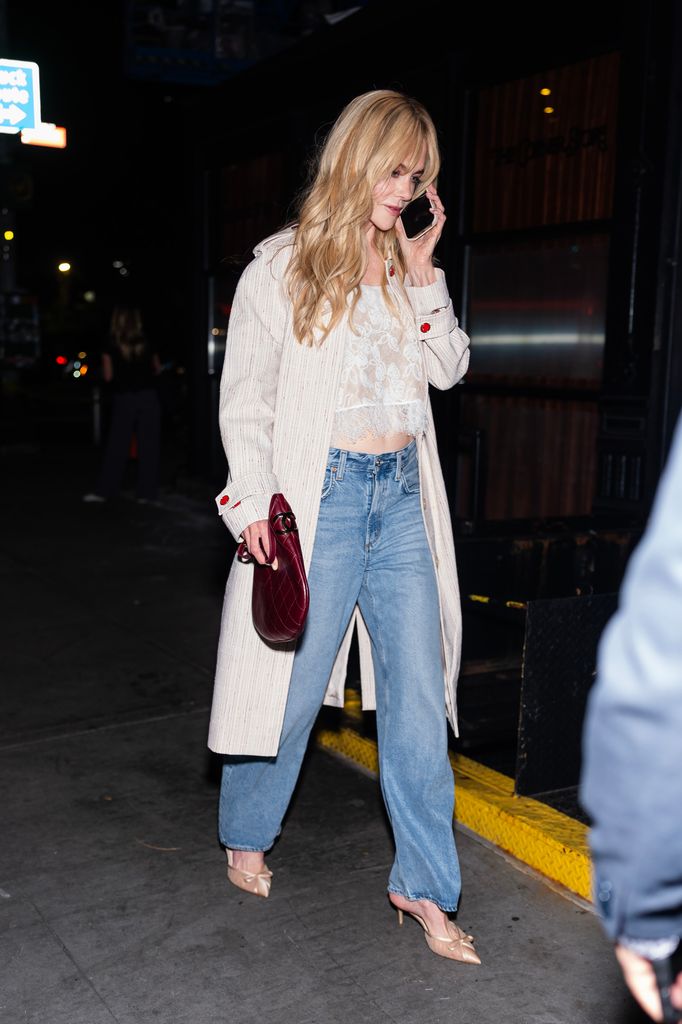
Nicole Kidman luce unos jeans de tiro alto en un delicado azul claro.
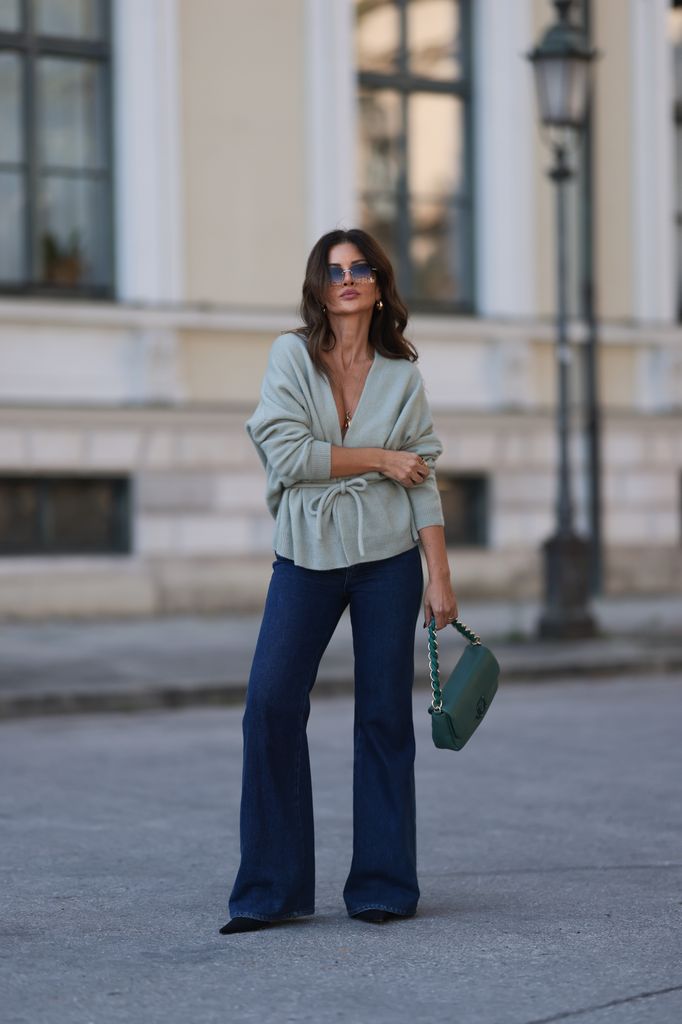
Wide leg jeans
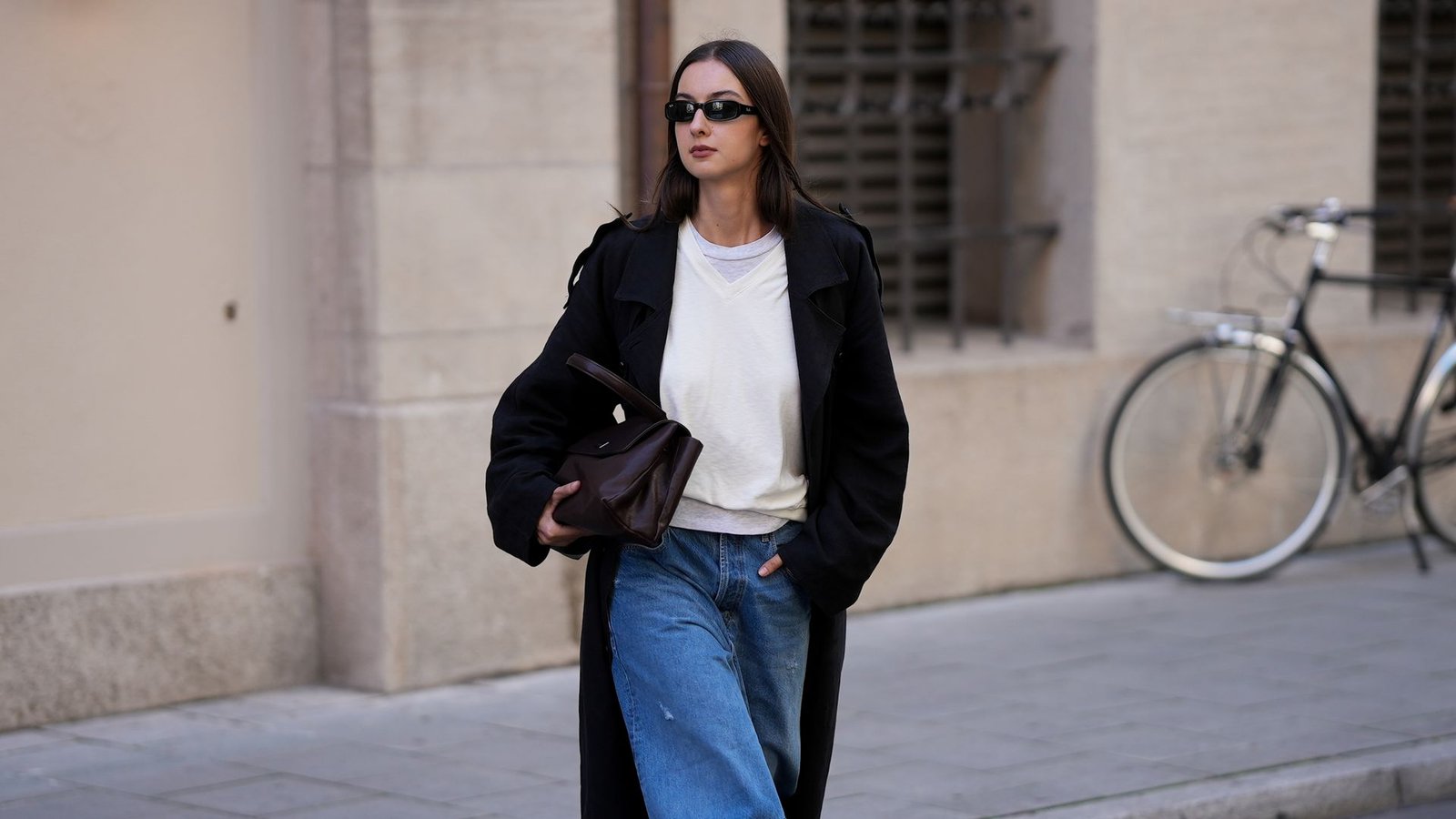
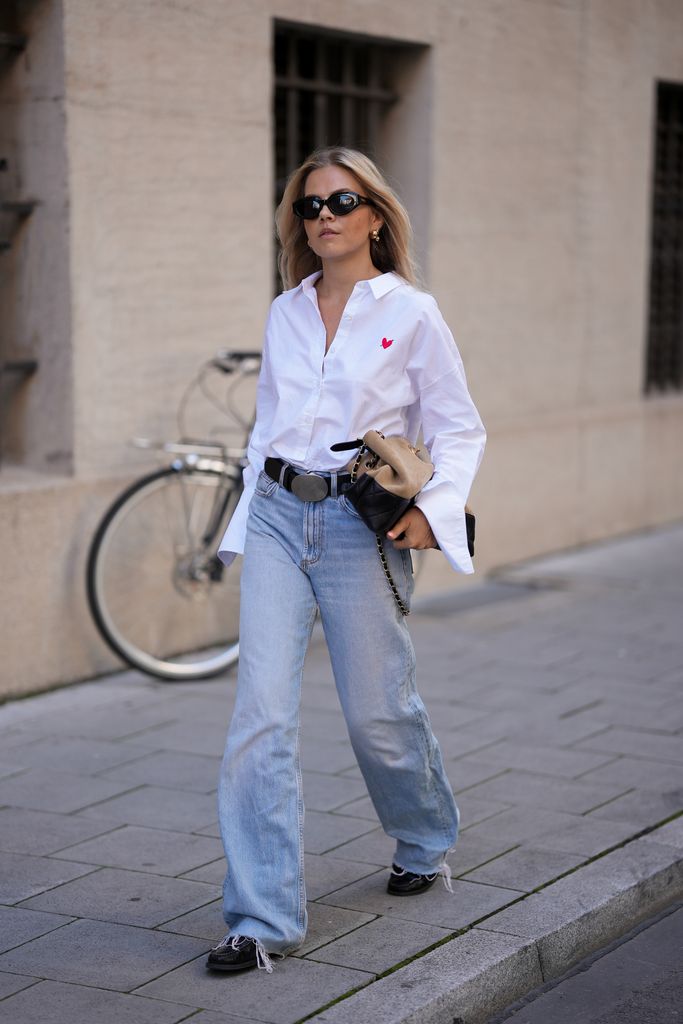
El equilibrio perfecto entre los baggy y los bootcut. Los wide leg jeans tienen una de las caídas más delicadas y sofisticadas. Su silueta y composición sugieren prendas un poco más ajustadas en la parte superior. Blusas abotonadas, cárdigans clásicos, blazers rectos o tops estructurados pueden convertirse en la dupla ideal para armar el conjunto más elegante. Los pantalones ideales para llevar con mocasines, slingbacks o botines clásicos.
Los wide leg jeans son ideales para alargar la silueta con elegancia.
Baggy jeans
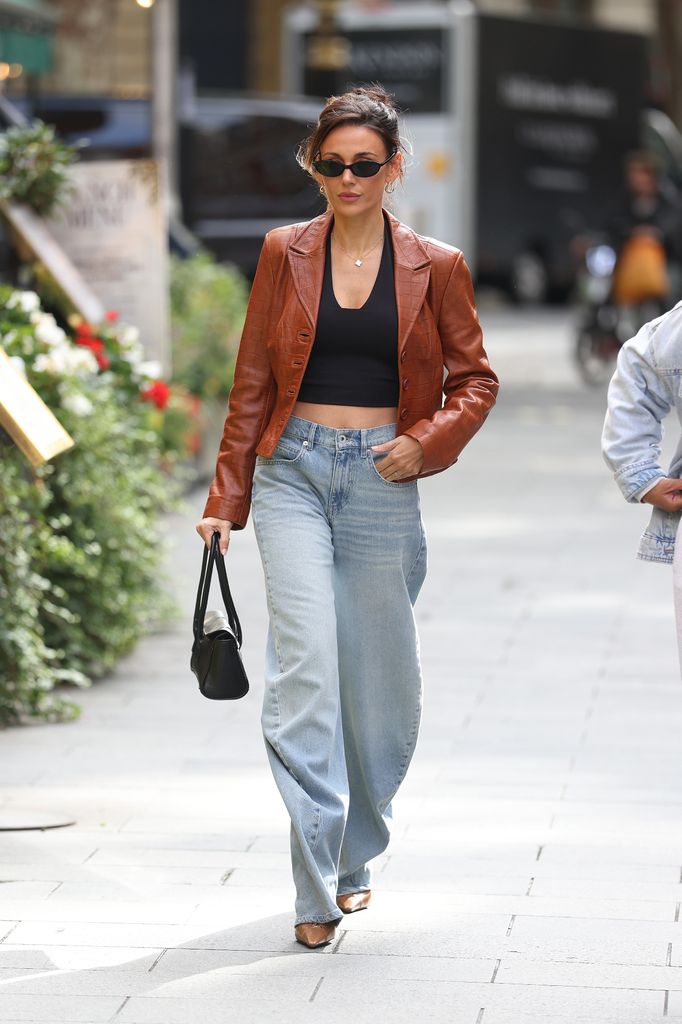
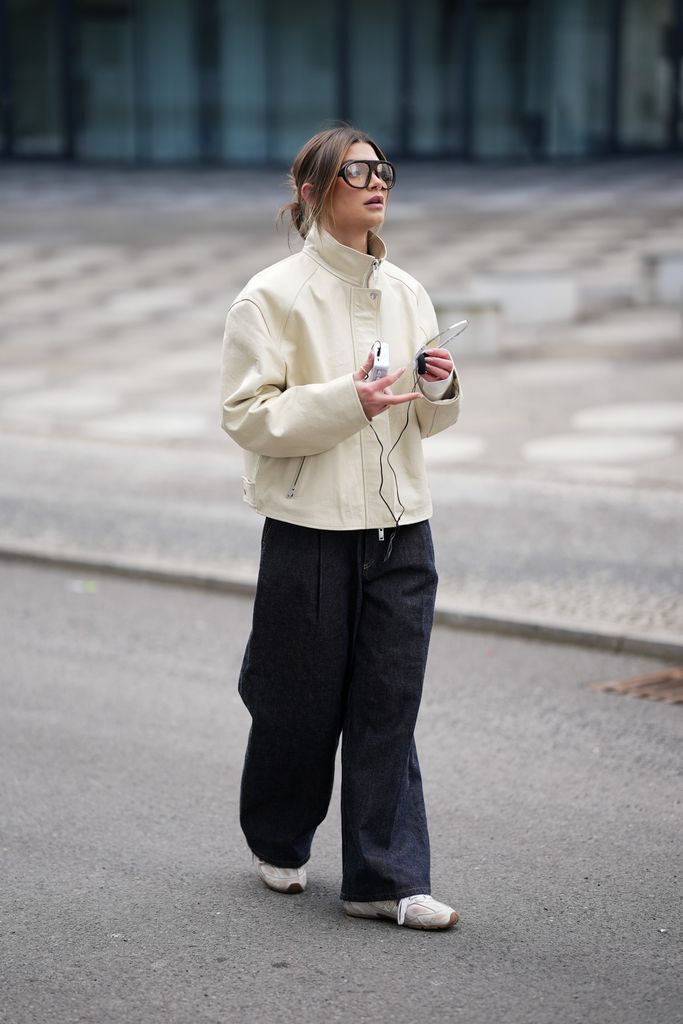
Una silueta despreocupada y dramática. Los baggy jeans son la opción perfecta para quienes con seguridad pueden encontrar el equilibrio ideal entre el pantalón y las prendas que protagonizan la parte superior del look. Con tops ajustados, bodysuits entallados o chamarras estructuradas puedes encontrar un atuendo de retrato invernal. La clave está en no tenerle miedo a la soltura del pantalón, sino convertirla en la protagonista. ¿Lo mejor? Puedes llevarlos con zapatos planos sin que el conjunto pierda elegancia ni sofisticación.
Los baggy jeans son una opción cómoda y versátil para esta temporada.
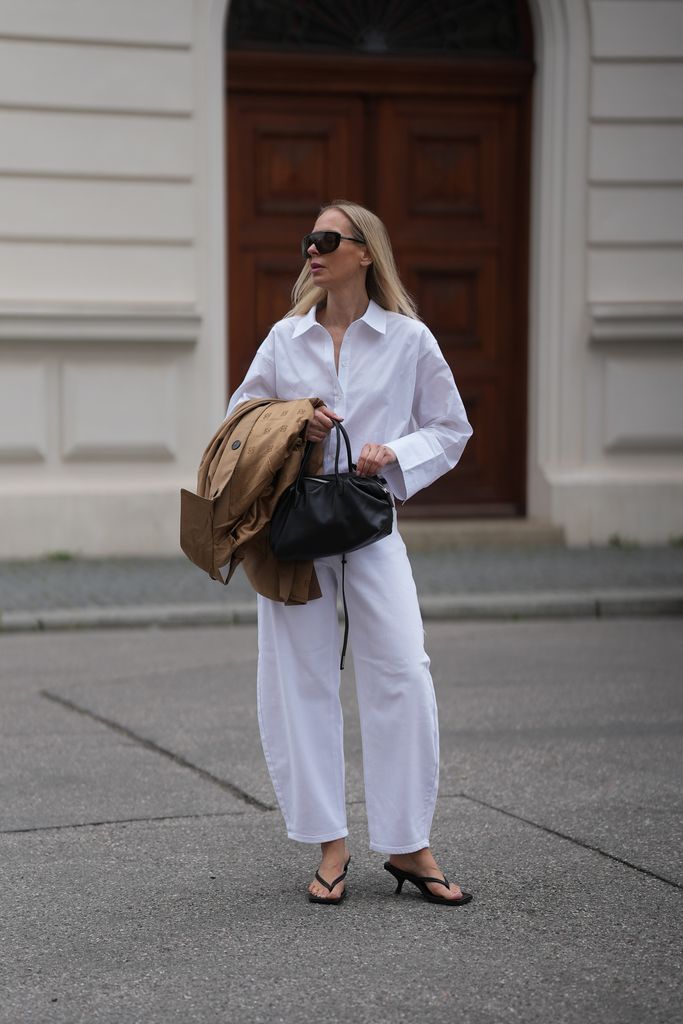
Jeans barrel
Un diseño inconfundible y único. La forma y la estructura tan originales de los jeans barrel los convierten en unos pantalones imposibles de no agregarles personalidad a cualquier look. La forma en la que se ensanchan al nivel de las rodillas y se estrechan en los tobillos permite aportar al conjunto un aire de carácter audaz. No es el pantalón más fácil de combinar, pero sí el ideal para destacar.
Elegir unos jeans barrel para otoño/invierno de 2026 es una apuesta segura.
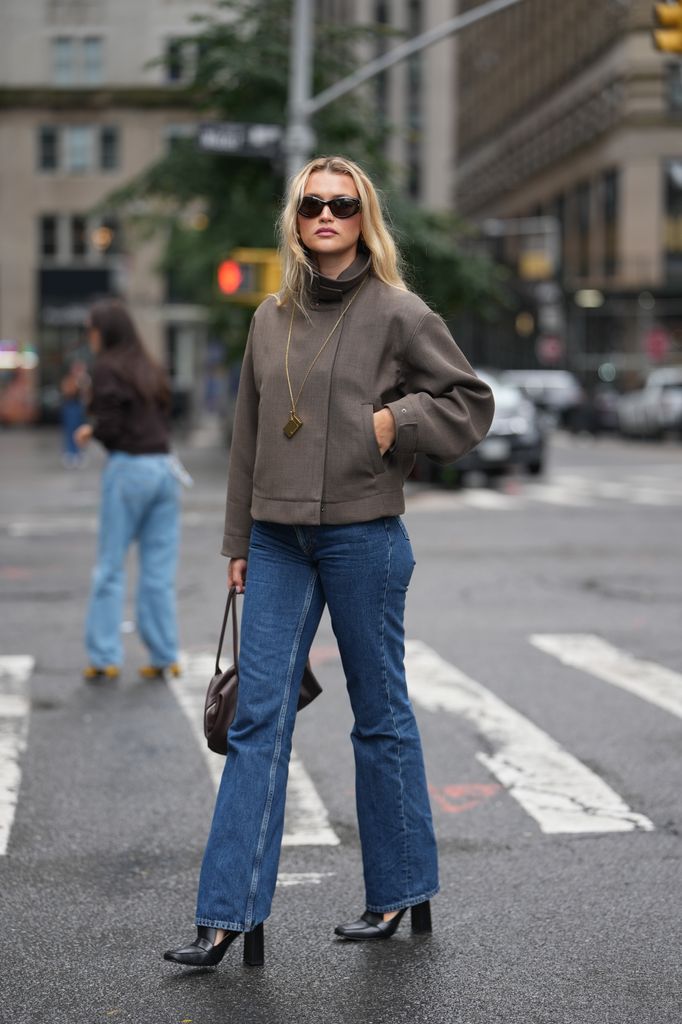
Jeans flare o bootcut
Tanto los jeans flare como los bootcut son modelos de vaqueros clásicos que, de manera innegable, te harán lucir impecable. Aunque son dos siluetas diferentes, tienen características similares que las convierten en estrellas del armario. La apuesta está en los zapatos de tacón. Desde botines tradicionales hasta slingbacks de punta fina. Todo consiste en dejar que su caída ligeramente acampanada sobresalga con elegancia.
Los jeans bootcut tienen un aire retro muy chic y distintivo.
Jeans culotte
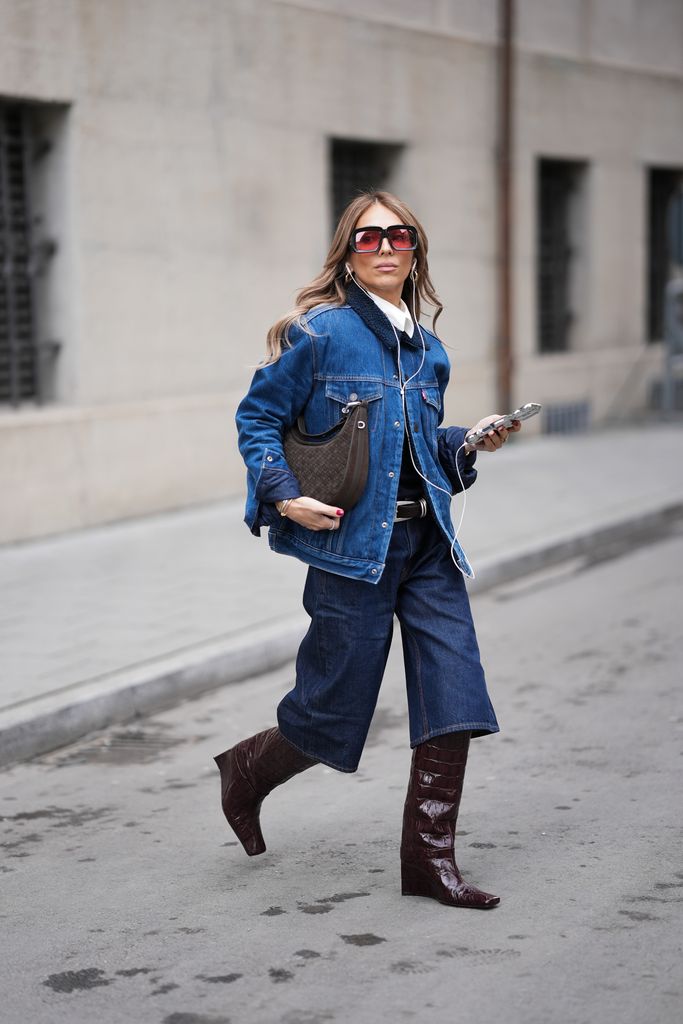
Por último, pero no menos importante, están los jeans culotte. Aunque ya han tenido sus temporadas de protagonismo en el pasado, este otoño e invierno de 2026 regresan con más fuerza que nunca. Su silueta, con aire setentero, la convierte en una de esas piezas del armario con más movimiento. Ideal para llevar con zapatos de carácter fuerte y prendas superiores más definidas. Tops ajustados y blusas fluidas serán tus mejores aliados al elegir un pantalón con líneas definidas.
Los jeans culotte tienen un corte contemporáneo muy sofisticado.
Los jeans en otoño/invierno 2026 serán una declaración de estilo. No importa si prefieres una silueta suelta o una más entallada; entre las tendencias hay un modelo ideal para cada personalidad. Porque encontrar las prendas con las que te sientas cómodo no es solo una cuestión de comodidad, sino también de estética.
Ya tienes una cuenta vinculada a EL TIEMPO, por favor inicia sesión con ella y no te pierdas de todos los beneficios que tenemos para tí. Iniciar sesión
Hazme un resumen de las noticias más relevantes.
¿Qué está pasando en Colombia?
¿Qué ocurre en el mundo hoy?
¿Qué pasó en deportes hoy?
¿Quién es James Rodriguez?
James Rodríguez, es un futbolista colombiano que juega como centrocampista en el São Paulo Futebol Clube de la Serie A de Brasil.
Te recomiendo estos artículos para ampliar tu búsqueda.
¡Hola! Parece que has alcanzado tu límite diario de 3 búsquedas en nuestro chat bot como usuario registrado.
¿Quieres seguir disfrutando de este y otros beneficios exclusivos?
Adquiere el plan de suscripción que se adapte a tus preferencias y accede a ¡contenido ilimitado! No te
pierdas la oportunidad de disfrutar todas las funcionalidades que ofrecemos. 🌟
¡Hola! Haz excedido el máximo de peticiones mensuales.
Estamos resolviendo el problema, inténtalo nuevamente más tarde.
Procesando tu pregunta… ¡Un momento, por favor!
Harry Kane Foto: @harrykane
El capitán de la Selección de Inglaterra y referente ofensivo del Bayern Múnichrompió el silencio en una entrevista con el diario MARCA.
Cuestionado por sus posibilidades de conquistar el prestigioso premio entregado por France Football, el goleador prefirió no entrar en autoelogios y mandó un contundente mensaje apoyado en su demoledora estadística de cara al arco.
LEA TAMBIÉN
¿Qué dijo Harry Kane sobre su candidatura al Balón de Oro?
Harry Kane Foto:AFP
El atacante de 33 años fue claro sobre su postura en la lucha por el trofeo individual más valioso del fútbol:
No me gusta hablar de mí mismo ni promocionarme, pero creo que
los 73 goles que marqué entre club y selección hablan por sí solos.
Harry KaneDelantero del Bayern Múnich
Rendimiento sostenido: Enfatizó que mantuvo una regularidad inédita a lo largo de toda la campaña sin atravesar baches futbolísticos.
Enfoque en lo colectivo: Destacó que el trabajo en el Bayern Múnich facilitó su extraordinario registro realizador.
¿Cuáles son los números de Harry Kane en la temporada?
Luis Díaz Y Harry Kane Foto:Cuenta oficial de Instagram de los jugadores
De acuerdo con las estadísticas recopiladas por Transfermarkt y los registros de la UEFA, la campaña del artillero inglés marcó hitos históricos:
Goles en el Bayern Múnich: 61 anotaciones disputando 51 compromisos oficiales.
Goles con la Selección de Inglaterra: 12 tantos anotados en torneos internacionales y clasificación europea.
Total acumulado: 73 goles totales, registro que lo situó en cifras no vistas desde la época dorada de Lionel Messi y Cristiano Ronaldo.
LEA TAMBIÉN
¿Quiénes son los principales rivales de Harry Kane por el Balón de Oro 2026?
El delantero francés del Real Madrid Kylian Mbappé Foto:EFE
El delantero encabeza los ránkings de poder de medios internacionales como Mirror Football. Sus principales competidores en el podio son:
Lamine Yamal (FC Barcelona): Figura de la selección española y autor de 24 goles y 17 asistencias en la temporada.
Kylian Mbappé (Real Madrid): Bota de Oro de LaLiga y máximo goleador del Mundial con 10 tantos.
Rodri Hernández (FC Barcelona / Manchester City):Balón de Oro del Mundial e insignia en la medular.
¿Cuándo y dónde se entregará el Balón de Oro 2026?
Balón de Oro Foto:EFE/Alessandro Della Bella/Archivo
La 70.ª edición de la gala del Balón de Oro organizada por France Football se llevará a cabo el lunes 26 de octubre de 2026 en el teatro London Palladium de Londres, Inglaterra, donde se revelará al sucesor en el palmarés internacional.
La agencia EFE señaló este viernes que Cristiano Ronaldo sigue siendo un fijo en la Selección de Portugal y que encabeza la primera convocatoria elaborada por el nuevo seleccionador, Jorge Jesus, para la fase de grupos de la Liga de las Naciones.
El estratega señaló que Cristiano tiene “un estatus diferente” a los demás, pero aseguró que “lo que importa es su rendimiento. El pasado no cuenta”. “Cris es un jugador como cualquier otro. Si rinde, juega; si no, no juega”, afirmó.
Jorge Jesus habla de Cristiano Ronaldo
“¿Tiene un estatus diferente? Sí. Su trayectoria es diferente, tiene cinco Balones de Oro. ¿Pero influye eso en mis decisiones? No. No influye en nada. Cero. Pero que (Cristiano) es diferente de los demás, eso sí”, contó.
Cristiano Ronaldo. Foto:Getty Images via AFP
EFE dijo que Cristiano Ronaldo, de 41 años, ha puesto en duda su continuidad en la selección tras el Mundial de 2026, pero Jesus, que la temporada pasada coincidió con el delantero en el Al Nassr saudí, señaló que no fue necesario hablar de ello con el exjugador del Real Madrid.
“Él conoce mis ideas, yo conozco las suyas”, comentó. Cristiano es uno de los 13 jugadores de la lista de 25 que ya han trabajado con Jorge Jesus, quien afirmó que ha aprovechado esa familiaridad para empezar a forjar la identidad de la nueva selección.
Cristiano Ronaldo. Foto:AFP
Su grupo de elegidos no difiere mucho del de su predecesor, Roberto Martínez, aunque el técnico ha asegurado tener una idea “completamente diferente” a la del español y ha prometido algunos cambios, pero sin “sorprender a nadie”.
Portugal comenzará la defensa de su título de la Liga de las Naciones el próximo 24 de septiembre contra Gales, en el Estadio José Alvalade de Lisboa, y el día 27 se enfrentará a la Noruega de Erling Haaland, a domicilio.
Reacción de Cristiano Ronaldo frente a la derrota de Portugal frente a España. Foto:Redes sociales
EFE dijo que la selección lusa continuará en territorio nórdico para enfrentarse a Dinamarca el primero de octubre y volverá a medirse a los noruegos el 4, en el Estadio do Dragão, en Porto.
Los convocados
Porteros: Diogo Costa (Porto), Rui Silva (Sporting), Samuel Soares (Benfica).
Volantes: Bruno Fernandes (Manchester United/ING), João Palhinha (Benfica), João Neves (PSG/FRA), Rúben Neves (Al Hilal/KSA), Vitinha (PSG/FRA), Bernardo Silva (Real Madrid/ESP).
Jorge Jesús. Foto:EFE.
Delanteros: Fábio Silva (Borussia Dortmund/GER), Francisco Trincão (Al Ahli/KSA), Francisco Conceição (Juventus/ITA), Gonçalo Ramos (Milan/ITA), João Félix (Al Nassr/KSA), Pedro Neto (Chelsea/ING), Rafael Leão (Galatasaray/TUR) y Cristiano Ronaldo (Al Nassr/KSA).
Luis Díaz y el Bayern Múnich tendrán al frente este viernes al Unión Berlin, en partido de la cuarta fecha de la Bundesliga, que se llevará a cabo en el estadio Allianz Arena.
Díaz quiere volver a ser el jugador que fue, pues en este arranque de temporada su rendimiento no es el mejor.
Luis Díaz y el Bayern Múnich ante un reto, el Unión Berlin
El delantero colombiano solamente ha marcado un gol y ya los aficionados y la prensa de Alemania le exigen mucho más.
Luis Díaz Foto:EFE
La primera temporada con el elenco bávaro fue brillante. Díaz fue uno de los jugadores destacados, pero en estas primeras de cambio no ha sido el de antes.
El elenco orientado por Vincent Kompany llega con siete puntos después de las tres primeras jornadas. En su última presentación consiguió una victoria por 2-1 frente al Elversberg, con un gol de Harry Kane en la segunda parte que terminó inclinando el resultado a favor del conjunto bávaro.
Luis Díaz Foto:EFE
Unión Berlin, en la mala
El rival, Unión Berlin, no hace una buena Bundesliga. Solo ha logrado un punto en sus tres primeras apariciones y todavía no conoce la victoria en el campeonato.
Por lo que se ve, el Bayern Múnich y Luis Díaz tienen una buena opción de ganar tres puntos para enderezar el camino y volver a ser el elenco sólido de la temporada anterior.
Luis Díaz, en acción contra el Bodo/Glimt. Foto:AFP
Una nueva cara
La llegada este verano al Bayern Múnich del marroquí Ismael Saibari, una de las revelaciones del Mundial 2026, refuerza el ataque de un equipo aspirante a todo, pero también amenaza con restar minutos de juego al colombiano Luis Díaz, contó la agencia AFP.
Luis Díaz, titular Foto:Bayern Múnich
El doblete (liga-Copa) de la pasada temporada no es suficiente para un Bayern insaciable, que aspira a ganar su séptima Copa de Europa esta temporada y, para ello, se ha reforzado en su línea ofensiva con Saibari y con el joven Nathaniel Brown, los dos únicos fichajes del verano, por los que el club bávaro pagó alrededor de 57,5 millones de dólares por cada uno al PSV Eindhoven y al Eintracht Fráncfort, respectivamente.
El Códice Azcatitlan salió de México hace casi dos siglos y por primera vez vuelve al país para ser exhibido ante público en el famoso Museo Nacional de Antropología de la capital.
Se trata de uno de los documentos que retratan, primordialmente con pictografías, los hitos del pueblo mexica (también conocido como azteca): su origen en el mítico Aztlán, su peregrinaje hacia la tierra donde fundaron Tenochtitlan (1325), sus gobernantes a lo largo de los siglos y los primeros años de la colonia española.
Junto con otros códices de su tipo, es uno de los documentos con los que los historiadores han estudiado el periodo prehispánico de esta y otras culturas originarias de Mesoamérica, que abarca la región centro y sureste de lo que hoy es México.
El Códice Azcatitlan ha estado desde la década de 1840 en Francia, donde a finales del siglo XIX fue entregado a la Biblioteca Nacional de ese país.
Su regreso a México llega tras una cumbre celebrada el año pasado entre la presidenta de México, Claudia Sheinbuam, y su homólogo francés, Emmanuel Macron, en la que acordaron un intercambio de códices antiguos para ser exhibidos temporalmente en ambos países.
“Azcatitlan tiene ilustraciones a color que siguen la historia [mexica] hasta la Conquista y los primeros tiempos del periodo colonial”, destacó este jueves la historiadora y secretaria de Cultura federal, Claudia Curiel, al inaugurar la exposición.
La exhibición del Códice Azcatitlan fue inaugurada este 17 de septiembre y permanecerá hasta el 31 de diciembre en el Museo Nacional de Antropología. [Getty Images]
En el intercambio, México envió a Francia el Códice Boturini que, de manera similar al de Azcatitlan, narra el peregrinaje hasta la fundación de Tenochtitlan, pero cuya elaboración es más antigua que la del segundo.
“La Biblioteca Nacional de Francia conserva un conjunto excepcional de manuscritos mexicanos en torno a los cuales trabajan investigadores de los dos países. Su estudio requiere el entrecruzamiento de las disciplinas, las lenguas, las tradiciones científicas y exige confrontar las miradas”, dijo en la inauguración Jean-Charles Bédague, director de las colecciones de esa biblioteca de París.
Aunque solo permanecerá en México hasta finales de año, el Códice Azcatitlan no solo permitirá a los investigadores encontrar nuevas pistas del pasado prehispánico del país, sino que hará que el público pueda contemplar el rico trabajo artístico que tiene este tipo de documentos.
¿Qué hay en el Códice Azcatitlan?
Una de las formas que tenían las civilizaciones prehispánicas de dejar testimonio de su historia fueron los códices, en donde se dibujaban glifos, pictogramas y algunas formas de escritura.
Los expertos han identificado entre 15 y 17 códices hechos por pueblos prehispánicos, pero se sabe que hay alrededor de 500 elaborados en el periodo colonial con técnicas prehispánicas, escrituras en latín, español, lenguas indígenas o una combinación de esto.
Como otros códices, el de Azcatitlan tiene varias páginas que se desenvuelven en biombo o acordeón. [Getty Images]
El Códice Azcatitlan es parte de los que fueron elaborados bajo encargo de los españoles, pero con apoyo de los tlacuilos, los pintores de códices con técnica pictográfica prehispánica, pero con influencias de estilo de los europeos de la época.
Fue elaborado en papel europeo, a diferencia del amate tradicionalmente usado en los prehispánicos, pero con una cuidadosa selección de colores. Tiene 25 folios con unas 50 páginas, pero hay seis láminas faltantes por un motivo desconocido.
En sus láminas abarca unos 500 años de la historia del pueblo nahua que salió de una ciudad mítica llamada Aztlán, que luego pasó varias décadas -con tiempos buenos y adversos- en busca de su nueva tierra hasta la llegada al lago de Texcoco.
Ahí ocurre la señal de los dioses, según la tradición, del águila que devora una serpiente en un islote (el escudo de la bandera de México) y establecen su nueva capital, Tenochtitlan. También mencionan a sus gobernantes, las guerras, los festejos, la geografía y la llegada de los españoles, ante los que cae Tenochtitlan.
También abarca algunos años del establecimiento de la colonia y la evangelización.
Los nahuas dejaron Aztlán para encontrar la “tierra prometida” en 1325. [Getty Images]
El rescate de la historia
El Códice Azcatitlan fue elaborado en la época colonial, entre finales del siglo XVI e inicios del XVII, cuando se intentó reconstruir la historia prehispánica.
“Los manuscritos [prehispánicos] eran incomprendidos por los frailes y las autoridades civiles, que ven en ellos un peligro para la evangelización, porque consideran que mucho de lo que contienen es contrario a la fe católica”, explicaba en una conferencia hace unas semanas Baltazar Brito, el director de la Biblioteca Nacional de Antropología e Historia.
“Y entonces se emprende una gran destrucción. Sin embargo, esos mismos sacerdotes que hacen quemas importantes, como Juan de Zumárraga, Diego de Landa y Motolinía… cuando empiezan a comprender la cultura y los grandes conocimientos que tenían, piden a los ancianos que están todavía vivos, que tienen conocimiento de la historia, que hagan nuevos documentos”, dijo el antropólogo.
El Códice Azcatitlan da cuenta de la llegada de los españoles a Tenochtitlan. [Getty Images]
El Códice Florentino es considerado el más extenso y completo, pero también otros son muy citados, como el Mendoza, el Boturini, el Borbónico, el Dresde o el Lienzo de Tlaxcala. Su temática es variada: botánica, cartografía, calendárica, genealogía y economía, entre otros.
Y ya que muchos eran encargados o comprados por personas privadas o coleccionistas de la época, terminaron por el mundo, como el de Azcatitlan, que está junto a unos 180 en la Biblioteca Nacional de Francia, mientras que otros se encuentran en el Vaticano, Madrid, Oxford, Londres o Bolonia, tanto en espacios públicos como en colecciones privadas.
Según Brito, México tiene 106 documentos originales, así como otra cifra similar de copias en una bóveda especialmente diseñada para mantener el control de humedad, temperatura y luz, y resguardar estos valiosos documentos.
Aunque en el país han surgido en múltiples ocasiones peticiones para que el patrimonio cultural de este tipo sea restituido, solo se han podido conseguir préstamos, como el del Códice Azcatitlan.
Los códices tocan temas de cartografía, histórica, genealogía y economía, entre otros. [Getty Images]
Ciudad de México, 18 sep (EFE).- Las defunciones registradas en México cayeron un 2,5 % interanual en el primer trimestre de 2026, hasta las 207.599, aunque se mantuvieron por encima del nivel prepandemia, informó este viernes el Instituto Nacional de Estadística y Geografía (Inegi), que situó los males cardíacos como la principal causa de muerte.
El dato de enero a marzo pasados es menor a los 212.844 fallecimientos reportados en el mismo periodo de 2025, pero mayor a las 202.556 de igual lapso de 2020, cuando la pandemia de covid-19 llegó al país a finales de febrero.
Por otro lado, la tasa de defunciones por cada 100.000 habitantes fue de 158,3 de enero a marzo de 2026, añadió el Inegi.
Este índice es menor al de 163,2 fallecimientos por cada 100.000 personas del mismo periodo de 2025 y el de 160,9 de igual lapso de 2020.
Del total de defunciones, 55,1 % fueron de hombres, 44,8 % de mujeres y el resto de género no precisado.
“El mayor porcentaje de defunciones se concentró en la población de 65 años y más, que representó 60,7 % del total de defunciones registradas”, ahondó el Inegi.
Las entidades con las mayores tasas de defunciones registradas y ocurridas por cada 100.000 habitantes fueron Ciudad de México (233,6), Morelos (195,5), Veracruz (190), Chihuahua (177,4) y Puebla (175,9).
En contraste, las menores tasas se registraron en Quintana Roo (113,9), Guerrero (116,9), Baja California (116,9), Sinaloa (118,5) y Chiapas (120,2).
Principales causas de muerte en México
El instituto registró a los males cardíacos como la principal causa de muerte en México, con 49.252 defunciones por esta causa.
El segundo motivo es la diabetes (30.779) y el tercero son los tumores malignos (24.095), mientras que el cuarto fueron la influenza y neumonía (11.023) y el quinto las enfermedades del hígado (9.910)
En tanto, los accidentes fueron la séptima causa de muerte (9.032), las enfermedades pulmonares obstructivas crónicas ocuparon el octavo puesto (5.765) y las agresiones (homicidios) el noveno, con 5.689 casos en los primeros tres meses de 2026.
Las cifras que el Inegi analizó se obtuvieron mediante los certificados de defunción de las Oficialías del Registro Civil y los Servicios Médicos Forenses. Se complementó con las actas de defunción del Registro Civil y los cuadernos estadísticos proporcionados por las Agencias del Ministerio Público.




:format(jpg)/f.elconfidencial.com%2Foriginal%2F7fc%2Ffb2%2F47c%2F7fcfb247c6ae55d89be010af3295a1ac.jpg)
:format(jpg)/f.elconfidencial.com%2Foriginal%2F143%2F691%2Fd47%2F143691d470903fc9073c797be66ef518.jpg)