The Bills’ inaugural season at the new Highmark Stadium calls for some fresh alternate threads.
Buffalo revealed its alternate “Nickel City” uniform on Monday morning.
The uniform, which features an all-gray pant and jersey combination, is complemented by “The Charge” alternate helmet, aptly named for the red charge that streaks across the shell’s blue base.
Buffalo’s newest alternate jersey drew inspiration from the city’s blue-collar roots.
“We worked very hard to ensure we continue to push the Buffalo Bills brand to new heights and reach more fans, both young and old, while still honoring the team and region’s rich history and legacy,” Bills director of design Aaron La Porta said, via the team’s website.
2025 stats:16 games | 94 tackles | 2 sacks | 7 PD | 3 INT
There are few utility men in the NFL as stellar as James, who’s recognized as one of the finest safeties in the league, but is really a positionless standout. He secured his second straight Pro Bowl selection and his fifth overall ahead of garnering a three-year, $75.6 million extension that made him the highest-paid safety in the NFL on an annual basis. Applied in the pass rush more than previous seasons, the six-time Top 100 member had a 12.9 blitz percentage that led to 16 QB pressures, which were second among defensive backs (minimum 25 pass rushes) and commanded the respect of being chipped on 11.9% of his rushes — also second among DBs. Heading into his age-30 season, James’ three picks last year matched his career high from his 2018 rookie campaign.
NFL Pro Insight for James: James was one of five defenders in 2025 to align on the line of scrimmage (123 snaps), at linebacker (231) and at safety (141) for at least 100 snaps.
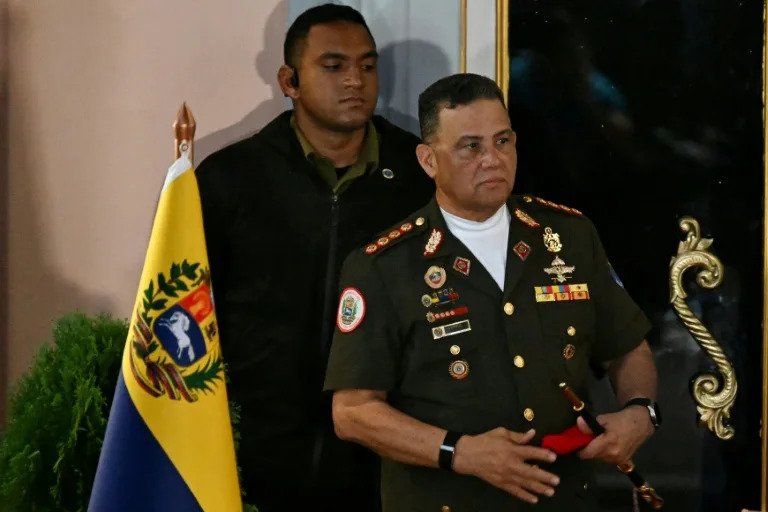
La presidenta de Venezuela, Delcy Rodríguez, invistió el sábado a nuevos integrantes del alto mando y varios cargos regionales de la Fuerza Armada, al tiempo que ratificó al ministro de Defensa, general en jefe Gustavo González López.
Rodríguez asumió funciones tras la caída de Nicolás Maduro en una operación militar estadounidense en enero. La Fuerza Armada, considerada pilar del chavismo, le expresó su respaldo irrestricto y absoluta “lealtad” en ausencia del líder izquierdista.
La investidura de los nuevos altos mandos militares ocurre “en aras de seguir fortaleciendo las políticas de seguridad para nuestro país, mantener la paz y la tranquilidad”, dijo el sábado Rodríguez en un acto militar televisado.
La mandataria designó al mayor general Rubén Belzares Escobar como jefe del Comando Estratégico Operacional, considerado el número dos de la Fuerza Armada y responsable de la tropa.
Belzares Escobar fungía como comandante del Ejército y reemplaza al mayor general Rafael Prieto Martínez, nombrado en marzo en medio de una depuración de Rodríguez en los mandos castrenses.
La presidenta sustituyó además al segundo al mando del Comando Estratégico Operacional, al jefe del Comando de Defensa Aeroespacial Integral y a seis de ocho generales responsables de las regiones del país.
El general en jefe Gustavo González López mantuvo su cargo al frente de la cartera de Defensa. Rodríguez lo designó en marzo en reemplazo del general Vladimir Padrino López, ficha leal de Maduro durante más de una década y ahora ministro de Agricultura.
“No la vamos a defraudar. ¡Venezuela va a triunfar, Venezuela va a renacer!”, expresó durante el acto González López, quien bajo el gobierno de Maduro comandó el temido servicio de inteligencia Sebin, acusado de tortura.
El general Pedro González Ovalles fue designado al frente del Ejército. Rodríguez ratificó a los jefes del resto de los componentes.
El remezón dentro de la Fuerza Armada se produce en medio de la atención al desastre del potente doble sismo del 24 de junio, que deja ya más de 5.500 muertos en Venezuela.
Rodríguez ordenó la militarización del costero estado La Guaira, considerado la zona cero, donde miles de voluntarios y rescatistas improvisados se activaron ante una respuesta oficial que denunciaron como lenta e insuficiente.
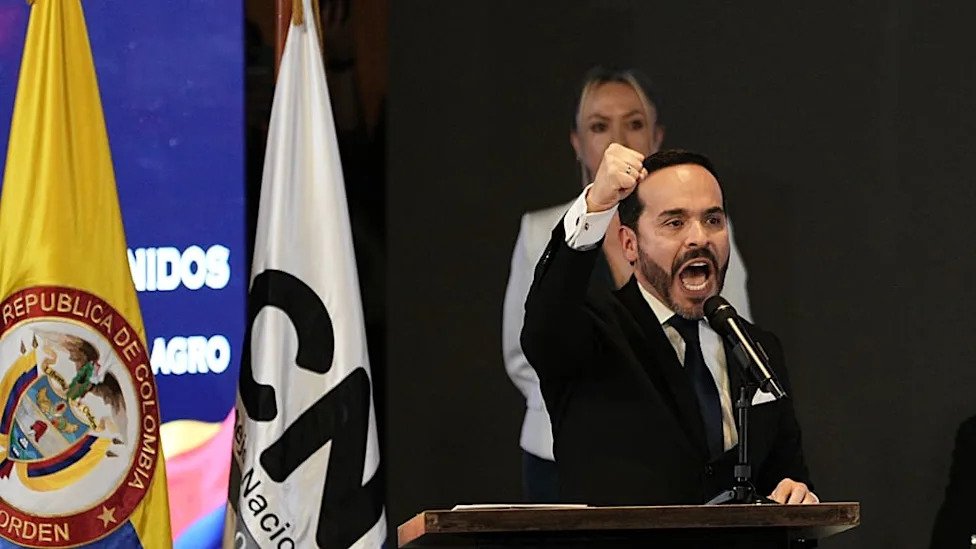
El presidente electo de Colombia, Abelardo de la Espriella, acusó a Gustavo Petro de promover “un golpe de Estado” al no reconocer su victoria en las elecciones del 21 de junio y pidió a las Fuerzas Militares preservar el orden constitucional. De la Espriella ya había ordenado suspender el proceso de transición con el Gobierno saliente.
“Acabo de dar instrucciones al señor vicepresidente electo de la República para que suspenda de manera inmediata el proceso de empalme con el Gobierno corrupto que termina su periodo, un Gobierno que, con sus decisiones y su conducta, pretende destruir a Colombia“, manifestó De la Espriella en su cuenta de X.
De la Espriella afirmó que su responsabilidad “es proteger los intereses de la Nación y garantizar una transición seria, transparente y al servicio de los colombianos, nunca legitimar el desastre ni el desconocimiento del orden constitucional”. Además, anunció que este martes dirigirá un mensaje a la nación para explicar los motivos de su decisión.
José Manuel Restrepo, vicepresidente electo y responsable del proceso de transición, señaló que la suspensión se debe a la negativa de Petro a reconocer el resultado electoral.
“Casi 13 millones de colombianos eligieron un nuevo rumbo para el país. Nadie tiene derecho a desconocer ese mandato popular ni a poner en duda la legitimidad del presidente electo, Abelardo de la Espriella”, declaró Restrepo en la red X.
Petro volvió a cuestionar la victoria de De la Espriella y afirmó que “no ganó” las elecciones, por lo que no reconoce la legitimidad del Gobierno que asumirá el 7 de agosto. En X, reiteró sus acusaciones de un supuesto fraude electoral mediante la manipulación de algoritmos, aunque no presentó pruebas que respalden sus afirmaciones.
Petro promete entregar el poder mientras cuestiona la victoria de De la Espriella
Gustavo Petro ha asegurado que entregará el poder el 6 de agosto a medianoche, pese a no reconocer a Abelardo de la Espriella como su sucesor, y afirmó que respetará el mandato constitucional.
Petro insiste en no reconocer la victoria de De la Espriella y mantiene sus denuncias de fraude, pese a que las misiones de observación electoral avalaron la organización de los comicios.
Petro reiteró que su partido impugnará las elecciones y mantuvo sus críticas a De la Espriella y su equipo de transición, aunque aseguró que dejará el poder al finalizar su mandato.
Petro llamó a una “resistencia activa” y afirmó que podría haber “desobediencia civil” cuando el pueblo lo decida, al considerar que la llegada del nuevo Gobierno amenaza la democracia.
The Eastern Conference has been the lesser conference (with a losing record against the West) in 24 of the last 27 seasons, and the West has also won 17 of the 27 championships over that stretch.
But the reigning champs reside in the East, which also had more teams (10) with winning records than the West (nine) last season. The West had the regular-season edge overall, but the East’s winning percentage in interconference games (220-232, .487) was its fourth-best mark over those 27 years.
And given the way the offseason has gone, the East may be in position to have its best season since Michael Jordan was still with the Chicago Bulls.
A quick recap, with the offseason movement having slowed down …
Jaylen Brown and LeBron James are joining forces with Tyrese Maxey and Joel Embiid in Philadelphia.
Tyrese Haliburton is healthy and set to return to the team that won the East 14 months ago.
Last season’s eight playoff teams should all be good or even better. The Heat lost in the SoFi Play-In Tournament, but were 43-39 and added the conference’s best player. The Hornets retooled, but should remain competitive, and the Pacers should be back in the mix after a gap year.
That gives us at least 11 teams looking to make the playoffs, with Washington still a bit of a wildcard. How they all stack up is anybody’s guess, but below is a preliminary guess as we head into August.
Note: For these offseason rankings, we’re looking at each conference separately. We’ll have Western Conference rankings next Monday. All stats refer to the 2025-26 regular season unless otherwise noted. “Last week’s rank” is based on how teams finished in the playoffs, Play-In and regular season.
Previously…
OffRtg: Points scored per 100 possessions (League Rank) DefRtg: Points allowed per 100 possessions (League Rank) NetRtg: Point differential per 100 possessions (League Rank)
The league averaged 114.8 points scored per 100 possessions and 100.2 possessions (per team) per 48 minutes last season.
NBA.com’s Power Rankings, released every Monday during the season, are just one man’s opinion. If you have an issue with the rankings, or have a question or comment for John Schuhmann, contact him via Bluesky.
They were the best fourth-quarter team in the 30 seasons for which we have play-by-play data, outscoring opponents by 11.7 points per 100 possessions in fourth quarters.
They made 5 corner 3-pointers per game, the most for any team in the 30 seasons of shot-location data. OG Anunoby led all players in total corner 3-pointers in both the regular season (88) and the playoffs (25).
They were 6-2 in playoff games they trailed by double digits. That was the best such playoff record for any team in the 30 years of play-by-play data, and the NBA Finals were the second best-of-seven series in that time where a team trailed by double digits in all four of its wins. (The other time was the Knicks’ first-round series against Philadelphia in 2024.)
Key question: How much of the title run was sustainable?
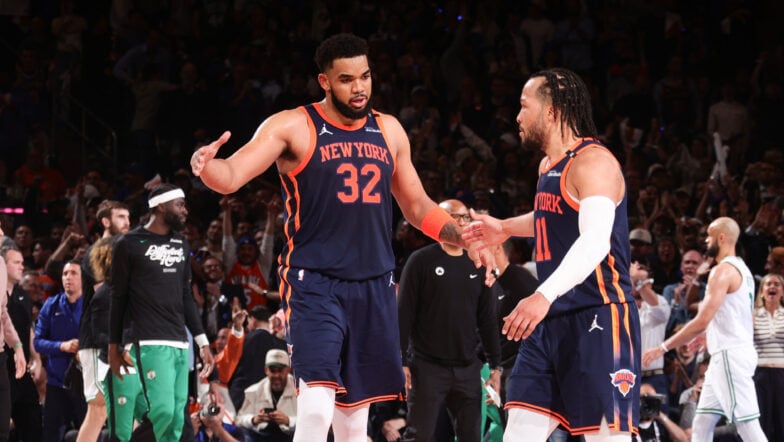
The Knicks were the only team that scored more efficiently in the 2026 playoffs than in the regular season. The defense was also improved and, statistically, they were the best playoff team in NBA history, outscoring their opponents by 14.9 points per game over their 19 postseason games. They can’t play that well over a full season, but they could surely carry over some level of chemistry and execution to improve upon their third-place finish in the East.
Only six of the last 22 champions were better statistically in the regular season following their title than they were the year they won. But maybe Anunoby is an All-Star, having made a huge leap (both literally and figuratively) in the playoffs, when he averaged 20.1 points on a true shooting percentage of 72.1%, up from 16.7 on 62% in the regular season. Robinson will be missed, especially on defense, and there’s now greater importance on Karl-Anthony Towns’ availability, defense and rebounding.
Key additions: Jaylen Brown, LeBron James, Anfernee Simons, Dean Wade
Key departures: Andre Drummond, Paul George, Quentin Grimes, Kelly Oubre Jr.
Three numbers to know …
The Sixers had the league’s biggest differential between their record against the 11 teams that finished below .500 (27-4) and their record against the 19 teams that finished above .500 (18-33).
Tyrese Maxey has led the league in miles traveled per game in each of the last three seasons.
Among 128 players who played at least 100 playoff minutes, the top two in usage rate were Joel Embiid (32.5%) and Jaylen Brown (32.5%).
Key question: Can all this talent create better shots for each other?
The Sixers ranked 29th in shot quality last season, and Brown takes some tough shots himself. Among 182 players with at least 500 field goal attempts, Embiid, Tyrese Maxey and Brown had the 12th, 15th and 26th lowest shot-quality scores, respectively. An upgrade in talent should lead to better looks for everybody, but the Sixers will need a little more shot discipline and a little more movement than those guys have played with in the past. James is one of the best passers in the league and may be just what they needed to keep them organized.
It’s going to be fascinating to see how it works offensively, but the other end of the floor will likely be the bigger concern. Embiid’s presence has usually meant a lot defensively. Still, teams know they can take advantage of him in space, and last season he posted the worst rim-protection mark of his career, with opponents shooting 61.6% at the basket when he was there.
The Cavs outscored their opponents by just 0.4 ppg from 3-point range last season, a differential that ranked 15th and was down from plus-7.3 per game (second) in 2024-25. They saw the league’s biggest drop in 3-point percentage, its seventh biggest jump in opponent 3-point percentage, and its fourth biggest jump in the percentage of their opponents’ shots that came from beyond the arc.
After James Harden’s arrival — and including the playoffs — the Cavs were a little more efficient offensively with only one of Harden and Donovan Mitchell on the floor (116.4 points scored per 100 possessions) than they were with the two on the floor together (115.8 points scored per 100).
In the conference finals, the Cavs scored just 100.3 points per 100 possessions, the worst mark for any team in any series in the 2026 playoffs. Harden’s effective field goal percentage of 43.5% was his second-worst mark in the 28 playoff series in which he’s had at least 50 field goal attempts.
Key question: Will continuity matter?
In the regular season, the Cavs’ most-used lineup played just 89 total minutes, the fewest for any team’s most-used lineup. They had two lineups play more than that in the playoffs, but this is still a core that could benefit from a full training camp and more time together.
There might also be an intangible ingredient missing. There were some quarters or halves where we saw the best the Cavs could be on both ends of the floor, but too often, they didn’t turn up the intensity until they were in a desperate situation. Both in the regular season and the playoffs, they were much better after halftime than they were before it. But double-digit deficits aren’t as easy to overcome as the Knicks made it look in May and June, and the Cavs trailed in 12 of their 18 playoff games by at least 10 points.
Pending trade: Brandon Ingram, Gradey Dick and picks for Kawhi Leonard
Three numbers to know …
The Raptors were the league’s third-most improved team last season, 7 points per 100 possessions better than they were in 2024-25. They were one of the league’s four most improved teams regarding their effective field goal percentage, turnover rate, opponent free throw rate and opponent turnover rate.
They outscored their opponents by 6.4 fast-break points per game, the biggest differential for any team in the last seven seasons.
They led the league in the percentage of their 3-point attempts (85%) that were off the catch and in the percentage (63%) that were wide open.
Key question: Can a smaller frontline hold up on the glass?
Amazingly, Jakob Poeltl has four years left on his contract. But Collin Murray-Boyles (191) played a lot more minutes than Poeltl (134) in the playoffs, and the Raptors’ best lineup would seemingly have Leonard, Scottie Barnes and Murray-Boyles on the frontline. That’s a strong, switchable group, but those three guys are 6-foot-6, 6-foot-8 and 6-foot-7, respectively. That means rebounding could be an issue for a team that ranked 13th in rebounding percentage in the first round, getting outscored by 28 points (45-17) on second chances over the last two games.
Offensively, Leonard should be just what the Raptors need: a player who can close possessions and games so they’re not as dependent on transition opportunities. No team got a greater percentage of their points from fast breaks and only the Pacers shot less effectively in the last six seconds of the shot clock last season.
Of course, the task of keeping Leonard healthy and fresh for the postseason will be tougher than it was eight years ago, and the Raptors’ depth took a hit with the departure of Mamukelashvili.
Key departures: Tobias Harris, Caris LeVert, Isaiah Stewart
Notable free agent: Jalen Duren
Three numbers to know …
In the regular season, the Pistons had the best record (16-7) in games played between the top 10 teams in the league.
They outscored their opponents by 14.2 points in the paint per game, the second biggest differential for any team in the 30 seasons for which points in the paint have been tracked. And 29.7% of their points, the league’s highest rate, came from fast breaks or second chances.
They averaged 3.8 more shot opportunities per game than their opponents, the league’s best differential by a healthy margin. Their 10.4 steals per 100 possessions were the most for any team in the last 20 seasons.
Key question: Is the load any lighter for Cade Cunningham?
Getting Joe for two second-round picks was a good deal for the Pistons, who now have two of the three players (Javonte Green is another) who shot 50% or better on at least 100 corner 3-point attempts last season. Collins gives them another vertical threat who can also space the floor and shoot from the corners. But in terms of secondary playmaking, they may have taken a step backward with the departure of Harris, who they could go to in the post a few times a game, even on some big possessions.
Ausar Thompson could certainly take a step forward, but he and Duren (assuming he signs the offer sheet or a new deal) could remain a clunky offensive fit if neither can improve their shooting. Cunningham certainly hasn’t reached his ceiling either, and he was more prolific and efficient offensively in the playoffs (28.1 points per game on a true shooting percentage of 57.2%) than he was in the regular season (23.9 on 56.4%). But he’ll continue to carry a heavy load on that end of the floor and, given the improvements elsewhere in the East, it may be hard for the Pistons to remain in the top two or three in the conference.
The Celtics have ranked in the top five on both ends of the floor in each of the last four seasons. Since the league started counting turnovers in 1977, no other team has ranked in the top five on both ends more than two years in a row.
Over the 30 years of play-by-play data, there have been 14 games where a team scored more than 150 points per 100 possessions. Last season’s Celtics accounted for four of the 14.
They’ve ranked last in the percentage of their shots that have come in the paint in each of the last three seasons. They’ve also ranked last in free throw rate in each of the last two.
Key question: Can Derrick White rediscover his shot?
Among 123 players with at least 500 field goal attempts in each of the last two seasons, White saw the biggest drop in effective field goal percentage from 2024-25 (58%) to ’25-26 (48.9%), and it was even lower (41.4%) as the Celtics lost to the Sixers in the first round of the playoffs. The drop-off was significant both from 3-point range and in the paint.
Somehow, the Celtics still had the league’s second-ranked offense last season. Repeating that feat will be tough if White doesn’t shoot better and if they don’t find a way to get to the basket (and to the free-throw line) more often. The talent level is lower given Brown’s departure, but the offense could flow a little better without him. Robinson will also give them more second-chance opportunities.
The Pacers have ranked in the top five in both ball and player movement in each of the last six seasons. No other team has ranked in the top five in both more than twice over that stretch.
Last season, they were outscored by 9.6 points in the paint per game, the biggest discrepancy for any team in the last seven seasons. Only 37.6% of their opponents’ shots, the league’s lowest opponent rate, came from 3-point range.
Among 260 players with at least 200 field goal attempts in each of the last two seasons, Aaron Nesmith (from 61.7% to 51.7%), Jay Huff (from 64.8% to 57.4%) and Jarace Walker (from 57.6% to 51%) saw the third, 10th and 15th biggest drops, respectively, in effective field goal percentage.
Key question: How well does Zubac fit in?
Ivica Zubac played just 118 minutes with the Pacers last season, none alongside Pascal Siakam and none alongside Haliburton. He’s an upgrade over the other centers they had last season, but he’s not used to playing in an offense like this one. While the Pacers have consistently ranked near the top of the league in ball and player movement, the Clippers have ranked in the bottom three in both in each of the last three seasons.
Defense matters, too. The Pacers have ranked 26th defensively over the last three years (combined), but they should be able to defend at a pretty high level when Andrew Nembhard, Nesmith, Siakam and Zubac are on the floor together. Myles Turner has blocked more shots, but overall, Zubac has been the better rim protector over the last three years than the Pacers’ former center.
Key additions: Giannis Antetokounmpo, Tim Hardaway Jr., Bobby Portis
Key departures: Tyler Herro, Kasparas Jakučionis, Jaime Jaquez Jr., Norman Powell, Kel’el Ware
Three numbers to know …
The Heat averaged 104.2 possessions per 48 minutes, the fastest pace for any team in the last five seasons. And 24.9% of their possessions were in transition, the highest rate for any team in Synergy’s 22 seasons of tracking.
Only 44% of their opponents’ 3-point attempts, the league’s lowest opponent rate, were wide open. But they still ranked 14th defensively, their lowest ranking in the last 11 seasons.
They’ve led the league in the percentage of their defensive possessions on which they’ve played zone in each of the last four seasons. Their 16.3% last season was the second-highest rate for any team in the 22 years of Synergy tracking.
Key question: Do they have enough in the backcourt?
Antetokounmpo and Bam Adebayo will be a dominant defensive frontcourt, and the Heat can stagger their minutes so that one of the two is always on the floor and the offensive fit issues are minimized. Portis can play alongside either one and Andrew Wiggins can play some minutes at the four. If Nikola Jović can recover from a rough season, Miami will have a deep and versatile frontline.
But as things stand, the backcourt is pretty thin, with Dru Smith and Pelle Larsson (combined 31% from 3-point range last season) seemingly set to back up Davion Mitchell and Hardaway. The Heat will surely continue to run, and nobody’s better in transition than Antetokounmpo. But the half-court offense could struggle with their guards lacking the requisite shooting and quickness to complement the frontcourt stars.
With only 11 of their 15 (non-two-way) roster spots filled, the Heat still have some offseason roster work to do.
Key additions: Lu Dort, Kingston Flemings, Aaron Wiggins
Key departure: Zaccharie Risacher
Notable free agent: Jonathan Kuminga
Three numbers to know …
The Hawks were 11 points per 100 possessions better after the All-Star break (plus-9.7, fourth) than they were before the break (minus-1.3, 19th). That was the biggest post-break improvement for any team in the last 27 years.
The lineup of CJ McCollum, Nickeil Alexander-Walker, Dyson Daniels, Jalen Johnson and Onyeka Okongwu outscored opponents by 20.3 points per 100 possessions in its 391 regular-season minutes. That was the second-best mark among the 19 lineups (best among those that are still together) that played at least 200 minutes. But it was outscored by 14.4 per 100 in its 82 minutes in the playoffs.
Daniels shot 21-for-111 (18.9%) on wide-open 3-pointers, the worst mark (by a healthy margin) for any player with at least 100 wide-open attempts in the 13 seasons of tracking data. Alexander-Walker’s 111-for-226 (49.1%) was the fifth best mark for a player with at least 200 wide-open attempts over those 13 seasons.
Key question: What is Johnson’s ceiling?
The Hawks have added some depth behind that successful starting lineup, allowing them to keep McCollum (who’ll turn 35 in September) fresh. But Johnson should be the primary ball-handler again, having led the team in time of possession (both in the regular season and the playoffs) after Trae Young was traded. He’s made strides as a playmaker, and if he can do the same as an off-the-dribble shooter, look out. His effective field goal percentage of 43.8% on pull-up jumpers last season ranked 50th among 65 players who attempted at least 250.
Daniels, Johnson and Okongwu are still just 23, 24 and 25 years old, respectively. That means there’s room for internal improvement along with whatever the new additions bring to the table.
The Magic were the league’s third most improved offensive team last season, scoring 5.3 more points per 100 possessions than they did in 2024-25. But it was still the 14th straight season in which they had a worse-than-average offense.
They ranked third in the percentage of their 3-point attempts (60%) that were wide open, but 28th in wide-open 3-point percentage (36.5%). Overall, they were 23-7 when they shot the league average (36%) or better from 3-point range, but those 30 games were tied (with the Kings) for the fewest in the league.
They were tied for the league lead in wins (they were 18-31) after trailing by double-digits and wins (7-23) after trailing by 15 points or more.
Key question: What will be the Sweeney effect?
The Magic are, basically, running it back, currently third in the percentage of last season’s minutes under contract for ’26-27. That means their new coach must make an impact.
Sweeney ran the league’s third-ranked defense in San Antonio. Objective No. 1 should be getting the Magic back into the top 10 on that end of the floor after a big drop-off last season. Orlando allowed 4.5 more points per 100 possessions than they did in 2024-25, having seen the league’s biggest drop in opponent turnover rate and its fourth-biggest jump in opponent field goal percentage in the paint.
On offense, he might want to get the Magic moving a little more. They saw significant jumps in ball and player movement last season, but were still in the middle of the pack in both, and Paolo Banchero ranked fifth with 14.8 isolations per 100 possessions. The Magic scored just 0.88 points per chance when a Banchero iso led directly to a shot, turnover or trip to the line. That rate ranked 48th among 53 players with at least 200 direct isolations.
The Hornets were 14 points per 100 possessions better than they were in 2024-25 (minus-9.1, 27th). That marked the second-biggest season-to-season improvement in the 30 years for which we have play-by-play data. They were the first team in that time to go from the bottom five to the top five in offensive efficiency, ranking fifth after ranking 29th in ’24-25.
They were 44-38 with the point differential (plus-4.8 per game, eighth best) of a team that was 55-27. That per-game differential was the second-best mark in NBA history for a team that missed the playoffs.
They scored 12.6 more points per 100 possessions with Ball on the floor (123.2) than they did with him off the floor (110.6). That was the third biggest on-off differential on offense among 263 players who played at least 1,000 minutes for a single team.
Key question: Is there enough playmaking?
Ball had a big on-off differential and his passes created the Hornets’ highest-quality shots, per tracking data. But he took the lowest-quality shots and the Hornets scored an efficient 120.3 points per 100 possessions in 332 total minutes (regular season + Play-In) with Coby White on the floor without Ball. White isn’t the passer that Ball is, but both Allen and Kon Knueppel can provide some secondary playmaking from the wings.
Turnovers could be an issue as the Hornets committed far more turnovers per possession with Ball off the floor last season. But they can still win the possession battle. They ranked second in both offensive and defensive rebounding percentage last season and a frontline of Reid, Moussa Diabaté and Ryan Kalkbrenner should remain strong on the glass.
The Wizards have ranked in the bottom 10 in each of the four factors on offenseanddefense in each of the last two seasons. No other team has ranked in the bottom 10 in all eight in any one season over the 30 years for which we have play-by-play data.
They were outscored by 8.6 points per game in the restricted area and by 5.1 points per game on free throws. Those were both the worst discrepancies for any team in the last 10 seasons.
They led the league in the percentage of their minutes (55%) that came from rookies or second-year players.
Key question: Can the young guys keep developing?
The Wizards were the worst team in the league last season, but there were some individual signs of progress with their young core …
Kyshawn George saw the third biggest jump in points + rebounds + assists per 36 minutes among 290 players that played at least 500 minutes in each of the last two seasons.
Alex Sarr, George and Bub Carrington saw the second, eighth and 11th biggest jumps, respectively, in effective field goal percentage among 123 players with at least 500 field goal attempts in each of the last two seasons.
Trae Young should help those players get better shots. The Wizards ranked 26th in shot quality last season, but their shot-quality score was much higher (top-five level) off of Young’s passes in the five games he played. However, the offense was still bad (106.6 points scored per 100 possessions) in his 104 minutes on the floor. The young guards will also have to adjust to getting far fewer touches, and it remains to be seen if Sarr and Davis can fit together offensively.
Dybantsa is the future, but there’s a decent team here if the returners can find their way in what may be a very different offense from what we’ve seen over the last few seasons.
The Bulls ranked second in ball movement, second in player movement, second in drives per 100 possessions, second in the percentage of their 3-point attempts that were off the catch and second in the percentage of their shots that came in the first six seconds of the shot clock last season.
They were the first team in the 30 seasons of shot-location data to take less than 5% of their shots from mid-range (between the paint and the 3-point line).
Powell scored 1.19 points per possession on isolations, the sixth-best mark for a player with at least 100 isolation possessions in the 22 years of Synergy tracking. The Bulls ranked 27th with just 15.1 isolations per 100 possessions last season.
Key question: Is there any depth?
The Bulls’ (assumed) starting lineup of Josh Giddey, Powell, Wilson, Matas Buzelis and Claxton should be pretty entertaining, and may be pretty good. Jalen Smith is solid and actually had the league’s sixth biggest on-off differential last year, when the Bulls were 11.9 points per 100 possessions better with him on the floor (plus-3.4) than they were with him off the floor (minus-8.5). There are a lot of questions beyond that, though this season will be a huge opportunity for third-year guard Rob Dillingham and second-year forward Noa Essengue to prove that they belong in the league.
Splitter might bring more changes on defense than on offense. The Blazers were much less aggressive on that end of the floor, ranking last in the percentage of ball-screens (6%) they defended with “blitz” or “show” coverage.
Key additions: Mikel Brown Jr., Keon Ellis, Julius Randle, Mo Wagner
Key departure: Nic Claxton
Three numbers to know …
Last season was the 10th time in the 30 years of play-by-play data that the Nets ranked in the bottom 10 on both ends of the floor. That’s the most for any franchise over that stretch.
They were the only team to rank in the bottom five in field goal percentage in the paint (55.3%, 30th), mid-range field goal percentage (37.1%, 28th) and 3-point percentage (34%, 30th).
Over the last three seasons, the Nets have been 9.4 points per 100 possessions better with Day’Ron Sharpe on the floor (plus-0.4) than they have with him off the floor (minus-9.0). Most of that differential has come on defense (109.2 vs. 117.1 allowed per 100).
Key question: How good is Egor Dëmin?
Randle should raise the floor for the Nets, especially offensively, where they scored 1.5 fewer points per 100 possessions than any other team last season. And it will be interesting to see if their (relative) success with Sharpe on the floor continues if he plays more minutes, presumably as the starting center. Michael Porter Jr. is still here and Brooklyn outscored opponents by 3.9 points per 100 possessions in his 373 minutes alongside Sharpe.
But how good the Nets are in 2026-27 is not as important as how good they can be a few seasons from now, so it’s important that they hit on their Lottery picks from the last two drafts. Dëmin and Mikel Brown Jr. combined to take 51 (60%) of their 85 Summer League shots from 3-point range, probably too high a rate given the former’s size and the latter’s explosiveness. Brown will need some time to find his way, but the time is now for Dëmin to take a big step forward and show that there’s a brighter future for this franchise.
The Bucks were one of two teams (the Hornets were the other) that ranked in the top five in both 3-point percentage (38.7%, second) and the percentage of their shots that came from 3-point range (45.7%, fifth).
They averaged 4.5 fewer shot opportunities than their opponents, the league’s worst discrepancy. They ranked in the bottom 10 in turnover rate (25th), opponent turnover rate (23rd) and offensive rebounding percentage (30th).
They were 14.1 points per 100 possessions better with Antetokounmpo on the floor (plus-4.4) than they were with him off the floor (minus-9.7). That was the second biggest on-off differential among 263 players who played at least 1,000 minutes for a single team.
Key question: Who’s here long term?
The post-Antetokounmpo era in Milwaukee will probably get off to a rough start, but the seeds of future success have been planted. Last season, the Bucks got just 318 minutes from first- or second-year players, while every other team got more than 1,300. They now have six players who were selected in the top 20 in the last five drafts.
Burries (No. 10 this year) was the highest of those picks and should have the ball in his hands as much as any rookie. He got a lot of pick-and-roll reps in Summer League and had 18 assists with just three turnovers.
The Bucks have some interesting questions to answer before the season starts, with both Herro and Jaquez Jr. eligible for contract extensions that would keep them from being free agents in 2027. The phone lines are likely open regarding some of the veterans that remain from last season’s roster.
Cortés, 24 de julio de 2026. Ante el brote de sarampión detectado en Cofradía, la Organización Panamericana de la Salud brinda cooperación técnica a la Secretaría de Salud para fortalecer las acciones de vigilancia epidemiológica, vacunación y preparación de los servicios de salud, con el objetivo de contener la transmisión del virus y proteger a la población, especialmente a niños y niñas.
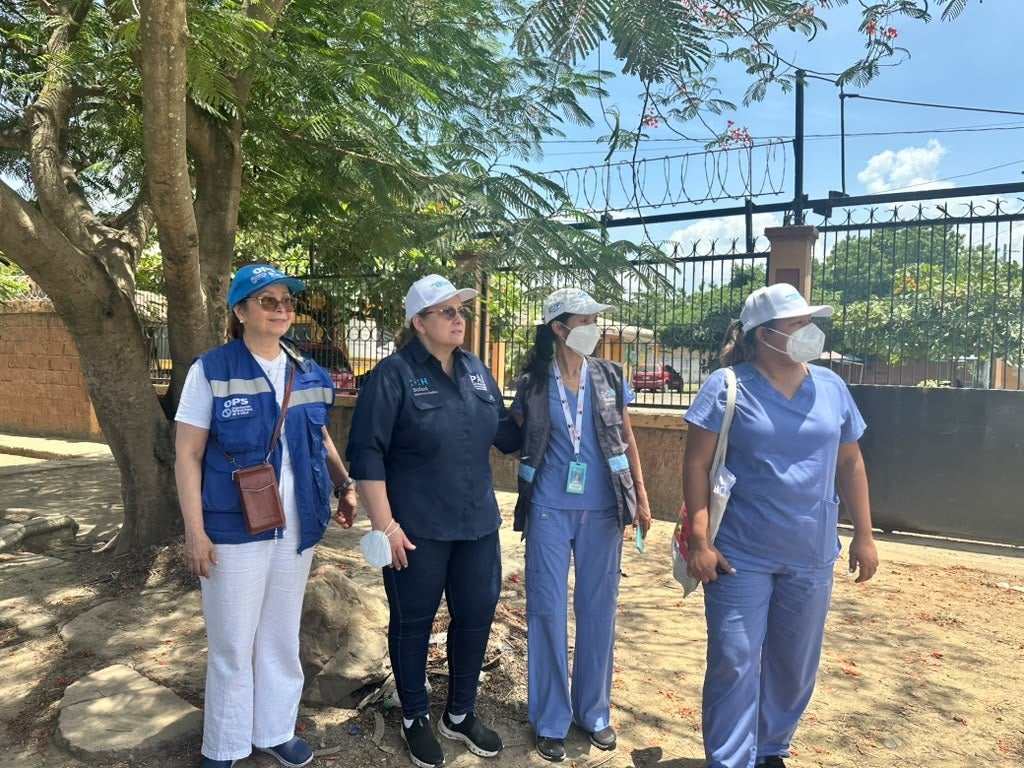
Como parte de esta respuesta, equipo técnico de la OPS acompañó a las autoridades nacionales y regionales de salud en una serie de actividades orientadas a reforzar la detección temprana de casos, la vigilancia en puntos de entrada al país y la capacidad de respuesta de los establecimientos sanitarios.
Una de las acciones prioritarias fue la supervisión de los puntos de entrada en Corinto, frontera entre Honduras y Guatemala, incluyendo la Oficina Sanitaria Internacional (OSI), donde se revisaron los mecanismos de vigilancia de personas con fiebre y otros signos compatibles con sarampión. Asimismo, se realizaron visitas al Punto de Entrada Marítimo de Puerto Cortés para fortalecer las alertas y procedimientos que permitan identificar oportunamente viajeros con síntomas sospechosos e impedir una posible propagación de la enfermedad.
La misión también incluyó una visita al Hospital de Puerto Cortés, donde personal de la Región de Salud y especialistas de la OPS evaluaron la sala de contingencia y las acciones implementadas ante el caso de sarampión atendido en este centro asistencial.
Durante la jornada se revisaron los protocolos de atención, las medidas de prevención y control de infecciones, las actividades de vigilancia epidemiológica y los mecanismos de coordinación entre los diferentes equipos de salud involucrados en la respuesta. El intercambio permitió identificar oportunidades de mejora y fortalecer la preparación del hospital para responder a futuros eventos de interés en salud pública.
“La revisión de estas experiencias es fundamental para asegurar que los establecimientos de salud estén preparados para detectar, aislar y notificar oportunamente casos sospechosos, contribuyendo así a interrumpir la transmisión y proteger a la población”, destacó Desirée Pastor, consultora de inmunizaciones y vigilancia epidemiológica de la OPS Honduras.
Paralelamente, se llevaron a cabo jornadas de vacunación casa a casa y un Monitoreo Rápido de Coberturas en el barrio Nueva Vida de Naco, Cortés, con la participación del Programa Ampliado de Inmunizaciones (PAI), la Región Metropolitana de Salud de San Pedro Sula y equipos técnicos regionales.
Estas actividades permitieron identificar personas pendientes de vacunación, verificar coberturas alcanzadas y reforzar la inmunización en comunidades donde persiste el riesgo de acumulación de personas susceptibles a la enfermedad.
Las acciones de supervisión también fueron desarrolladas junto al equipo regional del PAI y autoridades sanitarias de la Región Metropolitana de San Pedro Sula, fortaleciendo la coordinación entre los distintos niveles del sistema de salud para garantizar una respuesta integral y sostenida.
El sarampión es una de las enfermedades más contagiosas conocidas y puede causar complicaciones graves, especialmente en niños menores de cinco años, personas con desnutrición o sistemas inmunológicos debilitados. Por ello, mantener altas coberturas de vacunación, reforzar la vigilancia epidemiológica y asegurar la preparación de los servicios de salud son medidas esenciales para controlar los brotes y prevenir nuevas transmisiones.
La OPS y sus socios continuarán brindando cooperación técnica a la Secretaría de Salud para fortalecer la vigilancia, la atención clínica y las estrategias de vacunación, contribuyendo a proteger la salud de la población hondureña y a preservar los avances alcanzados en la eliminación de enfermedades prevenibles por vacunación.
Fuente de la imagen, Las Hermanas de San José de la Paz
Pie de foto, Las monjas de la congregación Hermanas de San José de la Paz logran influir en las compañías. Información del artículo
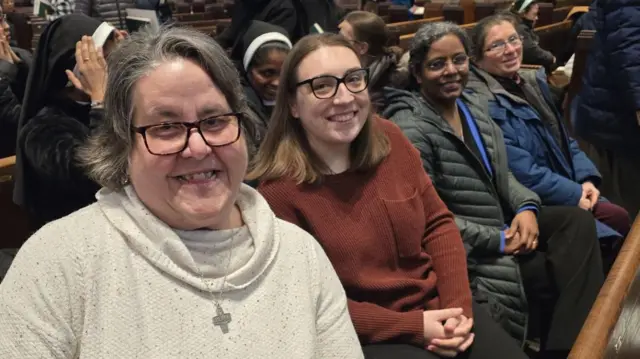
Puede que la hermana Susan Francois no sea lo que mucha gente imagina cuando piensa en una monja católica.
Ella no usa hábito, el uniforme modesto que incluye túnica y velo. Y es muy activa en TikTok. Su perfil está lleno de videos suyos afuera de un centro de detención de inmigrantes en Nueva Jersey, Estados Unidos, donde aboga por los migrantes y sus familias.
Pero la hermana Susan también llama la atención por otro tipo de activismo.
Junto con sus compañeras monjas de la congregación de las Hermanas de San José de la Paz, que cuenta con 88 religiosas en Estados Unidos y Reino Unido, son lo que se conoce como “accionistas activistas”, religiosas que invierten en compañías.
Ellas utilizan su posición como accionistas para presionar a las grandes empresas a fin de que aborden temas como el cambio climático, los derechos territoriales de los pueblos indígenas y la justicia racial.
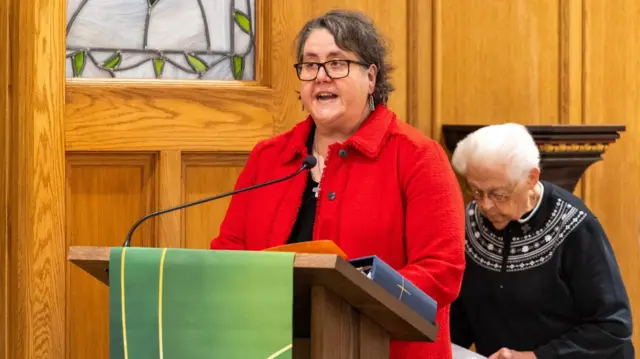
“Como tesorera de las hermanas, soy quien representa nuestros intereses… cuando les pedimos que promuevan el bien común”, señala.
Fuente de la imagen, AFP via Getty Images
Pie de foto, La encíclica del papa León XIV Magnifica humanitas se centra en el auge de la IA.
El caso de Palantir
En un caso reciente, intentaron que la junta directiva del gigante tecnológico Palantir atendiera sus inquietudes.
Las monjas creían que el software de inteligencia artificial de la compañía estaba siendo utilizado por el Servicio de Inmigración y Control de Aduanas de Estados Unidos (ICE) y otras agencias estatales “para rastrear y seleccionar migrantes con fines de detención y deportación”.
Según argumentaron, esto constituía una posible violación de los derechos humanos.
En concreto, las hermanas querían que Palantir llevara a cabo una Evaluación de Impacto en los Derechos Humanos, analizando cómo se utilizan sus productos y servicios para mitigar cualquier posible efecto negativo.
Utilizaron lo que se conoce como “resolución de accionistas”: una propuesta que solicita una acción específica y que luego se somete a votación en la junta general anual de la empresa.
Fuente de la imagen, Getty Images
Pie de foto, Las medidas de ICE han dividido a las comunidades en EE.UU.
A pesar de que solo obtuvo el 13% de los votos, la hermana Susan lo considera una victoria, dado que los fundadores de la empresa controlan el 49,9% de las acciones con derecho a voto.
“Del voto [total] no interno, el 56% estuvo de acuerdo con las hermanas”, dice. “Creo que es revelador que tantos accionistas estén de acuerdo con nosotras”.
La BBC se puso en contacto con Palantir para obtener comentarios, pero la compañía no respondió.
Sin embargo, en una declaración anterior a los accionistas, la compañía afirmó que la acción de las monjas se basaba en “malentendidos e inexactitudes sobre el trabajo de Palantir”, y que Palantir no es una empresa de datos, no vende datos personales ni proporciona minería de datos como servicio.
El mensaje del Papa
La votación tuvo lugar menos de dos semanas después de que el papa León XIV presentara en mayo su primer documento doctrinal importante, o encíclica, en la que advertía que la IA debe ser “desarmada” para evitar que “domine a la humanidad”.
El Papa argumentó que la IA debería utilizarse para “el bien común” y que la dignidad humana debería salvaguardarse.
El momento en que se produjo la votación fue una coincidencia, pero la hermana Susan se sintió ilusionada: “He leído su encíclica muchísimas veces, y simplemente reafirma todo lo que está detrás de [nuestro] esfuerzo”, apunta.
Fuente de la imagen, NurPhoto via Getty Images
Pie de foto, La participación accionaria de las monjas en Palantir les permitió cuestionar formalmente las prácticas comerciales de la empresa.
Palantir no es la única empresa a la que las monjas han propuesto resoluciones de accionistas, o amenazado con ellas, para presionar a los consejos de administración a abordar lo que ellas consideran cuestiones morales.
Las monjas cuestionaron a Citigroup, una de las instituciones bancarias más grandes del mundo, por su financiación de proyectos de combustibles fósiles en la cuenca amazónica.
A las religiosas les preocupaba cómo se estaban viendo afectadas las comunidades indígenas de la zona y exigían que Citigroup publicara un informe al respecto.
Finalmente, en abril de 2024, el banco lo hizo.
Fuente de la imagen, Las Hermanas de San José de la Paz
Pie de foto, La hermana Susan cree que plantear preguntas de manera pública y formal sobre la supuesta conducta de algunas empresas puede ser suficiente.
Al preguntársele si este tipo de resoluciones son realmente una forma eficaz de influir en los hechos, dado que en muchos casos no consiguen la mayoría de los votos, la hermana Susan responde que depende de cómo se mida el éxito.
“Nuestra primera resolución fue presentada por la congregación en 1976, y se trataba de una empresa que quizás conozcan, llamada Colgate-Palmolive. Trataba sobre el tema del sexismo y la representación de las mujeres en la publicidad”.
Las accionistas presionaron a la empresa para que abordara la discriminación de género.
La empresa se opuso a la resolución, argumentando que la propuesta era innecesaria, y la votación fracasó.
A pesar de ello, medio siglo después, la hermana Susan no está decepcionada.
¿Se ha eliminado el sexismo de la publicidad? No. ¿Es diferente ahora que en la década de 1970? Sí.
“Para las religiosas, y para la mayoría de los inversores guiados por valores y la fe, el éxito radica en que se planteen las cuestiones y en que estas terminen siendo abordadas a nivel de los miembros del consejo de administración.”
“La creación de Dios”
Entonces, en tanto inversoras, ¿las monjas ganan dinero con las mismas empresas cuyas prácticas cuestionan? Sí, dice la hermana Susan, reconociendo la ironía.
Pero añade que los beneficios que obtienen de estas inversiones se destinan a la atención médica de las monjas ancianas, y que solo poseen una pequeña cantidad de acciones.
La hermana Susan también insiste en que hay algunas empresas en las que no invertirían en absoluto, incluidas las fabricantes de armas y aquellas cuya función principal es la producción de combustibles fósiles.
Pero Susan sostiene que ellas deben interactuar con las grandes corporaciones y estar presentes donde se toman las decisiones.
“Si nos ausentamos de los centros de poder… entonces no tendremos voz ni voto en cómo se hacen las cosas”.
Fuente de la imagen, Las Hermanas de San José de la Paz
Pie de foto, La hermana Susan sostiene que no promueven ninguna causa política, sino proteger la creación de Dios.
La congregación de las Hermanas de San José de la Paz fue fundada en 1884 bajo el pontificado del papa León XIII, cuya obra inspiró al actual Papa a tomar su nombre.
La hermana Susan afirma que el León anterior escribió el primer documento sobre la doctrina social católica relativa al trabajo humano, y que ambos papas se han involucrado en los problemas sociales que importan en la vida de las personas.
Así pues, cuando algunos cuestionan si un grupo de monjas debería intentar influir en las prácticas empresariales de una manera que podría considerarse política, especialmente en un momento de creciente polarización, la hermana Susan tiene una respuesta firme.
“No estamos promoviendo partidos políticos. Estamos promoviendo el valor de la creación de Dios y el derecho de todas las personas a los derechos humanos. Y si eso es político, pues bien”.
Este artículo fue escrito originalmente en inglés y usamos una herramienta de inteligencia artificial para traducirlo. Un periodista de la BBC revisó el texto antes de su publicación. Más información sobre cómo usamos IA.
Descarga la nueva app del BBC World Service. Elige BBC News Mundo y recibe alertas de noticias, documentales y análisis, todo en un solo lugar. Importante: la nueva aplicación no está disponible en Reino Unido ni Estados Unidos.
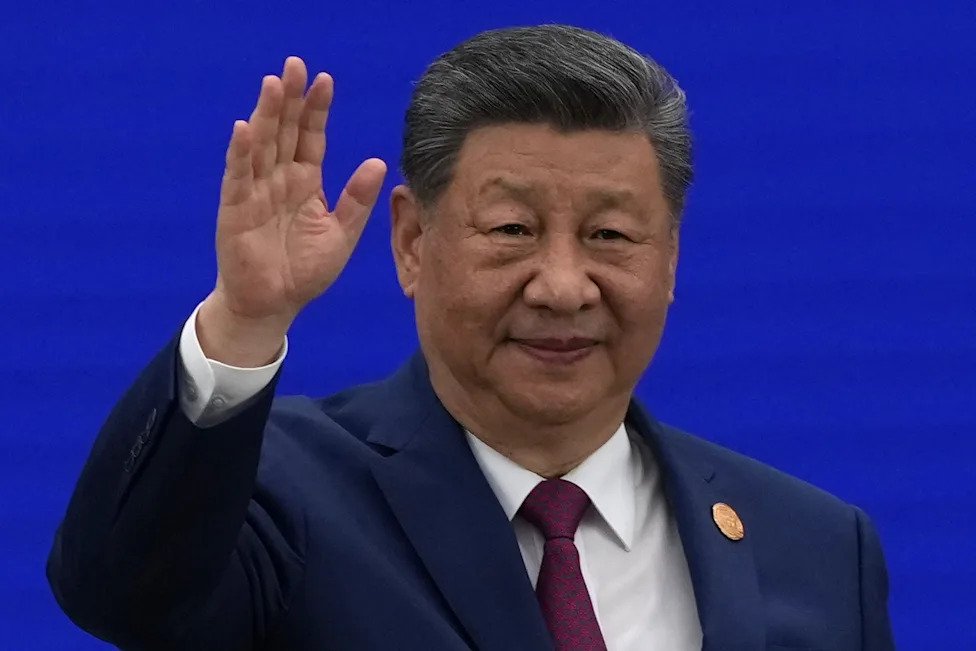
Pekín, 27 jul (EFE).- El presidente chino, Xi Jinping, le dijo este lunes a su homólogo brasileño, Luiz Inácio Lula da Silva, que China apoya a Brasil en la defensa de su soberanía y rechaza las “interferencias externas”, en un momento de tensión entre Brasilia y Washington por los aranceles impuestos por EE.UU. a productos brasileños.
Xi hizo estas declaraciones durante una conversación telefónica con Lula, informó el Diario del Pueblo, órgano oficial del Partido Comunista de China (PCCh, gobernante).
El mandatario chino afirmó que Pekín concede “gran importancia” al estatus internacional y a la influencia de Brasil, y apoyó que el país sudamericano “haga contribuciones” a la paz y la estabilidad regionales y mundiales.
Xi sostuvo que China y Brasil, como “miembros importantes del ‘sur global’, deben situarse del “lado correcto de la historia” y de la “civilización y el progreso”, además de desempeñar un papel “más constructivo” en la reforma del sistema de gobernanza global y en “la defensa de la justicia internacional”.
Por su parte, Lula afirmó que la cooperación bilateral “se ha desarrollado con rapidez” en distintos ámbitos, que el comercio entre ambos países volvió a alcanzar un récord y que Brasil espera reforzar la colaboración con China en inteligencia artificial, energía y minerales, además de recibir más inversiones de empresas chinas, según el Diario del Pueblo.
La llamada se produce después de que Estados Unidos anunciara recientemente aranceles del 25 % a determinados productos brasileños tras una investigación bajo la Sección 301 de la Ley de Comercio de 1974.
Brasil rechazó la legitimidad de esa investigación, anunció que activaría su Ley de Reciprocidad y dijo que volvería a plantear el asunto ante el mecanismo de solución de controversias de la Organización Mundial del Comercio.
El Gobierno de Lula ha defendido que “no existe justificación” para medidas unilaterales contra Brasil y ha acusado a la familia del expresidente Jair Bolsonaro (2019-2023) de colaborar con el relato que, a su juicio, condujo al nuevo “tarifazo” estadounidense.
China es el mayor socio comercial de Brasil desde 2009 y el intercambio bilateral alcanzó en 2025 un récord de 171.000 millones de dólares, con un crecimiento del 8,2 %, según datos difundidos por el Gobierno brasileño.
Brasil fue además el país que más inversiones chinas recibió ese año, con 6.100 millones de dólares, y en abril de 2026 se convirtió en el principal destino de las exportaciones chinas de automóviles, vehículos de nueva energía y turismos eléctricos puros, en un contexto de creciente presencia de empresas chinas en sectores como automoción, energía, minería e infraestructura. EFE
Juan Orlando Hernández llegó a Honduras el domingo después de cinco años fuera del país. El expresidente, que cumplía una condena de 45 años en una cárcel federal estadounidense por narcotráfico, fue liberado en diciembre pasado tras recibir un indulto del presidente de Estados Unidos, Donald Trump.
Su regreso marca un giro inesperado en la historia política de Honduras. Hernández fue extraditado a Estados Unidos en 2022, poco después de dejar la presidencia. Ahora regresa mientras Nasry Asfura, su sucesor político del Partido Nacional, gobierna el país desde enero.
Hernández llegó en vuelo privado al aeropuerto de Palmerola, en las afueras de Tegucigalpa. Lo recibieron familiares y cientos de simpatizantes que lo aclamaron.
En un discurso improvisado, citó las palabras de Trump: “El presidente más bien informado del mundo revisó mi caso en detalle y reconoció que se cometió una injusticia. Es una cacería de brujas, el uso del sistema de justicia como arma política”.
Hernández llegó en vuelo privado al aeropuerto de Palmerola. [Reuters]
Hernández ha insistido desde el juicio en que fue víctima de una persecución política orquestada por sus opositores de izquierda. Describió como “calumnias” las acusaciones en su contra.
Tomás Zambrano, presidente del Congreso de Honduras, le dio la bienvenida a Hernández en un mensaje en la red social X.
“Bienvenido a su país, rodeado de toda su familia y de sus hermanos nacionalistas que le han recibido como se lo merece (…) Regreso a su hogar del que nunca debieron arrancarle. La verdad prevaleció”.
La condena en Estados Unidos
En Nueva York, los fiscales probaron que Hernández facilitó el paso de cientos de toneladas de cocaína colombiana hacia Estados Unidos. Fue acusado de hacerlo en alianza con capos del narcotráfico, incluido Joaquín “El Chapo” Guzmán.
El tribunal determinó que Hernández se benefició personalmente de estas operaciones. Él lo negó siempre.
Su administración, entre 2014 y 2022, coincidió con el pico de violencia en Honduras. El país alcanzó tasas de homicidio que lo posicionaron como uno de los más mortíferos del mundo.
Trump concedió el indulto apenas días antes de las elecciones hondureñas de noviembre de 2025. En el mismo momento, amenazó con retener ayuda si Asfura no ganaba. Asfura resultó elegido y asumió la presidencia en enero.
Trump concedió el indulto apenas días antes de las elecciones hondureñas de noviembre de 2025. [Getty Images]
Analistas señalaron la paradoja: Trump había lanzado una campaña militar contra narcotraficantes en América Latina, pero indultaba a alguien condenado precisamente por eso.
Los desafíos pendientes
Ahora regresa a un sistema judicial débil donde, según críticos, la política influye en las decisiones judicales. [Reuters]
Sin embargo, Hernández no llega a un país donde pueda descansar. Debe presentarse ante un tribunal el 3 de agosto para enfrentar cargos por fraude y lavado de dinero. Las autoridades hondureñas lo acusan de desviar US$2 millones de fondos públicos para su primera campaña presidencial.
Además, una investigación reciente llamada “Hondurasgate” basada en audios de mensajería cifrada lo menciona como operador en una presunta operación transnacional. La BBC no ha podido verificar de forma independiente esos audios.
El regreso provocó rechazo entre organizaciones de derechos humanos. “Es un mensaje de que en Honduras no hay rendición de cuentas”, dijo Joaquín Mejía, analista legal.
Durante la presidencia de Hernández, grupos de derechos humanos documentaron miles de muertes, desapariciones forzadas y violaciones de derechos humanos. En 2017, cuando se reeligió en medio de acusaciones de fraude electoral, ordenó una represión que dejó alrededor de treinta personas muertas.
Ahora regresa a un sistema judicial débil donde, según críticos, la política influye en las decisiones judicales. Hernández ha dicho que espera que los cargos locales desaparezcan.
Hernández afirmó previamente que regresaba “sin ambiciones electorales”, enfocándose en su familia.
Sin embargo, su presencia en Honduras y el apoyo de simpatizantes levanta interrogantes sobre si buscará volver a la política, especialmente con Nasry Asfura su sucesor político ya en la presidencia.
Hernández ha insistido desde el juicio en que fue víctima de una persecución política orquestada por sus opositores de izquierda. [Reuters]
Descarga la nueva app del BBC World Service. Elige BBC News Mundo y recibe alertas de noticias, documentales y análisis, todo en un solo lugar. Importante: la nueva aplicación no está disponible en Reino Unido ni Estados Unidos.
El gobierno de Nicaragua expondrá a diplomáticos extranjeros una reforma que busca dejar fuera de las elecciones a partidos opositores, informó este viernes la copresidenta Rosario Murillo, tras las críticas de varios países y organismos internacionales a la propuesta.
La Asamblea Nacional y autoridades electorales -controladas por el gobierno- preparan las leyes solicitadas por el mandatario Daniel Ortega para que en los comicios no participen “vendepatrias” y “golpistas” al servicio de Estados Unidos, como suele referirse a sus adversarios.
El Congreso anunció este viernes que la propuesta de reformas constitucionales será entregada a la pareja presidencial “para su revisión y autorización”, y la próxima semana iniciará “un amplio proceso de consulta”.
La votación del texto está prevista para inicios de agosto.
“Se van a realizar consultas con empresarios, con inversionistas, con embajadores; vamos a informar, pero además con todos los estamentos de nuestra patria bendita”, dijo Murillo a un medio estatal.
Informaremos “al cuerpo democrático como corresponde, escuchamos, les escuchamos; son encuentros que hemos denominado de amistad, de hermandad entre los pueblos”, añadió.
El anuncio de Ortega el domingo pasado, durante el simbólico acto por el 47 aniversario de la revolución sandinista, desató una oleada de condenas de organizaciones internacionales y gobiernos encabezados por Estados Unidos, principal socio comercial de Nicaragua que ya aplica restricciones de visa a numerosos funcionarios nicaragüenses.
El presidente Donald Trump y la comunidad internacional “no se quedarán de brazos cruzados mientras la dictadura (…) profundiza la represión y fabrica inestabilidad que amenaza la seguridad nacional” de Estados Unidos, advirtió el secretario de Estado, Marco Rubio.
Ortega, de 80 años, y su esposa Rosario Murillo, de 75, gobiernan con poder absoluto y un fuerte control sobre la sociedad, especialmente tras las protestas de 2018 cuya represión dejó más de 300 muertos, según la ONU.
Ellos consideran esas movilizaciones como un intento de golpe de Estado patrocinado por Estados Unidos.
El excomandante guerrillero gobernó en la década de 1980 y volvió al poder en 2007, tras lo cual fue reelegido tres veces en cuestionados comicios. En los últimos, hace cinco años, encarceló a opositores y ganó ampliamente sin rivales.