Tag: NBA

  • Yanet García explota contra Gema y Flor Vigna tras salvarse de la eliminación en La casa de los famosos México 2026

    Yanet García explota contra Gema y Flor Vigna tras salvarse de la eliminación en La casa de los famosos México 2026

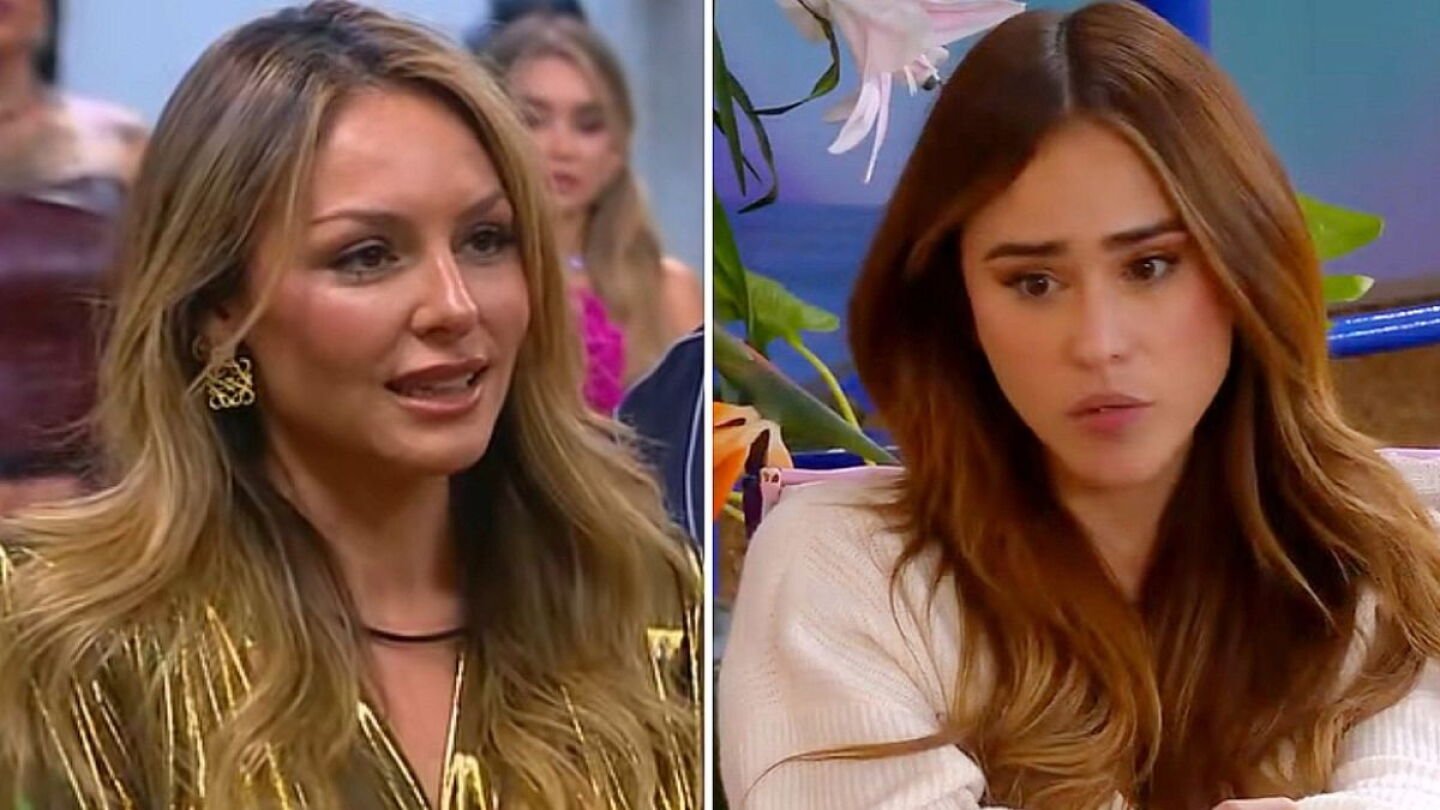
    La primera gala de eliminación de La casa de los famosos México 2026 no solo dejó a Mariana fuera de la competencia, también marcó un antes y un después en la convivencia. Yanet García, quien estuvo en riesgo de abandonar el reality, volvió a la casa gracias al respaldo del público, pero lo hizo con evidente molestia hacia algunos de sus compañeros.

    Mira: Aldo Rendón se lanza contra Yanet García tras cambiarse de cuarto: “Que se le quite lo mam…na”

    Yanet García

    ¿Yanet García quiere cambiar los cuartos en LCDLFMX?

    /

    Redes sociales

    ¿Por qué todos los habitantes se fueron contra Yanet García en La casa de los famosos México 2026?

    Durante la primera gala de eliminación de La casa de los famosos México 2026, Yanet García fue la habitante que recibió más posicionamientos por parte de sus compañeros.

    Cynthia Klitbo, Ernesto Laguardia, Moisés Peñaloza, Gema Garoa y Flor Vigna explicaron frente a ella las razones por las que preferían verla fuera del reality, generando uno de los momentos más tensos de la noche.

    Las críticas estuvieron relacionadas con su poca participación en las actividades del hogar, el tiempo que dedica a arreglarse y la escasa convivencia que, según ellos, ha mantenido con el resto de los habitantes.

    Uno de los comentarios más contundentes fue el de Gema Garoa, quien aseguró que nunca logró conectar con la modelo.

    “Quiero que te vayas de la casa porque siento que no hay canal de comunicación entre nosotras y, sin duda, eres a la que menos voy a extrañar, porque eres con la que menos he convivido”.

    Gema Garoa

    Nominados primera gala de La casa de los famosos méxico.

    Por su parte, Flor Vigna recordó el desencuentro que ambas tuvieron durante la primera semana de competencia: “Quiero que te vayas de la casa porque tuvimos un malentendido. Pensé que íbamos a hacer cosas juntas, pero ya veo que hay algo más acá”.

    Además, cuestionó el tiempo que Yanet pasa frente al espejo: “Te veo mucho tiempo en el tocador y siento que eres muy bella al natural y te mereces estar en otros lados de la casa y no tanto con tu discurso armado”.

    Lee: ¿Yanet García es la nueva Sian Chiong de LCDLFMX? Se muda de cuarto y el colchón vuelve a ser protagonista, VIDEO

    Flor y Gema vs Yanet

    Flor y Gema vs Yanet

    ¿Qué le dijo Yanet García a Gema Garoa tras regresar salvada por el público de La casa de los famosos México?

    Aunque Yanet García logró permanecer en La casa de los famosos México 2026, el apoyo del público no fue suficiente para borrar el mal sabor que le dejaron los posicionamientos.

    Después de que Mariana se convirtiera en la primera eliminada de la temporada de La casa de los famosos México, los habitantes regresaron a la casa para retomar la convivencia, pero el ambiente estaba lejos de ser tranquilo.

    En la cocina, Gema Garoa decidió acercarse a Yanet con la intención de hacerla sentir mejor tras la intensa gala. Sin embargo, la respuesta de la modelo sorprendió a todos por su frialdad.

    “No estoy hablando contigo”.

    Yanet García

    La reacción dejó claro que Yanet no tenía intención de reconciliarse de inmediato y que las palabras escuchadas durante el posicionamiento todavía pesaban.

    Mira: Aldo Rendón hace fuerte crítica al físico de Yanet García en LCDLFMX 2026: “Es postizo”, asegura

    Gema Garoa y Yanet García

    Gema Garoa y Yanet García

    ¿Cómo reaccionaron Gema Garoa y Flor Vigna al rechazo de Yanet García?

    Tras el incómodo momento, Gema Garoa compartió con Arantza Ruiz su versión de lo ocurrido y aseguró que nunca buscó iniciar una nueva discusión.

    La actriz explicó que únicamente quería acercarse para hacer sentir mejor a Yanet después de verla afectada por las críticas recibidas durante la gala.

    “Yo hubiera llorado. Lo único que quería era hacerla sentir mejor porque vi que estaba enojadísima por lo que le habían dicho, entonces le dije: ‘Wey, yo no dije eso de ti, yo lo único que dije es que no me diriges la palabra’”

    Gema

    Aun así, también dejó claro que entiende que su compañera estuviera sensible, aunque considera que eso no justifica que le hablen de esa manera. Mientras tanto, Flor Vigna también buscó aclarar el conflicto. La cantante explicó que, desde su perspectiva, durante el posicionamiento no dijo nada ofensivo ni tuvo intención de atacar personalmente a Yanet.

    Sin embargo, la conductora prefirió no responder. En lugar de entrar en una discusión, decidió guardar silencio y no continuar la conversación.

    Gema Garoa y Yanet García

  • Top 5 all-time Toronto Raptors scoring leaders

    Top 5 all-time Toronto Raptors scoring leaders

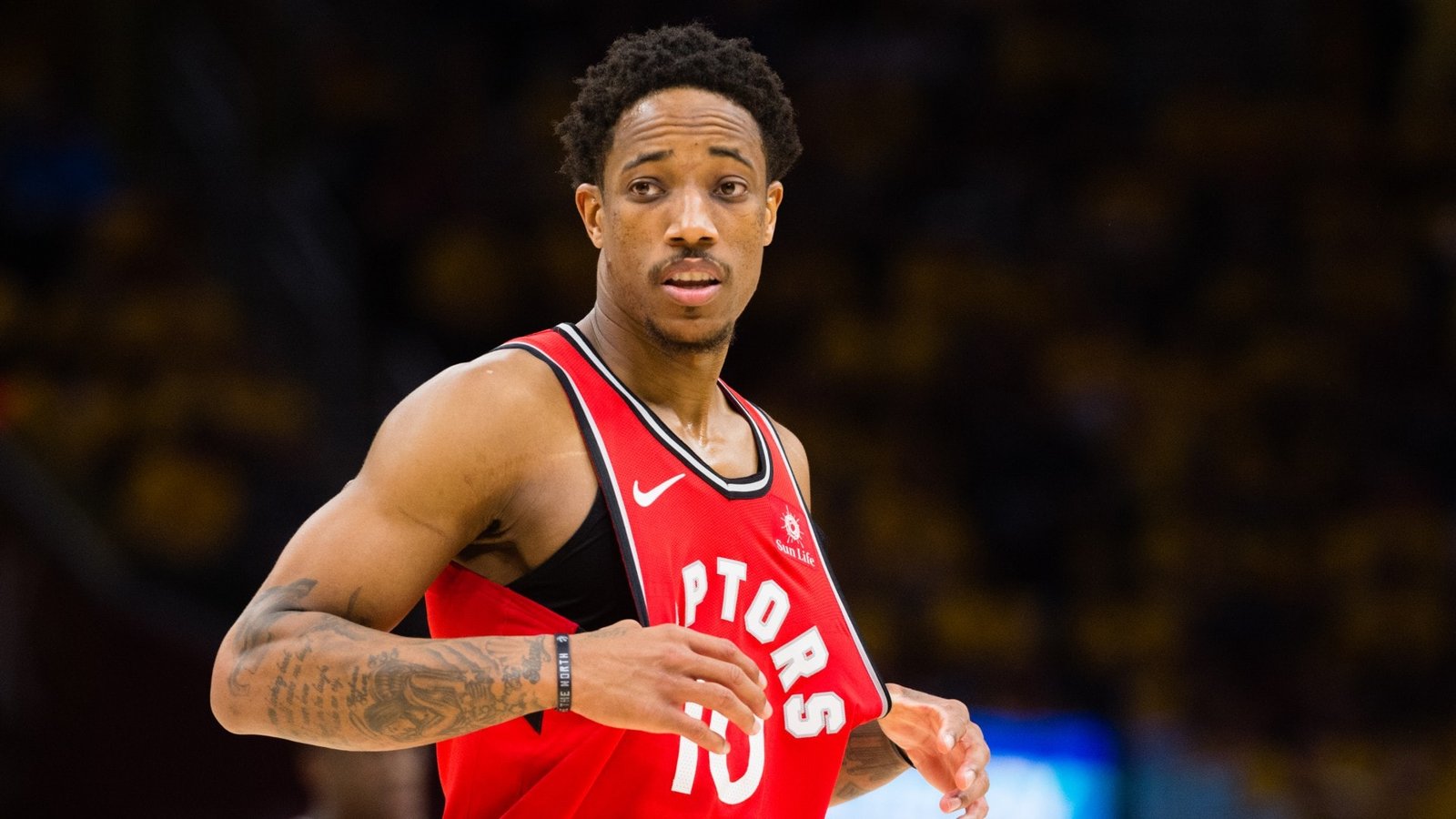
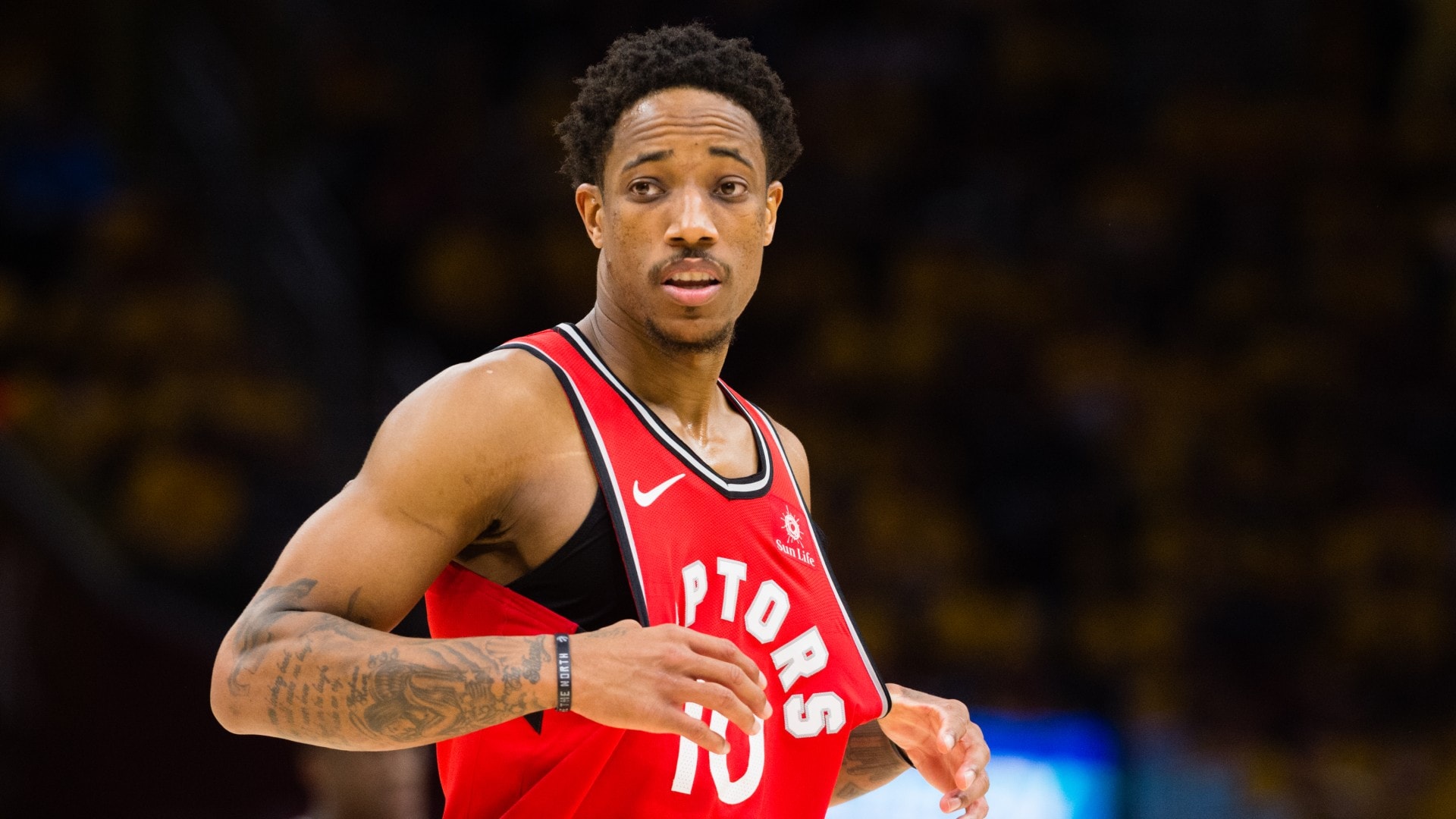
    DeMar DeRozan is the Raptors’ all-time leader in points.

    The Toronto Raptors have won seven division titles and one NBA championship since their first season in 1995. The franchise’s rise has been shaped by several iconic players, with DeMar DeRozan becoming Toronto’s all-time leading scorer.


    1. DeMar DeRozan – 13,296

    DeMar DeRozan spent the first nine seasons of his career in Toronto, growing into one of the greatest players in franchise history. The No. 9 overall pick in the 2009 NBA Draft became the Raptors’ all-time leading scorer while earning four All-Star selections and helping lead the franchise to five consecutive playoff appearances. During his time in Toronto, DeRozan averaged 19.7 points, 4.1 rebounds and 3.1 assists per game.


    2. Kyle Lowry – 10,540

    The most successful stretch in Raptors history was fueled by Kyle Lowry’s leadership and playmaking. During his nine seasons in Toronto, the six-time All-Star guided the franchise to seven consecutive playoff appearances, two Eastern Conference Finals appearances and its first NBA championship in 2019. Lowry ranks second in points scored while holding the Raptors’ all-time record for assists, steals and 3-pointers made.


    3. Chris Bosh – 10,275

    Chris Bosh emerged as the face of the Raptors during his seven-season stretch with the franchise. The No. 4 overall pick in the 2003 NBA Draft earned five straight All-Star selections, helped Toronto to its first Atlantic Division title in 2006-07 and left as the franchise’s all-time leader in points, rebounds, blocks and minutes before joining Miami in 2010, where he won two championships.


    4. Vince Carter – 9,420

    Few players have had a greater impact on the Raptors’ early history than Vince Carter. The 1999 Rookie of the Year became an instant sensation in Toronto, earning five All-Star selections and helping lead the franchise to its first playoff appearance. His jaw-dropping athleticism and iconic dunks earned him the nickname “Air Canada.” After a legendary 22-season career, Carter retired in 2020 and was inducted into the Naismith Basketball Hall of Fame in 2024. He became the first player in franchise history to have his No. 15 jersey retired by Toronto, cementing his lasting impact on the organization.


    5. Pascal Siakam – 8,875

    Selected 27th overall in the 2016 draft, Pascal Siakam developed into one of Toronto’s greatest success stories. His breakout campaign came during the 2018-19 season, when he captured the NBA’s Most Improved Player award and played a pivotal role in helping Toronto win its first NBA championship.

  • Top 5 all-time Cleveland Cavaliers scoring leaders

    Top 5 all-time Cleveland Cavaliers scoring leaders

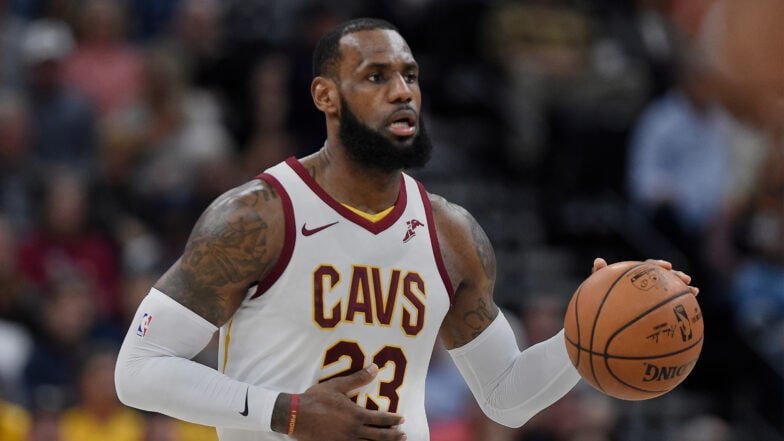
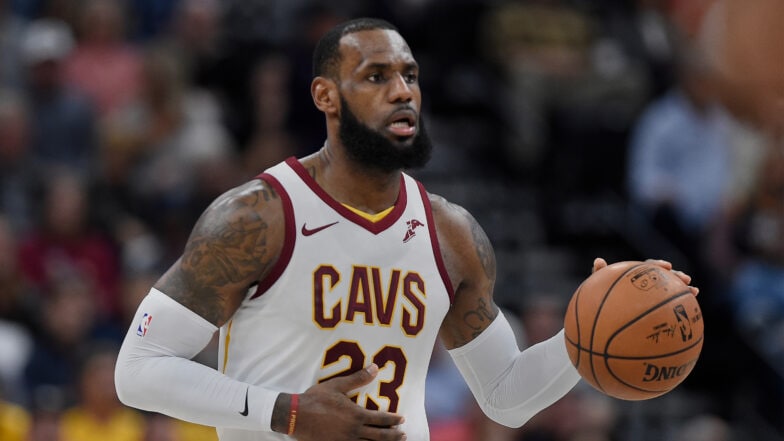
    LeBron James has scored over 23,000 points as a member of the Cleveland Cavaliers.

    The Cleveland Cavaliers stand as one of the NBA’s oldest franchises with decades of history. Founded in 1970, the Cavaliers have eight division titles, five conference titles and one championship to their name. 

    Their lone NBA championship was delivered to Cleveland thanks to LeBron James, a homegrown franchise legend, who is also the Cavaliers’ all-time leading scorer.


    1. LeBron James – 23,119

    Born in Akron, Ohio, James was selected with the No. 1 overall pick in the 2003 NBA Draft by the hometown Cavaliers. James spent the first seven seasons of his career in Cleveland, before returning for a second stint in 2014 for four more seasons. 

    Throughout his 11-year Cavaliers career, James averaged 27.2 ppg. During the Cavaliers’ 2016 championship run, James averaged 26.4 ppg during the regular season and increased his average to 32.8 ppg in the playoffs. He made 10 All-Star appearances and won two MVP’s during his time with the Cavaliers.


    2. Zydrunas Ilgauskas – 10,616

    Born in Lithuania, Ilgauskas was the 20th pick in the 1996 NBA Draft and played overseas before making the move to the NBA. 

    He played 12 seasons in Cleveland, where Ilgauskas averaged 13.8 ppg. He made two All-Star appearances during the 2003 and 2005 NBA seasons, where Ilgauskas averaged 17.2 ppg and 16.9 ppg, respectively.


    3. Brad Daugherty –  10,389

    Before James, the Cavaliers had another first overall pick in the 1986 NBA Draft. 

    They selected Daugherty, who was a bruising 7-foot center. He played for the Cavaliers during all eight years of his NBA career, where he made five All-Star teams. Throughout his Cavaliers tenure, Daugherty averaged 19.0 ppg. 


    4. Austin Carr – 10,265

    A No. 1 overall selection in the 1971 NBA Draft, Carr was a lethal shooting guard who left his mark in Cleveland. Earning the nickname “Mr. Cavalier,” Carr spent nine seasons in Cleveland, where he averaged 16.2 ppg. 

    Carr made the All-Star team during the 1973-74 season, where he averaged 21.9 ppg. Now, he is on the local broadcast as a commentator for the Cavaliers.


    5. Mark Price – 9,543

    Price, who was a sharp-shooting guard from Georgia Tech, was drafted in the second round by the Cavaliers in the 1986 NBA Draft. Listed at 6 feet, Price had a 12-year NBA career where his shooting abilities shined. 

    He averaged 16.4 ppg during nine years with the Cavaliers and made four All-Star teams. Additionally, Price would shoot better than 94% from the free-throw line twice while shooting 40% from 3-point range as a Cavalier, making himself one of the league’s premier guards during his era. 

  • Top 5 all-time Chicago Bulls rebounding leaders

    Top 5 all-time Chicago Bulls rebounding leaders

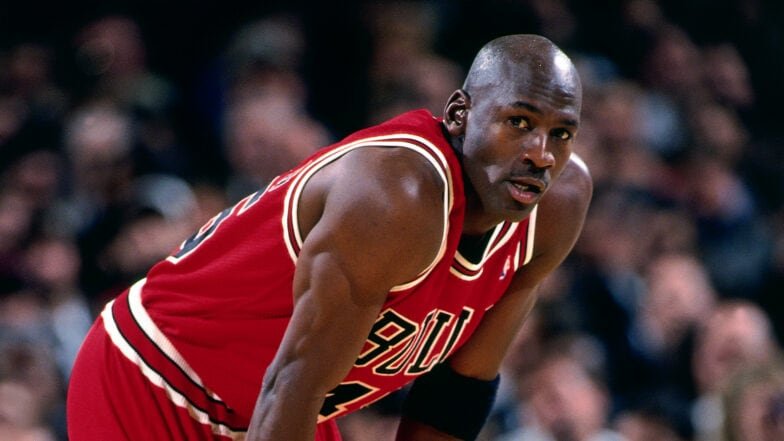
    Michael Jordan is the Bulls’ all-time leading rebounder with 5,836 rebounds.

    The Chicago Bulls took home six NBA titles via two separate three-peats in the 1990s, largely due to the legendary Michael Jordan. Jordan leads the franchise all-time in just about every statistic, and rebounding is no different.


    1. Michael Jordan – 5,836 rebounds

    Where do you begin with Michael Jordan? The five-time MVP, six-time Finals MVP, 11-time All-NBA selection and nine-time All-Defense selection did it all in his 15-year career. Jordan averaged 31.5 points and 5.3 assists per game across his 13 seasons with the Bulls, and he also worked hard on the glass. He averaged 6.3 rebounds per game across his Chicago career, and even tallied a career-high 8.0 per game in 1988-89, helping land him atop the list.


    2. Tom Boerwinkle – 5,745 rebounds

    The 7-footer Tom Boerwinkle was a beast on the boards in Chicago, particularly in his early years in the NBA, when he averaged at least 11.1 rebounds per game in each of his first four seasons. That stretch included a stellar 1970-71 season, where he posted a career-high 13.8 rebounds in addition to 10.8 points and 4.8 assists per game. His numbers took a dip in the latter half of his career following the 1972-73 season in which he appeared in just eight games due to injury. Still, in 1975-76, the big minutes returned and so did the boards, as he averaged 10.7 per game.


    3. Scottie Pippen  – 5,726 rebounds

    Right there with Michael Jordan in Chicago’s golden era was Scottie Pippen. The Hall-Of-Famer was elite in numerous facets of the game, proven by his seven All-Star nods, seven All-NBA selections and 10 All-Defense selections. Pippen averaged 17.7 points, 6.7 rebounds, 5.3 assists and two steals across his 856 career games with the Bulls. Aside from his rookie year and final season in the NBA, Pippen never averaged fewer than 5.2 rebounds with Chicago and peaked at 8.7 per game in 1993-94.


    4. Joakim Noah – 5,387 rebounds

    He was never the flashiest, but Joakim Noah certainly got things done with the Bulls. At the pinnacle of Noah’s career, the two-time All-Star and two-time All-NBA selection was perhaps the best defender in the NBA, backed up by his 2013-14 Defensive Player of the Year award. The big man averaged 10-plus rebounds per game on four separate occasions in his Chicago career and more than 8.8 per game three more times. In 572 games with the Bulls, he averaged 9.4 boards per game, cementing himself on this list.


    5. Jerry Sloan – 5,385 rebounds

    The third Hall-Of-Famer on the list, Jerry Sloan held his own on the glass for the Bulls for a decade, despite being a 6-foot-5 shooting guard. The two-time All-Star and six-time All-Defense selection averaged 15-plus points per game five different times in his career and was a double-digit scorer in every season with Chicago. But as seen by the All-Defensive recognition he consistently garnered, his hustle was especially a large part of his game, and that included rebounding. He averaged a career-high 9.1 boards per game in his first season with the Bulls and never dipped below 6.9 per game until his final NBA season.

  • Despierta América de luto: interrumpen transmisión para confirmar, devastados, la muerte de uno de sus integrantes

    Despierta América de luto: interrumpen transmisión para confirmar, devastados, la muerte de uno de sus integrantes

    La familia de Despierta América atraviesa uno de sus momentos más dolorosos. La noticia de la muerte de un querido integrante del equipo sacudió a colegas, conductores y seguidores del programa, quienes inundaron las redes sociales con mensajes de despedida y reconocimiento a su trayectoria. Aunque en un inicio el matutino no reveló detalles sobre lo ocurrido, con el paso de las horas comenzaron a surgir más datos sobre los últimos años de vida del comunicador y la dura batalla de salud que enfrentó.

    Mira: Colaboradora de Despierta América revela duro diagnóstico de alzheimer a su padre: “Da mucho dolor”

    Muere

    Muere

    /

    Redes sociales

    ¿Quién fue el querido integrante de Despierta América que murió y por qué su muerte conmocionó a Univision?

    La persona que perdió la vida fue Ángel de los Santos, reconocido reportero y periodista de espectáculos que durante más de dos décadas formó parte de importantes producciones de la televisión hispana, entre ellas Despierta América, Escándalo TV, La Tijera y La Tómbola.

    La noticia tomó por sorpresa al medio del espectáculo, ya que el comunicador era ampliamente querido por sus compañeros de profesión, quienes destacaron no solo su talento frente a las cámaras, sino también su calidad humana y el apoyo que siempre brindó a quienes lo rodeaban.

    Fue el propio programa de Univision el que confirmó públicamente la lamentable noticia mediante un emotivo mensaje publicado en sus redes sociales, donde expresó el profundo cariño que el equipo sentía por el periodista.

    “Recibimos con mucho dolor la noticia de tu partida, querido Ángel de los Santos. Siempre vivirás en nuestros corazones. Descansa en paz”.

    Despierta América

    El mensaje rápidamente se llenó de comentarios de seguidores y colegas que lamentaron la pérdida de uno de los rostros más conocidos del periodismo de espectáculos en la televisión hispana.

    Mira: Conductor se casa con su novio tras 30 años de mantener en secreto su homosexualidad: VIDEO

    ¿Qué se sabe sobre la muerte de Ángel de los Santos y cuál era su estado de salud?

    Aunque Despierta América no reveló inicialmente las causas de la muerte, el periodista Javier Ceriani compartió información sobre el complicado estado de salud que Ángel de los Santos enfrentó durante los últimos años.

    Según explicó, el comunicador llevaba aproximadamente una década sometiéndose a tratamientos de diálisis debido a una severa enfermedad renal que fue debilitando poco a poco su organismo. Ceriani relató que el periodista había perdido mucho peso, presentaba un evidente deterioro físico e incluso sufría caída de cabello como consecuencia de su delicado estado de salud.

    Asimismo, comentó que los primeros reportes apuntaban a que habría fallecido mientras dormía, presuntamente a causa de un infarto.

    “Se fue dormido, luego de ocho horas su hermano llega a su casa y llama a los paramédicos (…) cuando los paramédicos llegaron, le dijeron que no pudieron reanimarlo porque ya llevaba ocho horas muerto. Tenía una enfermedad en los riñones que no logró superar nunca”.

    Javier Ceriani

    El conductor también recordó que la última vez que convivió con él lo encontró sumamente débil debido a las constantes sesiones de diálisis que debía realizar prácticamente todos los días.

    Hasta el momento, la familia del periodista no ha emitido un comunicado oficial confirmando las causas del fallecimiento.

    Lee: En Despierta América despiden en vivo a querido conductor; así fue el emotivo momento “Te vamos a extrañar”

    Javier Ceriani de luto

    ¿Quién fue Ángel de los Santos y cuál fue su legado en el periodismo de espectáculos?

    Ángel de los Santos construyó una sólida carrera dentro del periodismo de entretenimiento en Estados Unidos, convirtiéndose en un rostro familiar para miles de televidentes de habla hispana.

    Participó en importantes programas especializados en espectáculos como Despierta América, Escándalo TV, La Tijera y La Tómbola, donde realizó coberturas exclusivas y entrevistas con algunas de las figuras más importantes del medio artístico.

    En los últimos años también impulsó el canal de YouTube El precio de la fama, dedicado a noticias de farándula y que logró reunir más de 150 mil suscriptores interesados en la información del espectáculo.

    Uno de sus logros más recientes ocurrió en mayo de este año, cuando fue reconocido con el galardón internacional La Moneda, convirtiéndose en el primer periodista en recibir esa distinción.

    Despierta América de luto

  • ¿Kunno en La mansión VIP? Aseguran que es el primer confirmado para la segunda temporada: “Súper firmado”

    Tras darse a conocer que Kunno y Laura Zapata podrían encontrarse de frente en los juzgados, el periodista Gabo Cuevas reveló que el influencer presuntamente es uno de los participantes confirmados para la segunda temporada de La mansión VIP. ¿Ya tiene su contrato?

    Te recomendamos: Exintegrante de La mansión VIP se sincera y revela que terminó su relación, ¿infidelidad?: “Me fui decepcionada”

    kunno-lcdlf.jpg

    Kunno llegaría a La mansión VIP tras causar controversia en La casa de los famosos Telemundo.

    /

    Redes sociales

    ¿Cuando empieza y dónde ver La mansión VIP 2026?

    Tras el éxito de la primera temporada de La mansión VIP, donde resultó ganadora Sol León, se dio a conocer que el creador de contenido Roberto González Manso, mejor conocido como HotSpanish, ya alista la segunda entrega con nuevos influencers.

    “Nos miramos en octubre o noviembre. La segunda temporada este mismo año”, dijo al concluir la primera edición. Pese a que ha protagonizado algunos intercambios de declaraciones con Rosa María Noguerón, productora de LCDLFMX, todo indica que no competirá con el reality de Televisa.

    Sin embargo, al estrenarse durante los últimos meses del año, es probable que su transmisión sea simultánea a La granja VIP, reality de TV Azteca; sin embargo, HotSpanish ha asegura que su formato va dirigido al público de Internet al transmitirse por YouTube.

    Lee: ¿Kunno rechaza a fan? Aseguran que no quiso enviar saludos; él responde: “Me insultó”

    La mansión VIP

    La mansión VIP se prepara para la segunda temporada.

    /

    Archivo TVNotas y redes sociales

    ¿Kunno es el primer confirmado para la segunda temporada de La mansión VIP?

    Gabo Cuevas, quien se caracteriza por dar algunas exclusivas, compartió en el programa de una periodista que Kunno presuntamente ya está confirmado para la nueva temporada de La mansión VIP. De acuerdo con el periodista, aunque han sonado varios nombres, el influencer ya está firmadísimo.

    “Ya está súper firmado Kunno. Kunno va a estar en la nueva temporada de La mansión VIP. De hecho, Roberto vino hace tres días, se fue a Puerto Vallarta y regresó el día de ayer. Ya está firmando algunos creadores de contenido”.

    Gabo Cuevas

    Asimismo, Cuevas detalló que dentro de los posibles participantes hay 20 personalidades diferentes que aún están siendo elegidas; sin embargo, Kunno es uno de los que ya está confirmado para la segunda entrega.

    Lee: La casa de los famosos México 4: ¿Moisés Peñaloza es gay? El polémico VIDEO con Kunno que desató rumores

    ¿Qué ha dicho Kunno sobre su supuesta participación en La mansión VIP?

    Hasta ahora, Kunno no se ha pronunciado directamente sobre su supuesta participación en La mansión VIP, pero no sería la primera vez que forma parte de un reality 24/7, ya que fue parte de la reciente edición de La casa de los famosos de Telemundo.

    Pese a ser uno de los influencers con mayor número de seguidores, su participación en el reality causó controversia debido a un inesperado comentario que hizo de Laura Zapata, quien al salir del programa inició un proceso legal contra el influencer, el cual sigue en marcha.

    No te pierdas: Laura Zapata podría volver a encontrarse con uno de sus secuestradores a más de 20 años del suceso: ¿Por qué?

    Kunno

    ¿Kunno llega a La mansión VIP?

    /

    Redes sociales

  • ‘It doesn’t get any better than this.’ Tracy McGrady revives ABCD Camp

    ‘It doesn’t get any better than this.’ Tracy McGrady revives ABCD Camp

    Tracy McGrady is mentoring the next generation at the legendary adidas ABCD camp.

    PHOENIX – The ABCD Camp was the premier summer event for 22 years in the ‘90s and early 2000s. Basketball legend Sonny Vaccaro founded the camp in 1984, and the stories and matchups to come out each year changed the trajectory for some players. The camp ended in 2006, but Tracy McGrady and Vaccaro revived it 20 years later, and 50 of the top players in the country came out to compete over the weekend. 

    Kobe Bryant was the camp MVP in 1995, and in 2001, it was16-year-old LeBron James who solidified himself as the best prospect in the nation. James stole the ball from Lenny Cooke and hit the game-winner, a one-legged 35-foot jumper, in the championship game. James’s nickname “The Chosen One” resulted from the ABCD Camp. 

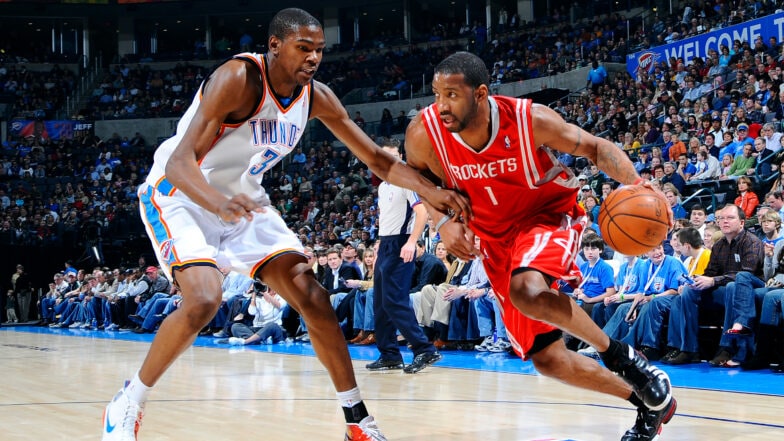
    Maybe the best story to come from the ABCD Camp was in 1996 when an unknown prospect, McGrady, received the last invite to the camp from Vaccaro and ended up completely dominating all competition. The 6-foot-8 wing received MVP honors and skyrocketed into the No. 1-ranked player in the country. 

    “I still remember my time as a camper and what it did for my career,” McGrady told NBA.com. “It was the best of the best, and that brought out everything in me. I’m just happy to be back in the gym and give these kids the same opportunity I had. This is a legendary camp, and I’m glad to be a part of it, and it doesn’t get better than this.” 

    McGrady was the No. 9 pick in the 1997 NBA Draft and went on to play 13 years in the NBA. 

    This year marks the first time since 2006 that the camp has run. Some of the top players in high school competed over three days in front of NBA scouts and executives from all 30 teams. There were also some NBA legacy kids in attendance like Pierre Rondo (Rajon Rondo) and RJ Evans (Reggie Evans). Rajon was like any typical dad, taking pictures and videos on his phone of Pierre during drills and scrimmages. RJ Evans is one of the top players in the 2029 high school class and was a top performer of the camp, coming off a strong AAU season on the adidas 3SSB circuit.

    “I’ve heard the stories of this camp growing up, and it’s just cool to come out here and be included in the first one back in 20 years,” Evans said. “I’m one of the younger guys here, so I just want to go out and cook and show that I’m one of the best players in the country.” 

    The high school players were being coached by current NBA assistant coaches, and a few NBA players were on hand for mentorship and different panels off the court. Darryn Peterson, the No. 2 pick in the draft, was there for the first two days and made a point to watch the No. 3 player in the incoming senior class, Demarcus Henry, during scrimmages Friday night. 

    “He’s cold,” Peterson said of Henry, who had 15 points and six rebounds. “The game slows down for him; he’s patient, he’s a good player.” 

    Mikel Brown Jr., the No. 6 overall pick to the Brooklyn Nets, was on the bench coaching his little brother Zach, who’s an incoming freshman. Brown took time to really sit with each player when they left the game and recognized what it means to bring this camp back. 

    “It’s just a privilege to be here and help the next group of players coming up,” Brown said. “I was just a camper in this same gym two years ago for Dame’s [Lillard] camp, so I know what any sort of advice or anything I can give will help these guys. It’s crazy just being here coaching my little bro too. I’m glad they brought this back.” 

    Houston Rockets forward Jabari Smith Jr. and 76ers guard VJ Edgecombe were also coaching on the sidelines and in drills. It was an opportunity for them to get in and get reps with the younger players but also work out themselves. 

    “Just having some of the young NBA talent in the building is so crucial for these young kids,” McGrady said. “They’re really dialed in on how they see the game and approach different sets and read things. It’s something I didn’t really have coming up, and it’s just cool to see how everything has come together on every level.” 

    Even though it’s the end of the summer, there is something about the ABCD Camp that elevates the game for players, and the scrimmages were highly competitive. Vaccaro and his wife Pam were in the stands watching all weekend long and had some long conversations with some of the top players in the camp. 

    Lewis Uvwo, a 6-foot-10 center, won camp MVP and went from being ranked in the 90s in his class to now the No. 6 player in the country. He had 16 points, eight rebounds, three blocks, three assists and two steals in the championship game and capped off his summer on a high note. 

    “Just being here and competing against these guys and learning from the NBA players has been amazing,” Uvwo said. “Sonny Vaccaro is a legend and just meeting him and being able to talk to him was something I’ll never forget. The amount of basketball he’s seen and what he’s done for the game is crazy.” 

    The ABCD Camp has been dormant for 20 years, and the spirit was revived for the first time with a lot of tough competition and excitement. Even Lenny Cooke was quietly in the stands watching some of the best basketball players coming up. A legendary camp with legends in the stands watching possibly the next great player to hit the NBA in a few short years.

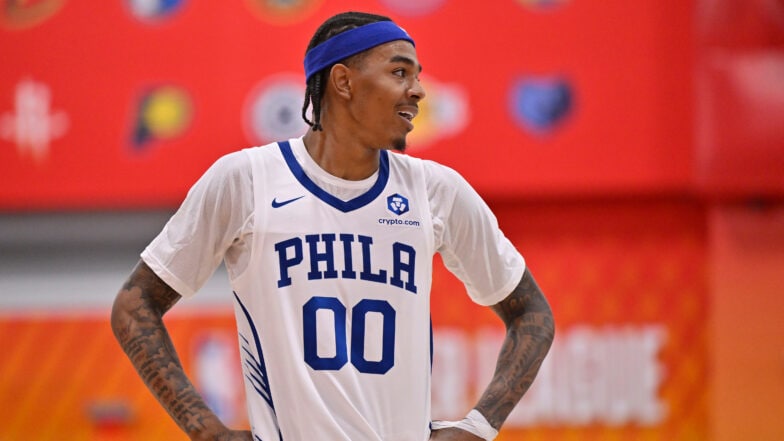
  • The Athletic: Labaron Philon is trying to prove he belongs on a loaded Sixers roster

    Labaron Philon, the Sixers’ first-round pick, had himself quite the Summer League debut with 18 points and seven assists.

    Editor’s Note: Read more NBA coverage from The Athletic here. The views on this page do not necessarily reflect the views of the NBA or its teams. 

    ***

    Labaron Philon is entering a rookie season that could be intimidating for some in the same situation.

    By the time he began his summer-league stint in Las Vegas, his Philadelphia 76ers traded for Jaylen Brown. After a few games, the LeBron James-to-Philly rumors were running rampant. Once July wound down, he was teammates with James. And as September enters the chat, Philon is teammates with Tyrese Maxey and VJ Edgecombe.

    To say the first-year point guard from Alabama is entering a stacked backcourt might be an understatement when December rolls around. Shooting. Ballhandling. Bucket-getting. Playmaking. Firepower off the bench. In almost every offensive situation, the 76ers can cover it with their backcourt.

    But Philon, one of college basketball’s best players last season, will have every chance to contribute to the collective. As Philadelphia’s first-round pick this June, he begins his career on a team with great expectations. And there is a good chance he gets rotation minutes.

    “I’m lucky and fortunate that I’m coming to a team that’s a contender,” Philon told The Athletic. “I’m grateful for that. I feel like I’m going to have a chance to compete on a team full of veterans. That doesn’t happen to everyone, so I feel lucky with that. My mindset is to continue to work and continue to get better. I want to embrace this, and coming into the league, I want to embrace what’s in front of me.”

    Philon joins a roster with a chance to compete for the ultimate prize: an NBA championship. How can he add to that? How will he handle it physically and mentally? He will have opportunities with the second unit to positively impact one of the league’s most talented teams. When you watch the swag and confidence Philon plays with, it’s evident he’s ready for the opportunity. He plays fearlessly and believes he belongs.

    This is someone who spent the better part of two seasons generating offense almost at will against SEC athletes. And in his sophomore season, he became one of the best scorers in the conference and in the country. His ability to handle the basketball and reach spots on the floor made him a projected first-round pick. In a class full of dynamic point guards, the Sixers went into draft night thinking one would fall to them at No. 22. That one happened to be Philon.

    “He’s talented, and, in my mind, he’s going to begin camp in the rotation,” coach Nick Nurse said. “He’s dynamic with the basketball, and he plays with a short memory. Those are things that you can’t teach.”

    Philon’s summer-league run opened eyes. He had inefficient moments and bouts of turnovers, specifically as teams began to key on him. But he left no doubt about his ability to score and create offense for himself and others. He was Philadelphia’s best player. And yet, because he was the Sixers’ only player guaranteed a multiple-year career in the league, he was the subject of more defensive attention than other rookies with NBA-level players around them.

    This was good, though.

    Philon saw ample double-teams. His pick-and-rolls were blitzed, and, as summer league progressed, he had to adjust. Philon’s flashy ability to handle the ball made for highlights, but the Sixers’ coaching staff implored him to beat his man off the bounce and get inside the paint, instead of using too many dribbles. Once he got inside the lane, he was able to finish plays at all three levels, traits that should get him on the court as a rookie.

    “I think I’m learning on and off the court,” Philon said. “I think being able to play on and off the ball has been valuable for me. Being able to defend at a high level has been valuable for me. That’s one of the reasons I went back to Alabama for my sophomore season. I wanted to learn how to space, and I wanted to continue to figure out ways to affect the game at a high level. That’s always been my mindset. I want to continue to get better. I want to continue to evolve as a person and as a basketball player.”

    So, where does Philon fit in Nurse’s rotation?

    The easy answer is at backup point guard, filling in for Maxey. But it’s probably more complicated than that, since the Sixers now have James on the roster. James likely has to take a step back on his usage in a star-studded starting lineup. One of the ways to get the ball in Philon’s hands is to play him at point guard with the second unit in the non-Maxey minutes. That being said, Philon has always been effective without the basketball. In his freshman season at Alabama, he played with Mark Sears, who was perhaps the best collegiate point guard in the country, leaving Philon to play a lot on the wings.

    He can do that in a lineup with James, and particularly in Nurse’s system, which has a lot of interchangeable movement. The most important thing Philon may do for the Sixers this season — and this may also apply to two-way guard Caleb Love — is give Philadelphia real regular-season insurance. For much of last season, the Sixers were so short on bodies in the backcourt that Maxey and Edgecombe were their only two real ballhandlers. Even if Philon isn’t in the rotation, he ensures Philadelphia won’t suffer from a dearth of talented guys off the bench.

    And, in a larger sense, that is what will make this Philadelphia team rare. It will be a star-studded squad with impressive depth. And for a team that limped through 82 games last season, that could be a significant development.

    ***

  • Offseason Power Rankings: Spurs and Thunder rule the West

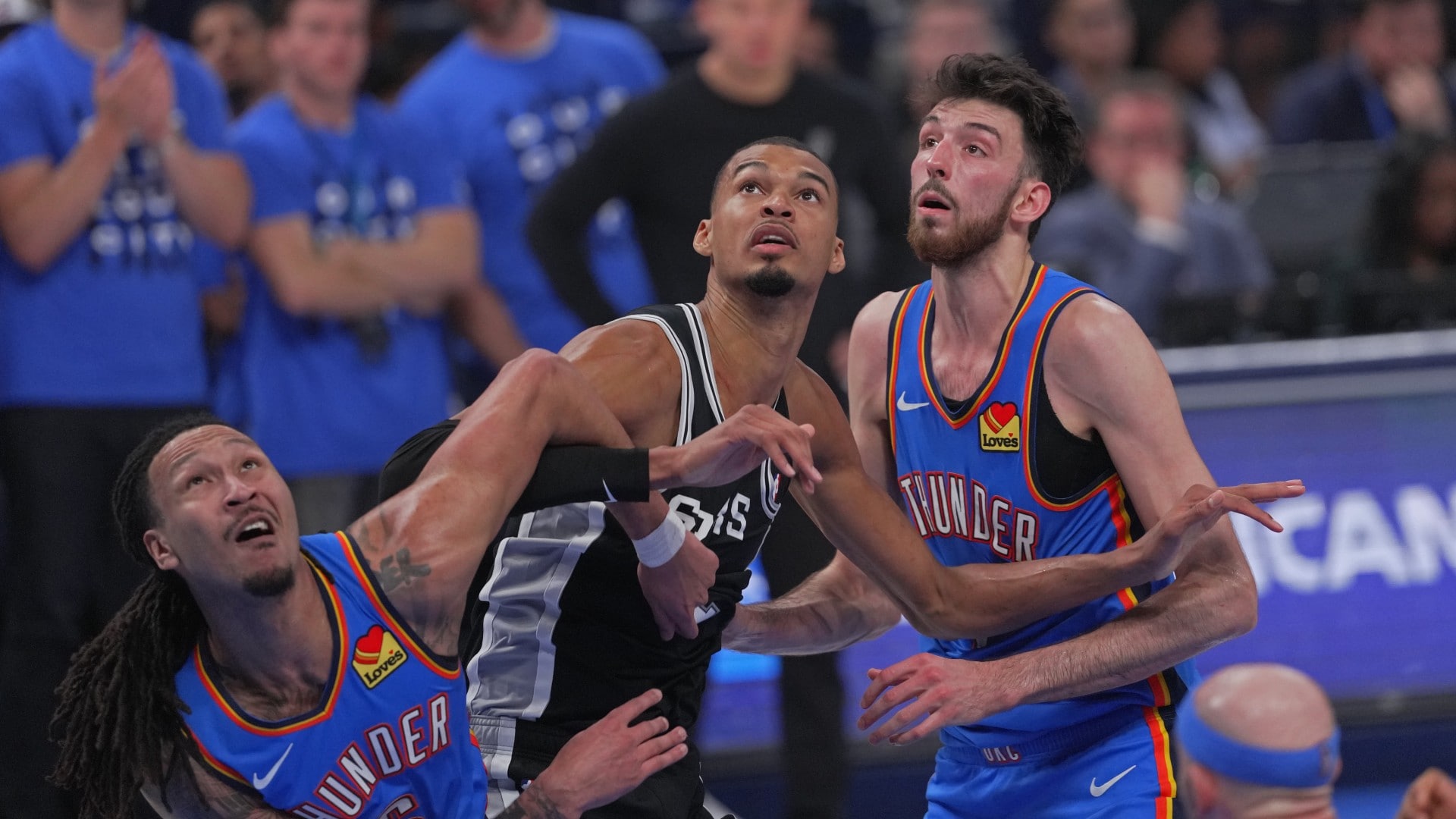
    The Spurs and Thunder battled through a contested seven-game series in the 2026 Western Conference Finals.

    • Download the NBA App
    • 2026 Free Agent Tracker
    • Every reported deal for all 30 teams

    The Eastern Conference may be the deeper when it comes to teams that could finish with winning records in the 2026-27 season. But the West still has the San Antonio Spurs and Oklahoma City Thunder.

    Over the last two seasons (and including playoffs), the Thunder have outscored their opponents by an amazing 11.2 points per game. Simply, they’ve had two of the best seasons in NBA history. But they met their match last season, with the Spurs winning eight of the 12 head-to-head matchups, including Game 7 of the Western Conference finals in Oklahoma City.

    The Thunder have had to shed some of their depth, but they should be getting more games and minutes from Jalen Williams than they did last season, while seeing some improvement from their young core. Speaking of young cores, the Spurs’ Dylan Harper, Stephon Castle and Victor Wembanyama are just 20, 21 and 22 years old, respectively.

    So it looks like we’re going to get another epic battle between Oklahoma City and San Antonio, both in the regular season and in the playoffs. But is there a third Western Conference team that can challenge the top two? Can a Play-In or Lottery team from last season climb into the top six?

    Here’s a crack at how the Western Conference stacks up as we enter the month of August, with some offseason business still to be done.

    Note: For these offseason rankings, we’re looking at each conference separately, with the Eastern Conference rankings having been published last week. All stats refer to the 2025-26 regular season unless otherwise noted. Last week’s rank is based on how team’s finished in the playoffs, Play-In and regular season.

    Previously…


    OffRtg: Points scored per 100 possessions (League Rank)
    DefRtg: Points allowed per 100 possessions (League Rank)
    NetRtg: Point differential per 100 possessions (League Rank)

    The league averaged 114.8 points scored per 100 possessions and 100.2 possessions (per team) per 48 minutes last season.


    NBA.com’s Power Rankings, released every Monday during the season, are just one man’s opinion. If you have an issue with the rankings, or have a question or comment for John Schuhmann, contact him via Bluesky.


    Last Week:2↑

    2025-26 record: 64-18

    OffRtg: 117.6 (7) DefRtg: 106.5 (1) NetRtg: +11.1 (1)

    Key addition: Aday Mara

    Key departures: Lu Dort, Isaiah Joe, Aaron Wiggins

    Three numbers to know…

    • The Thunder allowed 8.3 fewer points per 100 possessions than the league average (114.8), which was the second best differential for any team in the 30 seasons for which we have play-by-play data, topped by only that of the 2003-04 Spurs.
    • Shai Gilgeous-Alexander scored 1.18 points per possession as a pick-and-roll ball-handler, the best mark for a player with at least 200 ball-handler possessions in the 22 seasons of Synergy tracking. He was the first player in the 13 seasons of camera-tracking data to shoot 55% or better on at least 500 pull-up 2-point attempts.

    Key question: How much does depth matter?

    The Thunder have had the league’s top-ranked bench (by wide margins) in each of the last two seasons. But they’ve just salary-dumped guys who ranked second, fifth and sixth on the team in total minutes over those two years. Both Ajay Mitchell and Cason Wallace appear ready for bigger roles, but Gilgeous-Alexander probably won’t be the only Thunder player averaging at least 30 minutes this season, and it’ll be tougher to be extra cautious with Alex Caruso’s playing time.

    It may all come down to how well the Thunder match up with the Spurs, with the 107.9 points per 100 possessions they scored in the conference finals being their worst offensive mark for any of their nine playoff series in the last three years. But they basically had Jalen Williams for just one of those seven games, and he could make up for much of the lost depth if he’s fully recovered from his multiple injuries over the last 16 months.

    Last Week:1↓

    2025-26 record: 62-20

    OffRtg: 118.7 (3) DefRtg: 110.4 (3) NetRtg: +8.4 (3)

    Key addition: Tobias Harris

    Key departures: N/A

    Three numbers to know…

    • The Spurs were one of two teams (the Celtics were the other) to rank in the top five on both ends of the floor. They were 11.2 points per 100 possessions better than they were in 2024-25 (minus-2.8, 22nd), with that being the fifth biggest season-to-season jump for any team in the last 30 years.
    • Stephon Castle averaged 8.9 assists per 36 minutes, up from 5.5 as a rookie. That was the biggest jump among 290 players who played at least 500 minutes in each of the last two seasons. He had 130 total assists to Victor Wembanyama, a rate of 3.9 per 36 minutes on the floor together. That was the highest rate among 56 combinations where one player had at least 75 total assists to the other.
    • The Spurs were 16.4 points per 100 possessions better with Wembanyama on the floor (plus-17.0) than they were with him off the floor (plus-0.6). That was the biggest on-off differential among 263 players who played at least 1,000 minutes for a single team.

    Key question: How much more is Dylan Harper going to play?

    The Spurs are running it back, with players under contract accounting for 94% of their 2025-26 regular-season minutes, the league’s highest rate. They actually gained a rotation player (Harris) without losing any. But Harper needs to be on the floor more than he was last season, when he ranked eighth on the team at 22.6 minutes per game. He averaged 26.8 in the playoffs, but that was still 6.7 fewer minutes per game than De’Aaron Fox.

    The team was at its best in the regular season (plus-27.0 per 100 possessions) with Harper and Wembanyama on the floor together, but they were the Spurs’ 33rd most-used combination at just 560 total minutes. Might they make another big step forward if Harper is improved and playing more?

    Last Week:5↑

    2025-26 record: 54-28

    OffRtg: 121.2 (1) DefRtg: 116.0 (21) NetRtg: +5.2 (7)

    Key addition: Marvin Bagley III

    Key departures: Tim Hardaway Jr., Jonas Valančiūnas

    Notable free agents: Bruce Brown, Peyton Watson

    Three numbers to know…

    • The Nuggets have ranked in the top seven offensively in each of the last 10 seasons, with last season (when they scored 6.4 points per 100 possessions more than the league average) being their best offensive season in that stretch. They were the only team that ranked in the top five in field goal percentage, 3-point percentage and free throw percentage.
    • Cam Johnson had a usage rate of 14.4%, down from 22.4% with Brooklyn in 2024-25. That was the biggest drop among 290 players who played at least 500 minutes in each of the last two seasons.

    Key question: How much depth are they losing?

    Hardaway and Valančiūnas are gone, and keeping Watson may lead to another rotation player being traded. Depth has always been an issue with the Nuggets (they’ve been outscored by 7.7 points per 100 possessions with Jokić off the floor over the last five years) and their depth is taking more hits. They finished 2025-26 with a league-high 10 players who shot the league average or better from 3-point range, and they have just six under contract for ’26-27, with three of the other four – Brown, Watson and Jalen Pickett – still free agents.

    The Nuggets can hope that Aaron Gordon is healthier after playing in only 36 games in the regular season and in only three of their six playoff games. They need to get back to being an average-ish on defense, and Gordon’s health is obviously the most important thing in that regard. They can also hope for a healthier Christian Braun (44 games in the regular season), who could also get back to shooting from 3-point range as well as he did through his first three seasons (38.4%) after dropping to 30.1% last year.

    Last Week:3↓

    2025-26 record: 53-29

    OffRtg: 117.0 (10) DefRtg: 115.5 (20) NetRtg: +1.5 (14)

    Key additions: Quentin Grimes, Jaden Hardy, Walker Kessler, Kevon Looney, Sandro Mamukelashvili, Collin Sexton

    Key departures: Deandre Ayton, Rui Hachimura, Jaxson Hayes, LeBron James, Luke Kennard, Marcus Smart

    Three numbers to know…

    • The Lakers were 53-29 with the point differential of a team that was 46-36, in part because they were a league-best 22-8 (starting the season with 13 straight wins) in games that were within five points in the last five minutes. They scored 129.3 points per 100 clutch possessions, the second best mark for any team in the 30 seasons of play-by-play data.
    • They outscored their opponents by 3.6 points per game at the free throw line, leading the league in free throw differential for the fourth straight season.
    • They outscored opponents by 10.1 points per 100 possessions in 532 minutes with Luka Dončić and Austin Reaves on the floor without James.

    Key question: Can they defend?

    It’s a restart of the Dončić era in L.A., with the Lakers set to return only 42% of their regular-season minutes from last season, easily the league’s lowest rate. (The Clippers are the only other team currently under 50%.) They’ll be elite offensively with a full season from Dončić, but their biggest issue is the same as it was last season, when they had their second worst defensive season (they allowed 0.7 points per 100 possessions more than the league average) in the last nine years. Defending opposing perimeter stars is tough when you’re starting Dončić and Reaves at the guard positions.

    Kessler should be able to clean things up better than last year’s centers, but the length and mobility they need to defend at a high level is coming from guys – Matisse Thybulle and Ziaire Williams – who don’t offer much offensively and might see limited minutes in the playoffs.

    Last Week:6↑

    2025-26 record: 52-30

    OffRtg: 117.5 (8) DefRtg: 112.1 (6) NetRtg: +5.4 (6)

    Key additions: Bogdan Bogdanović, Marcus Smart

    Key departure: Josh Okogie

    Key return: Fred VanVleet

    Three numbers to know…

    • The Rockets have led the league in rebounding percentage in each of the last two seasons, with their 54.5% last season being the highest for any team in the 30 years of play-by-play data.
    • They were tied with the Pistons for the fewest losses (they were 30-7) in games that weren’t within five points in the last five minutes. They had the second biggest differential between their record in non-clutch games and their record in games that were within five in the last five (22-23).
    • Amen Thompson shot 61.2% in the paint, but had an effective field goal percentage of just 30.3% on shots from outside the paint. That was the biggest such differential among 149 players with at least 200 field goal attempts both in and outside the paint.

    Key question: How important is VanVleet?

    The Rockets desperately needed a point guard last season. Not only did they rank 27th in turnover rate (15.7 per 100 possessions), but, on average, they were the slowest team to cross midcourt in the 13 seasons of tracking data. VanVleet will get them into their offense a little quicker, while also giving them some much-needed perimeter shooting. The Rockets have just three of the 154 players – Kevin Durant, Reed Sheppard and Jabari Smith Jr. – who shot the league average (36.0%) or better on at least 100 3-point attempts last season.

    This team was better than its record, finishing with the league’s sixth best point differential, that of a team that was 56-26. And it destroyed the Lakers in the possession game (averaging 17 more shot opportunities) in the first four games of the first round, but was just unable to make shots in the first three. Some improvement with offensive execution could make all the difference.

    Last Week:4↓

    2025-26 record: 49-33

    OffRtg: 115.6 (13) DefRtg: 112.5 (8) NetRtg: +3.1 (10)

    Key additions: LaMelo Ball, Josh Green, Trey Lyles

    Key departures: Mike Conley, Julius Randle, Naz Reid

    Three numbers to know…

    • The Wolves are one of two teams (the Celtics are the other) that have ranked in the top 10 defensively in each of the last four seasons. But last season (when they allowed 2.3 fewer points per 100 possessions than the league average) was their worst defensive season of the last three.
    • Ayo Dosunmu (from 32.8% to 43.9%) and Jaden McDaniels (from 33.0% to 41.2%) saw the biggest and third biggest jumps in 3-point percentage from 2024-25 to ’25-26 among 222 players with at least 100 3-point attempts in each of the last two seasons.
    • Anthony Edwards had an effective field goal percentage of 64.7% with the game within five points in the last five minutes of the fourth quarter or overtime. That was the best clutch effective field goal percentage for a player with at least 75 field-goal attempts (491 total instances) across the 30 seasons for which we have clutch data.

    Key question: Can Rudy Gobert continue to hold up?

    Ball should help Edwards, who shot 69-for-139 (49.6%) on catch-and-shoot 3-pointers, the best mark among 308 players with at least 75 catch-and-shoot attempts last season and much better than he shot (35.3%) on pull-up 3s. Increase the percentage of his attempts that come off the catch to around 50% and Edwards is a much more efficient player. Ball’s teammates had an effective field goal percentage of 61.8% on his passes last season, the third-highest mark among 139 players who were the passer on at least 500 shots.

    But with the departures of Randle and Reid, the Wolves are more dependent on Gobert than they’ve ever been. He’s obviously the biggest reason they’ve been so good defensively over the last four years, in which he’s averaged 73.5 games played. But he’ll be entering Year 14 at the age of 34, and the only other centers on the roster – Joan Beringer and Rocco Zikarsky – played a total of 23 minutes over the Wolves’ 12 playoff games.

    Last Week:7

    2025-26 record: 45-37

    OffRtg: 114.2 (17) DefRtg: 112.9 (9) NetRtg: +1.4 (15)

    Key additions: Miles Bridges, Luke Kennard

    Key departures: Grayson Allen, Royce O’Neale

    Three numbers to know…

    • The Suns were the league’s most improved team (by a wide margin) in regard to the possession game. They averaged 3.1 more shot opportunities than their opponents, the league’s third best differential last season and up from 4.3 fewer than their opponents (third worst) in 2024-25. But they lost the possession game in three of their four games as they got swept by the Thunder in the first round of the playoffs.
    • Last season was their second-best defensive season (1.9 fewer points allowed per 100 possessions than the league average) in the last 25 years. They saw the league’s biggest jump in opponent turnover rate (see note above) and its second biggest drop in opponent 3-point percentage.
    • Dillon Brooks had a usage rate of 27.9%, up from 17.6% with Houston in 2024-25. That was the biggest jump among 290 players who played at least 500 minutes in each of the last two seasons.

    Key question: Is more Jalen Green a good thing?

    After playing all 82 in each of the previous two seasons, Green was available for just 32 regular-season games last year, logging just 291 total minutes (regular season, Play-In and playoffs combined) alongside both Brooks and Devin Booker. But the offense worked with all three on the floor, with the Suns scoring an efficient 122.6 points per 100 possessions in those minutes, even though 37% of them came against the Thunder. With Brooks’ ability to play the four, they didn’t necessarily have to play without a real point guard, and Collin Gillespie was also on the floor for 64 (60%) of the trio’s playoff 107 minutes.

    The Suns can certainly compete with the second tier of Western Conference teams if they can score that efficiently in a larger sample size with a healthier Green, while also continuing to win the possession game. It’s a huge year for the Suns-Green relationship, with him having a player option for 2027-28.

    Last Week:15↑

    2025-26 record: 22-60

    OffRtg: 112.7 (22) DefRtg: 120.8 (29) NetRtg: -8.2 (27)

    Key additions: Josh Okogie, Darryn Peterson

    Key departure: Walker Kessler

    Three numbers to know…

    • The Jazz are the third team in the 30 years for which we have play-by-play data to rank in the bottom two on defense in three straight seasons. They’ve ranked last in both transition points allowed and 3-pointers allowed in all three.
    • Their opponents took 45.1% of their shots, the league’s highest opponent rate, from 3-point range. And 59% of their opponents’ 3-point attempts, also the league’s highest rate, were wide open.
    • Lauri Markkanen scored 0.505 points per touch, the highest rate among 426 players with at least 500 total touches.

    Key question: How easily can they flip the switch?

    The Jazz have finished last in the Western Conference in each of the last two seasons. Will Hardy has a .326 winning percentage in his four years as head coach, and Lauri Markkanen has never made the playoffs in his nine-year career. Now, they have the talent to compete for a top-eight spot in the West. But how easy is it to turn the ship around after not caring about wins and losses for so long?

    There’s obviously more room for improvement on defense, where the Jazz could take a step forward by just trying to get back in transition every once in a while. They actually allowed only 90.4 points per 100 possessions in Jaren Jackson Jr.’s 72 minutes on the floor in February (before he was shut down for the season), but there aren’t many other plus defenders on this roster. There’s more talent on offense, but how it all fits together without a natural playmaker in the starting lineup will be an interesting puzzle for Hardy to solve.

    Last Week:8↓

    2025-26 record: 42-40

    OffRtg: 113.1 (21) DefRtg: 113.5 (12) NetRtg: -0.4 (19)

    Key addition: Ja Morant

    Key departures: Jerami Grant, Matisse Thybulle

    Key return: Damian Lillard

    Coaching change: Tiago Splitter out, Micah Nori in

    Three numbers to know…

    • Last season was the first in the last seven years that the Blazers had a better-than-average defense. They had the ninth-ranked defense (116.3 points allowed per 100 possessions) in games against the league’s top 10 offenses.
    • According to tracking data, they ranked second in shot quality. But they were 22nd in effective field goal percentage. They ranked in the bottom five in both mid-range field goal percentage (38.0%, 26th) and 3-point percentage (34.3%, 28th).
    • They averaged 18.4 second-chance points per game, the second most for any team in the 30 seasons for which second-chance points have been counted. Donovan Clingan (14.9%) and Robert Williams III (13.3%) ranked second and seventh in offensive rebounding percentage among 305 players who averaged at least 15 minutes in 40 games or more.

    Key question: How is this going to work … on either end of the floor?

    Talent is the most important thing, and this looks like the Blazers’ most talented roster in the last six years. But it also may be the most unbalanced roster in the league, comprised mostly of guards and centers, with Deni Avdija and Toumani Camara the only true forwards.

    Avdija will be a better perimeter shooter playing more off the ball; He shot 36.0% on catch-and-shoot 3-pointers and just 25.0% on pull-up 3s last season. But his efficient trips to the line will be reduced if he’s ceding touch time to Lillard and Morant.

    The Morant-Avdija combination will be lethal in transition, but transition opportunities require stops on the other end of the floor. And it will be difficult to maintain a better-than-average defense if Lillard and Morant are playing a lot of minutes, even if Jrue Holiday can hold up against opposing forwards.

    Last Week:9↓

    2025-26 record: 37-45

    OffRtg: 113.8 (19) DefRtg: 114.4 (16) NetRtg: -0.5 (20)

    Key addition(s): Yaxel Lendeborg

    Key departure: Quinten Post

    Three numbers to know…

    • Last season was just the second time in the last 14 seasons that the Warriors had a negative point differential. It was both their third worst offensive season (they scored 0.9 fewer points per 100 possessions than the league average) and their third worst defensive season (they allowed 0.4 fewer than average) over those 14 years.
    • They had the league’s highest 3-point rate, taking 49.7% of their shots from beyond the arc. They outscored their opponents by 8.3 points per game, the league’s second biggest differential, from 3-point range.
    • The Warriors scored 1.13 points per chance when they set a ball-screen for Stephen Curry. That was the highest mark for any player (minimum 500 ball-screens set) in the 13 seasons of tracking data.

    Key question: Will there be other trade opportunities?

    Curry remains one of the most impactful players in the league, but the Warriors haven’t had enough complementary players to take advantage of his gravity on offense, and they haven’t been able to add veteran talent to guarantee him another playoff appearance. Might there be more opportunities to add another starter between now and the trade deadline?

    Better health from Curry himself would keep the Warriors more competitive. His 43 games last season were the second fewest he’s played in the last 14 years, but they were 24-19 in the games he played, putting up the numbers (117.9 points scored per 100 possessions) of a top-five offense. Kristaps Porziņģis played in 16 of their final 22 games (including the Play-In), just turned 31 on Sunday, and could certainly raise the floor if the Warriors have figured out how to keep him healthy.

    Last Week:12↑

    2025-26 record: 26-56

    OffRtg: 110.3 (27) DefRtg: 115.5 (19) NetRtg: -5.2 (22)

    Key additions: Santi Aldama, Morez Johnson Jr., Zaccharie Risacher, Marcus Sasser

    Key departures: Marvin Bagley III, Ryan Nembhard

    Key return: Kyrie Irving

    Coaching change: Jason Kidd out, Dusty May in

    Three numbers to know…

    • The Mavs were one of two teams (the Kings were the other) that ranked in the bottom five in both 3-point percentage (34.4%, 26th) and the percentage of their shots that came from 3-point range (35.5%, 27th).
    • They had the league’s biggest differential between their effective field goal percentage in the first six seconds of the shot clock (64.1%, fifth best) and their effective field goal percentage thereafter (52.7%, 28th).
    • Cooper Flagg was the eighth qualified rookie in NBA history to average at least 20 points, six rebounds and four assists per game. His 11.3 points in the paint per game were the most for a qualified rookie in the last seven years.

    Key question: What becomes of Kyrie Irving?

    Irving is a good offensive fit with Flagg, but he’s 15 years older than the reigning Rookie of the Year and (with a player option) can be a free agent next July. So the Mavs’ best play may be to trade the star guard at some point. First, they (and the rest of the league) need to see how well he’s recovered from the torn ACL he suffered 17 months ago.

    More important in regard to the Mavs’ long-term plan is the health of Dereck Lively II, who’s played in just 43 games over the last two years and logged just 84 minutes (over six games) alongside Flagg last season. The on-court sample size isn’t big (948 total minutes), but over the last two years, the Mavs have allowed 10.0 fewer points per 100 possessions with Lively on the floor (105.9) than they have with him off the floor (115.9).

    Last Week:10↓

    2025-26 record: 42-40

    OffRtg: 116.3 (11) DefRtg: 115.2 (18) NetRtg: +1.1 (16)

    Key additions: Rui Hachimura, Keaton Wagler

    Key departure: John Collins

    Notable free agent: Bennedict Mathurin

    Pending trade: Kawhi Leonard for Brandon Ingram, Gradey Dick and picks

    Three numbers to know…

    • The Clippers have had a winning record in each of the last 15 seasons, the fourth longest streak in NBA history. But last season was the second in that stretch in which they missed the playoffs, and it’s now been five years since they last won a playoff series (2021).
    • They had the league’s biggest differential between their record when their opponents shot worse than the league average from 3-point range (30-9) and their record when their opponents shot the league average or better (12-31).
    • They’ve ranked in the bottom three in both ball and player movement in each of the last three seasons. Last season, they ranked last in ball movement, averaging just 292 passes per 24 minutes of possession.

    Key question: What is this team’s identity?

    It’s kind of amazing how much the Clippers have turned over the roster in less than a year. Bradley Beal, Bogdan Bogdanović, John Collins, James Harden, Chris Paul and Ivica Zubac are all gone from the veteran-laden group that began last season with a loss in Utah.

    Leonard may be gone as well, with the Clips having been 13.8 points per 100 possessions better with him on the floor (plus-7.5) than they were with him off the floor (minus-6.3) last season. That was the third biggest on-off differential among 263 players who played at least 1,000 minutes for a single team.

    There’s still some talent here, and the Clippers can put together some good defensive lineups that include returnees Kris Dunn and Derrick Jones Jr. But they don’t have a lot of guys that have played a lot of minutes together, and it will be fascinating to see how they win possessions offensively. It’s certainly an opportunity for Darius Garland (11th in the league in time of possession after his Clippers debut) to put up All-Star numbers.

    Last Week:11↓

    2025-26 record: 26-56

    OffRtg: 113.3 (20) DefRtg: 117.6 (23) NetRtg: -4.4 (21)

    Key additions: N/A

    Key departures: N/A

    Coaching change: James Borrego out, Jamahl Mosley in

    Three numbers to know…

    • The Pelicans led the league in the percentage of their shots (58%) that came in the paint, but ranked 29th in field goal percentage in the paint (55.4%). They had three of the 41 players – Herb Jones, Micah Peavy and Jordan Poole – that shot worse than 50% on at least 100 shots in the paint.
    • They outscored their opponents by 6.6 points per 100 possessions in 303 total minutes with Dejounte Murray on the floor with at least two of Jones, Trey Murphy III or Zion Williamson. But they were just 3-6 in games that all four played in.
    • As things stand on Monday morning, the Pels are set to return 15 players, accounting for 93% of their minutes last season. That’s the league’s second highest rate, trailing only that of the Spurs (94%).

    Key question: Can Williamson and Derik Queen play together?

    The Pelicans basically gave up on the Williamson-Queen combo in late February. Over the last 20 games that both were available, they averaged just 5.9 minutes on the floor together, down from 14.5 prior to that. In total, the Pelicans were outscored by 11.0 points per 100 possessions in 711 total minutes with both bigs on the floor. But they’re bringing back the same group that finished 11 games out of the Play-In.

    In Saddiq Bey and Yves Missi, the Pels have other useful bigs. But they should obviously try the Williamson-Queen combo again. It might not ever work defensively, but maybe the offense can be good enough to make up for that. It was on offense where they were at their best (116.2 points scored per 100 possessions) with Murray on the floor.

    Last Week:13↓

    2025-26 record: 25-57

    OffRtg: 112.4 (23) DefRtg: 118.4 (27) NetRtg: -6.0 (24)

    Key additions: Cameron Boozer, Jerami Grant, Quinten Post, Isaiah Stewart

    Key departures: Santi Aldama, Ja Morant

    Three numbers to know…

    • The Grizzlies were 10.5 points per 100 possessions worse after the All-Star break (minus-12.8, 28th) than they were before the break (minus-2.3, 21st). That was the fifth biggest post-break drop-off for any team in the last 25 years.
    • Cam Spencer shot 73-for-129 (56.6%) on wide-open 3-pointers, the second-best mark for a player with at least 100 wide-open attempts in the 13 seasons of tracking data.

    Key question: How good is Ty Jerome?

    Jerome averaged 31.4 points and 9.0 assists per 36 minutes last season and, over the last two years, he’s shot 43.3% from 3-point range and 54.2% on pull-up 2-pointers. He was coming off the bench in Cleveland two seasons ago and played just 339 total minutes last season, and Jerome is 10 years older than Boozer, so he doesn’t fit the optimal timeline for the Grizzlies. Still, it will be fascinating to see if he can come close to matching last season’s per-minute production in a larger sample size and earn a big pay day next Summer.

    It’s also a big year for Cedric Coward, Zach Edey and Jaylen Wells, who all fit the Boozer timeline. They played just 158 minutes together last season, but the Grizzlies outscored their opponents by 66 points (20.9 per 100 possessions) in that time. If Edey can stay healthy (he played fewer minutes than Jerome last year), he could be one of the most impactful defensive players in the league.

    Last Week:14↓

    2025-26 record: 22-60

    OffRtg: 110.6 (26) DefRtg: 120.3 (28) NetRtg: -9.7 (28)

    Key addition: Darius Acuff Jr.

    Key departure: DeMar DeRozan

    Three numbers to know…

    • The Kings were outscored by 10.0 points per game, the point differential of a team that was 16-66 and the worst differential in franchise history.
    • They were outscored by 10.6 points per game from 3-point range, the worst discrepancy for any team in the last three seasons. Their 10.3 3-pointers per game were the fewest for any team in the last five seasons.
    • Dylan Cardwell grabbed 14.8% of available offensive rebounds while he was on the floor. That was the second highest rate among 234 players who averaged at least 20 minutes in 40 games or more. The Kings outscored their opponents by 1.9 points per 100 possessions in 569 minutes with Cardwell and Nique Clifford on the floor together.

    Key question: How good are the second-year guys?

    Acuff is the most important guy on the roster, but does he have a running mate when it comes to the Kings’ long-term future? All three of last season’s rookies – Cardwell, Clifford and Maxime Raynaud – have shown some promise, but could any of the three develop into a top-six player on a good team?

    Cardwell and Raynaud got opportunities, in part, because Domantas Sabonis played in only 19 games last season. But both of the rookies played some minutes alongside the veteran, and they also played 234 minutes together. So Sabonis’ return shouldn’t keep the young bigs from seeing the floor, and letting the young guys develop should obviously be the priority going forward. The phone lines are probably open in regard to the veterans that are still here.

  • Standout performers from adidas ABCD Camp include Lewis Uvwo, Antonio Pemberton

    Standout performers from adidas ABCD Camp include Lewis Uvwo, Antonio Pemberton

    Lewis Uvwo continues to open eyes among the top performers in the Class of 2027.

    PHOENIX – For the first time since 2006, a collection of the top high school players in the country had been invited to the adidas ABCD Camp, now run by NBA veteran Tracy McGrady and grassroots legend Sonny Vaccaro.

    It was Vaccaro who started the camp in 1984, and for 22 years, it was the story of the summer for all the top high school players in the country. Kobe Bryant won camp MVP in 1995 and LeBron James won it in 2001. In 1996, McGrady entered the camp as an unknown prospect, won the MVP and became the No. 1 high school player in the country soon after. He was the No. 9 overall pick in the 1997 NBA Draft and went on to play 15 seasons in the NBA. 

    In the camp’s return this year, following two dormant decades, there were drills and scrimmages on the court – along with workshops on financial literacy, Name, Image & Likeness (NIL) opportunities and media training. NBA players on hand as mentors and coaches to the 50 invitees included: Rockets forward Jabari Smith Jr., 76ers guard VJ Edgecombe, Raptors guard Ja’Kobe Walter, Jazz guard Darryn Peterson and wing Cody Williams, as well as Nets guard Mikel Brown Jr.


    Here are the standout players from the 2027-30 classes at this year’s adidas ABCD Camp:

    Lewis Uvwo, Class of 2027

    Uvwo is one of the best stories of the summer after rising from No. 94 in the class to No. 6 in the nation. He received the top honor of the weekend as McGrady awarded him with the adidas ABCD Camp MVP. He is the best shotblocker in the nation, and showcased that all weekend long. Yet in the championship game, it was what he did on the offensive end that truly impressed the NBA players and NBA scouts in the building. He recorded 16 points, eight rebounds, three blocks, three assists and two steals in the commanding 63-53 win for the Nets over the Cavs. 

    This is Uvwo’s first summer playing AAU basketball, after moving to the U.S. from Nigeria. He’s only been playing basketball for three years and the raw talent is absolutely noticeable. The 6-foot-11 rimrunner – who has a 7-foot-7 wingspan – has seen his recruitment skyrocket. He holds offers from Duke, BYU, Florida State, UCLA, Baylor, Alabama, Arkansas and others. 


    RJ Evans, Class of 2029

    Evans, the son of 13-year NBA veteran Reggie Evans, has a ton of upside with his length at 6-foot-7 and his two-way play on the perimeter. He led his team in scoring during scrimmage play and had the hot hand Friday night when he finished with a game-high 23 points. Evans plays for Austin Rivers’ AAU program on the adidas 3SSB circuit (Austin Rivers SE Elite). Rivers was on staff at the camp.
    “That kid can play,” Rivers told NBA.com. “What he’s doing at 15 years is old is crazy and he has a natural feel for the game that’s only going to grow as he fills into his body. I can’t wait to see where he is in 3-to-4 years.” 

    Evans holds a handful of early offers as a rising sophomore and plans on taking unofficial visits to Miami, Florida State and Iowa (his dad’s alma mater) in the fall. 


    Antonio Pemberton, Class of 2027

    Pemberton was the best lead guard on the court throughout drills and during the scrimmages. His team was down six points and slowly chipped away at the lead. Pemberton hit a deep 3 at the buzzer to go into halftime, giving his team a two-point lead. The 6-foot-1 point guard completely took over the second half, netting 25 points and scoring at will. He’s coming off a strong showing at the adidas 3SSB Championships where he led his team, Mass Rivals, to the title game. Pemberton loves the mid-range and manipulates the defense well. His 3-ball is more consistent and he’s becoming a reliable three-level scorer. 

    Pemberton is down to a final eight schools of Kansas, Michigan State, Tennessee, UCLA, Marquette, Ohio State, Creighton and Boston College. 


    Darius Wabbington, Class of 2027

    The 6-foot-10 forward is the most skilled big in all of high school basketball, regardless of class. He has a 7-foot-4 wingspan and passes the ball extremely well with the way he can see over the top of the defense. In a game against the No. 1 shotblocker in the country, Lewis Uvwo, Wabbington hunted the matchup on the block and used his footwork and shot fakes to get around Uvwo. He’s a threat in the pick-and-pop, hitting at least three 3-pointers per game during the scrimmages and is advanced in multiple facets of the game for a player his age.

    Wabbington already has official visits scheduled in the fall to Arizona, Texas, North Carolina, Louisville and Indiana. 


    Jalen Davis, Class of 2027

    Davis wore a facemask during camp after he sustained a facial fracture during Session 3 of the adidas 3SSB circuit. He had to sit out the Championship tournament in Rock Hill, but if the facemask was bothering him during ABCD camp, he didn’t show it at all. The scrappy 6-foot-4 combo guard did everything on both sides of the ball, averaging 10 points, five steals and five assists across three games and helped lead his team, the Nets, to a perfect 3-0 record. 

    Davis is a top 20 player in the incoming high school senior class and holds offers from Alabama, BYU, Cal, Houston, Iowa, Oregon State, SMU, Vanderbilt, Xavier, Oklahoma and West Virginia. 


    Demarcus Henry, Class of 2027

    Henry had a tremendous summer and caps it off with a strong showing at camp. He really turned a corner after the first live period in May and has been consistent all summer long. Henry is a 6-foot-7 wing with excellent footwork who has really improved his ball handling, especially in traffic. There was a four-way tie to make the championship game and it was Henry to win a game of ones (1-vs.-1) against Micah Gordon to help his team advance to the final game. He and the Grizzlies ultimately ran out of gas and ended up losing to the Nets. 

    Jazz rookie Peterson watched Henry during the first day of scrimmages and was impressed with his size and how well he used his body: “He’s good and adjusts to the defense well,” Peterson said. “[Henry] has a good pace to his game and good feel.”

    Henry is down to a final eight schools of BYU, Arkansas, Kansas, Kentucky, Louisville, North Carolina, Ohio State (where his older brother plays football and older sister plays basketball) and UConn. 


    Blaze Johnson, Class of 2028

    Johnson was the leading scorer for his team throughout the entire weekend and his combination of positional size – as a 6-foot-5 combo guard – and patience on offense makes him one of the top guards in the incoming junior class. Johnson and Davis complemented each other well in the backcourt and Johnson found ways to completely switch the momentum of the game and make a run for his team. At the very end of the first half of the first game, Johnson hit an and-one 3-pointer for a four-point play to go up one at the half. 

    Johnson is the No. 16 player in his class and holds offers from Maryland, Alabama, Auburn, Florida State, Georgia, Kansas, Virginia, Missouri, Villanova and Providence. 


    Moussa Kamissoko, Class of 2027

    After dealing with injuries during his high school season, Kamissoko has really come alive in the spring and summer. During his run with the PSA Cardinals, he averaged 16.6 points and 9.4 rebounds. He didn’t skip a beat at the ABCD Camp where he utilized his length as a 6-foot-8 wing and did a bit of everything for his team. His most complete performance came in his final game when he posted 20 points, seven rebounds, four assists and one steal in the 71-54 Jazz win over the Pelicans.

    Kamissoko holds offers from Alabama, BYU, Cincinnati, Illinois, Kentucky, UConn, Virginia, Providence, Oklahoma State and others.