SÃO PAULO, 26 jul (Reuters) – Brasil retiró a su embajador en Buenos Aires después de que el presidente argentino, Javier Milei, aprovechara un viaje al país para criticar a sus dirigentes y al poder judicial, según informaron el domingo dos fuentes conocedoras del asunto.
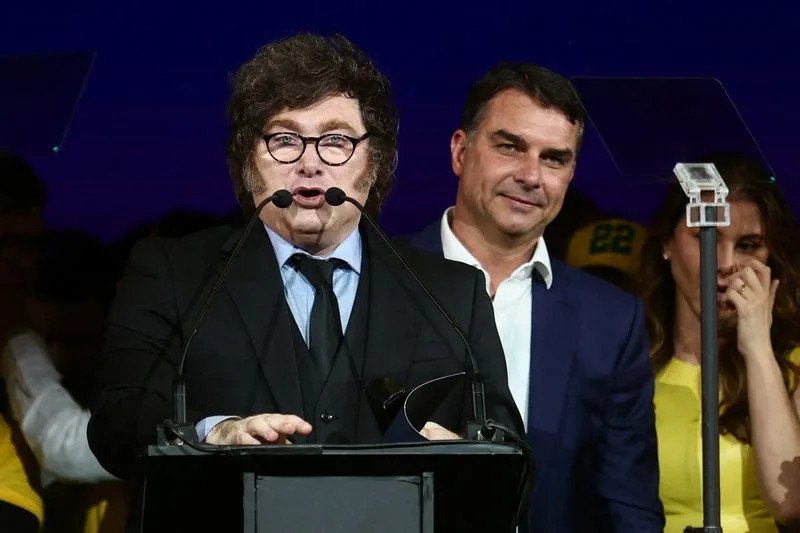
En su segunda visita al país, Milei llegó a Brasil el viernes para apoyar la candidatura presidencial del senador Flavio Bolsonaro. El hijo mayor del expresidente Jair Bolsonaro presentó oficialmente el sábado su candidatura para desbancar al presidente brasileño Luiz Inácio Lula da Silva, quien ha ido ampliando su ventaja de cara a las elecciones de octubre.
En una comparecencia junto a Bolsonaro en São Paulo, Milei calificó a Lula de “presidiario”, tildó al Gobierno brasileño de «socialistas ladrones» y defendió al candidato conservador como el único capaz de “detener a Lula”.
La decisión de retirar al embajador brasileño Julio Bitelli se tomó el domingo por la mañana, después de que el ministro de Relaciones Exteriores, Mauro Vieira, consultara con Lula, según fuentes familiarizadas con el asunto. El Gobierno brasileño consideró las declaraciones de Milei como una “afrenta directa”, señaló una de las fuentes.
Las relaciones diplomáticas entre ambos países son prácticamente inexistentes. Milei no ha solicitado ninguna reunión oficial con Lula en ninguno de sus dos viajes a Brasil, ni el líder brasileño ha mostrado interés alguno en recibirlo.
(Reportaje de Lisandra Paraguassu, edición de Deepa Babington, Editado en español por Juana Casas )
El expresidente de Honduras Juan Orlando Hernández regresó este domingo a su país, casi ocho meses después de que el mandatario estadounidense, Donald Trump, lo indultara de una condena a 45 años de cárcel por narcotráfico.
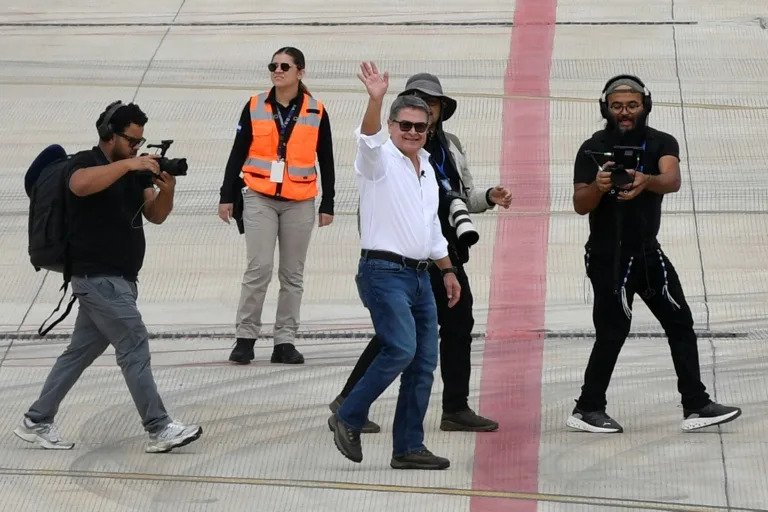
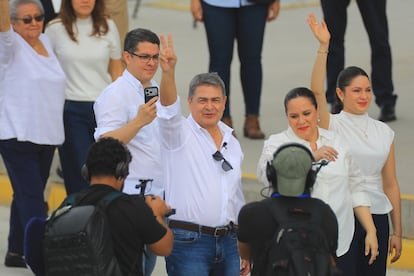
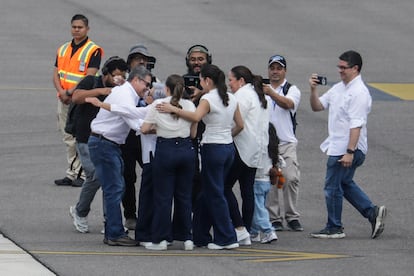
Hernández llegó en un vuelo privado al aeropuerto de Palmerola, a 60 km al noroeste de Tegucigalpa, donde su familia lo recibió en la pista, mientras cientos de simpatizantes lo esperaban frente a la terminal.
El exmandatario recibió el perdón previo a las elecciones presidenciales de noviembre pasado, que su copartidario conservador Nasry Asfura ganó por escaso margen tras amenazas de Trump de cortar la ayuda a Honduras si no era elegido.
“Estoy feliz, alegre de estar en mi tierra de nuevo”, dijo el expresidente a periodistas en la caja de una camioneta durante una caravana de bienvenida.
Hernández, que gobernó entre 2014 y 2022 y quien se declara víctima de “persecución”, enfrentará ahora a la justicia hondureña acusado del desvío de dos millones de dólares de fondos públicos para financiar su primera campaña presidencial.
Bajo el compromiso de presentarse voluntariamente, un juez le suspendió una orden de arresto.
“Estamos muy contentos” de recibirlo, comentó a AFP Eva Amador, simpatizante de 56 años, quien portaba una pancarta con un mensaje de agradecimiento a Trump.
Hernández, de 57 años, comparecerá ante una corte el 3 de agosto por acusaciones de fraude y lavado de activos de las cuales se declara “inocente”.
Su retorno es “una prueba para la independencia” judicial, dijo a AFP Ana María Méndez, directora para Centroamérica de la Oficina en Washington para Asuntos Latinoamericanos (WOLA).
También “reabre el debate sobre la impunidad” tras los cuestionamientos al indulto de Trump, añadió.
– Meterles droga “en sus narices” –
Un juez federal de Nueva York condenó a Hernández a 45 años años de cárcel en junio de 2024, dos años después de su extradición.
Fue declarado culpable de ayudar a introducir a suelo estadounidense cientos de toneladas de cocaína producida en Colombia en alianza con capos como el mexicano Joaquín “El Chapo” Guzmán, preso a perpetuidad en Estados Unidos.
La fiscalía acusó al expresidente de convertir a Honduras en un “narco-Estado” y una “superautopista” para traficar.
“Le vamos a meter la droga a los gringos en sus narices y no se van a dar ni cuenta”, habría dicho Hernández, según un testigo que colaboró con los fiscales.
La sentencia fue anulada en abril tras el indulto del republicano Trump, que asegura que Hernández fue víctima de un “montaje” de su antecesor en la Casa Blanca, el demócrata Joe Biden (2021-2025).
Hace tres meses, Diario Red, un medio digital fundado por el exvicepresidente del gobierno español Pablo Iglesias, difundió audios que supuestamente revelan que Hernández fue indultado en un plan de varios gobiernos para convertirlo en operador contra la izquierda en la región.
Estados Unidos, Israel, Honduras y Argentina estaban detrás de la trama, según las publicaciones del llamado “Hondurasgate”, que Hernández catalogó de falsas.
Asfura, quien presuntamente le ofreció dinero, según los audios, guardó silencio.
– “Bofetada” a las víctimas –
Tras su arresto en 2022, a Hernández le decomisaron 131 bienes, incluyendo 32 inmuebles, que según él son una herencia familiar y deben ser devueltos.
El exmandatario fue uno de los impulsores de las Zonas de Empleo y Desarrollo Económico (ZEDE), territorios autónomos aprobados en 2013 para atraer inversión.
Consideradas un “Estado dentro del Estado”, fueron declaradas inconstitucionales en 2024, pero algunas siguen operando.
Hernández llegó a tener tanto poder que en 2017 logró un segundo mandato, pese a que la Constitución prohibía la reelección.
Una interpretación de la Corte Suprema le allanó el camino y, tras ganar los comicios bajo acusaciones de fraude, decretó un toque de queda por las protestas que dejaron una treintena de muertos.
“Su regreso en total impunidad y sin el castigo por esos crímenes es una bofetada tremenda a las víctimas”, dijo a la AFP el analista jurídico Joaquín Mejía.
Hasta el momento, los participantes confirmados son:
Ernesto Laguardia: Actor y conductor
Karina Torres: Influencer.
Ximena Herrera: Actriz.
Aldo Rendón: Influencer y asesor de imagen.
Moisés Peñaloza: Actor, modelo y empresario.
Cynthia Klitbo: Actriz.
Yahir: Cantante, actor y conductor.
Flor Vigna: Influencer y boxeadora argentina.
Massad Altamimi: Empresario e influencer de origen árabe.
Arantza Ruiz: Actriz, influencer y streamer.
Ese Pérez: Influencer.
Fede Vigevani: Influencer y youtuber.
Brianda Deyanara: Influencer.
Memo Schutz: Comentarista deportivo de Televisa.
Yanet García: Conductora y ex chica del clima.
Además, se espera que durante el estreno, programado para el próximo domingo, la producción anuncie a más habitantes que terminarán de conformar el elenco de esta nueva temporada.
Aunque ambos pertenecen a mundos completamente distintos del entretenimiento, Schutz confesó que existe un vínculo inesperado entre ellos gracias a sus hijos, quienes son seguidores del contenido que crea el influencer:
Tengo que hablar con mi Fede (Vigevani) porque además sé que le gusta el basketball. Voy a hablar con él, mis hijos son muy aficionados de Fede y ahí está en su teléfono.
Memo Schutz
Durante la charla explicó que, a lo largo de más de 25 años dedicados al periodismo y la narración deportiva, ha aprendido que el deporte suele ser una excelente herramienta para iniciar conversaciones y conectar con personas de distintos ámbitos.
Aunque no dijo que hará una alianza directa con él, espera interactuar con el youtuber.
A lo largo de su carrera ha cubierto eventos internacionales como los Juegos Olímpicos, la Copa del Mundo, el Super Bowl, las Finales de la NBA, la Serie Mundial de las Grandes Ligas, entre otros torneos.
Memo Schutz se ha consolidado como una de las voces más reconocidas del periodismo deportivo en México.
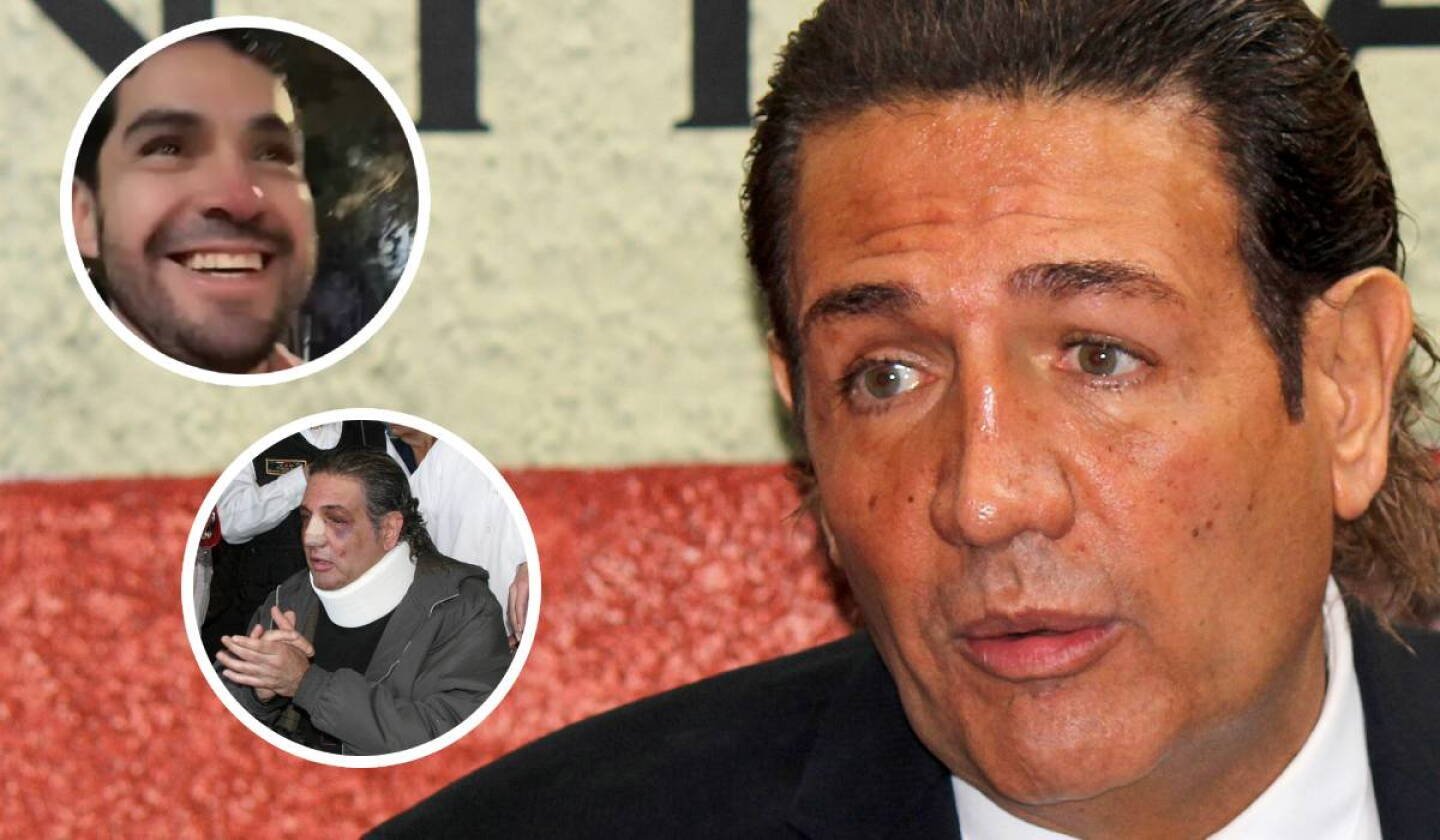
En los últimos días, Fabián Lavalle ha estado en medio de la polémicaluego de que un joven asegurara que el conductor quiso subirlo a su camioneta. Este tema ha hecho que muchos recuerden la agresión que Lavalle sufrió mientras buscaba divertirse con “chicas buena onda”.
“Chavos, no estoy mam…. Está Fabiruchis en Reforma queriéndome subir a su camioneta. Y no es broma. Definitivamente la cosa más random que me ha pasado en un rato”, indicó. Al mismo tiempo, mostró un vehículo, supuestamente, muy parecido al que el conductor suele manejar.
Posteriormente, diversos usuarios aseguraron que, según ellos, el coche que se ve en la grabación sí era el que maneja Lavalle. Aunque el joven contó la anécdota con cierto humor, muchos señalaron que el famoso habría, presuntamente, acosado al chico, cuya identidad no se ha revelado hasta el momento.
Incluso surgieron algunos testimonios de usuarios que afirman haber vivido situaciones similares con Fabián. Hasta ahora, el conductor no se ha pronunciado al respecto. Estos son los comentarios que se le podían leer en redes sociales:
“Te vio ‘chavo buena onda’”
“Te creo totalmente, estuve presente cuando le hizo lo mismo a alguien muy cercano”
“Tratar de subirlo a su camioneta es delito”
“Las mujeres lo vivimos a diario”
“No eres el único ni es broma, a mí me lo hizo en Masaryk, en Polanco”
Fabián Lavalle y el escándalo de las chicas ‘buena onda’
Todo esto ha hecho que muchos recuerden lo sucedido con Fabián Lavalle y las llamadas ‘chicas buena onda’. Este suceso data de octubre de 2007. En aquel entonces, se dio a conocer que el famoso fue hospitalizado tras recibir una golpiza.
Al salir de la clínica, Lavalle contó su versión de lo ocurrido. Según se dijo, el presentador estaba transitando por las calles de CDMX cuando un hombre llamado Alfredo Cervantes le habló para invitarlo a una fiesta con “chicas buena onda”, es decir, trabajadoras s…x…s.
Supuestamente, cuando llegaron al hotel, el hombre le robó y lo golpeó fuertemente. Posteriormente huiría de la escena, dejándolo sin ropa y amarrado. A los seis días del hecho, Cervantes fue capturado. Tras un juicio, fue hallado culpable de robo agravado y lesiones. Lo condenaron a cinco años de prisión.
Aunque no se sabe qué pasó con Alfredo tras salir de la cárcel, en su momento ofreció su lado de la historia. Dijo ser un trabajador s…x…l y que ya había tenido encuentros con Lavalle en al menos tres ocasiones. Sostuvo que lo golpeó después de que Lavalle se negara a pagar por un servicio.
Cabe mencionar que, años después de los acontecimientos, Fabián negó haber dicho la frase ‘chicas buena onda’. Aseguró que todo fue un invento.
“Hubo una historia que vendieron que no fue cierta y cuando me di cuenta del tamaño del ped… que se armó y que se había construido una telenovela sobre eso no es que hubiese querido ocultar y fue un intento de secuestro que nadie entendió y la frase que nunca dije fue: ‘chicas buena onda’. Me decían eso y yo: ‘¿de qué hablan?’”
El expresidente Juan Orlando Hernández regresó este domingo a Honduras tras haber sido indultado por Donald Trump de su condena por narcotráfico, por la que fue sentenciado en 2024 a 45 años de presión. Hernández informó en abril de que una resolución de la Corte de Apelaciones del Segundo Circuito de Nueva York ordenó desestimar el caso de raíz, calificándolo de “improcedente”. El presidente aterrizó en su país con un recibimiento de héroe por parte del conservador Partido Nacional, al que pertenece junto al actual presidente, Nasry Asfura.
El exmandatario llegó en un vuelo privado procedente de Miami a la terminal de Palmerola, a unos 75 kilómetros de Tegucigalpa, acompañado por su abogado en Estados Unidos, Renato Stabile, y por un nutrido grupo de aliados castrenses —los generales Willy Oseguera, Tulio Romero y Javier Barrientos— que testificaron a su favor durante el juicio en la Gran Manzana. En la pista de aterrizaje le aguardaban su madre, Elvira Alvarado, su esposa, la exprimera dama Ana García, y tres de sus hijos. Apenas descender de la aeronave, la familia protagonizó una escena de abierta religiosidad al arrodillarse a orar sobre el asfalto.
Hernández, de 57 años, llega a su país en un escenario de profunda polarización. Pese a la escenografía de triunfo orquestada por la militancia del conservador Partido Nacional, que acudió a recibirlo entre banderas e himnos, la situación procesal de Hernández en Tegucigalpa dista de estar resuelta. El político deberá comparecer el próximo 3 de agosto en audiencia inicial por acusaciones locales de lavado de activos y fraude. Pese al apoyo de las bases del Partido Nacional, e Honduras hubo un enorme el descontento de la gente por los escándalos de corrupción durante su mandato. Uno de los casos más sonados fue el desfalco al instituto de seguridad social por más de 200 millones de dólares. Investigaciones periodísticas revelaron que parte de ese dinero sirvió para financiar a la campaña electoral del Partido Nacional.
El presidente Asfura no ha reaccionado al retorno de Hernández, pero en un guiño al electorado más conservador del país, dijo tras conocerse el indulto de Trump: “Para la familia, el indulto deja atrás sus tristezas y les permite recuperar la tranquilidad y la felicidad que se merecen”, dijo el político.
Juan Orlando Hernandez es recibido por su familia.Fredy Rodriguez (REUTERS)
El expresidente fue condenado en 2024 a 45 años de prisión por asociarse durante más de una década con narcotraficantes que pagaban sobornos para asegurarse de que más de 400 toneladas de cocaína llegaran a Estados Unidos, según la acusación en su contra. La sentencia fue, según detalló el tribunal, una advertencia a los individuos “bien educados y bien vestidos” que adquieren poder y piensan que su estatus les blinda ante la justicia.
Hernández abandonó la cárcel gracias a un indulto del presidente de Estados Unidos, Donald Trump, quien influyó en las elecciones presidenciales de 2025 ofreciendo su apoyo al candidato conservador Nasry Tito Asfura, del mismo partido que Hernández, quien ahora es el presidente del país centroamericano.
El proceso contra Hernández fue muy polémico en Honduras, pero también en Washington. Durante los años que estuvo en el poder, Hernández había sido un fiel aliado de la Casa Blanca. Aparentemente, había colaborado en la lucha contra el narcotráfico, pero en realidad se aprovechaba de su influencia en el país centroamericano para que la policía, el ejército y los jueces miraran para otro lado mientras él hacía negocios con los narcos.
El indulto de Trump se produce pese a las múltiples señales que relacionan a Hernández con el narco. Su hermano Juan Antonio, con el que mantenía una estrecha relación, fue condenado hace cuatro años por el mismo tribunal de Nueva York por sus vínculos con los cárteles de la droga hondureños. Cuando aún estaba en el poder, la fiscalía de Manhattan llegó a acusar a Juan Orlando Hernández de recibir un millón de dólares del capo mexicano Joaquín El Chapo Guzmán. Los fiscales recabaron testimonios de otros narcotraficantes del cartel local Los Cachiros que revelaban las actividades de Hernández como pieza fundamental del engranaje del narco. Los documentos judiciales en los que se basó la sentencia condenatoria señalan: Hernández “estuvo en el centro de una de las conspiraciones de narcotráfico más grandes y violentas del mundo”.
El colombiano Luis Díaz no tuvo un buen Mundial de 2026, pero ya pasó la página y se centra en la nueva temporada con el Bayern Múnich alemán, aunque volvió a sonar el interés del fútbol árabe por contar con él.
Díaz fue una pieza clave en el conjunto bávaro en su primera temporada y, al lado de Harry Kane y Michael Olise, conformó un peligroso tridente ofensivo.
El delantero guajiro ha despertado nuevamente el interés del Al-Hilal, equipo que ya había mostrado su intención de ficharlo en anteriores mercados de pases.
Luis Díaz perdió con el Bayern Múnich Foto:AFP Y EFE
El interés árabe por Luis Díaz
Luis Díaz conquistó la Bundesliga y la Copa de Alemania (DFB-Pokal), torneo en el que anotó 26 goles y repartió 19 asistencias en 51 partidos. Ese rendimiento no solo lo consolidó entre los mejores extremos del mundo, sino que despertó el interés de varios clubes internacionales.
Luis Díaz, figura en el Bayern Múnich Foto:AFP
Según informó Futbolred, uno de los equipos que busca su fichaje es el Al-Hilal de Arabia Saudita, club en el que militan figuras como Yassine Bounou, Kalidou Koulibaly, Theo Hernández, Darwin Núñez y Karim Benzema.
No obstante, de acuerdo con el diario Sport, no será fácil que el Bayern Múnich acepte la salida del colombiano, ya que es considerado una pieza fundamental en el esquema del entrenador Vincent Kompany. Por esa razón, cualquier oferta tendría que superar los 100 millones de euros, señaló el medio.
Luis Díaz, figura del Bayern en París Foto:AFP
La publicación agregó que Díaz tiene contrato con el Bayern Múnich hasta el 30 de junio de 2029, pero el club saudí estaría dispuesto a ofrecerle un salario cercano a los 25 millones de euros por temporada para convencerlo.
La actual cotización del colombiano
El interés del Al-Hilal también se explica por la cotización que actualmente tiene Luis Díaz en el mercado internacional, indicó Futbolred.
Según Transfermarkt,el extremo del Bayern Múnich tiene un valor de mercado de 70 millones de euros, cifra que lo mantiene como el futbolista colombiano más valioso de la actualidad.
Luis Díaz, figura del Bayern en París Foto:AFP
Además, figura entre los jugadores con mayor cotización tanto de la Bundesliga como de la plantilla del conjunto bávaro.
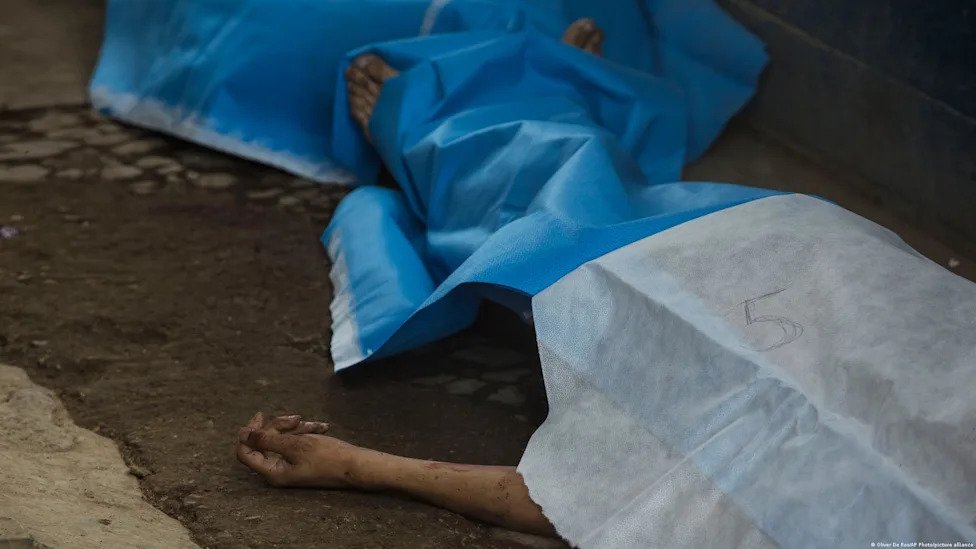
Al menos seis personas fueron asesinadas a tiros en la noche del sábado en un barrio en el sur de la Ciudad de Guatemala, en circunstancias que se están investigando, según confirmaron este domingo (26.07.2026) los cuerpos de socorro.
El ataque armado tuvo lugar en el municipio de Villa Canales del departamento de Guatemala, en el centro del país centroamericano, de acuerdo con los bomberos municipales. Los fallecidos son cuatro jóvenes de menos de 23 años, otro hombre de 29 y una mujer de 58 años.
“Paramédicos brindaron atención prehospitalaria y trasladaron a dos personas heridas: un hombre hacia la emergencia del Hospital Roosevelt y una mujer hacia la emergencia del IGSS 7/19, para recibir atención médica especializada”, indica el reporte médico de los bomberos, citado por la prensa local, que destaca que dos de los fallecidos eran conocidos por su actividad en las redes sociales.
Masacre en Boca del Monte
La masacre se registró en el sector denominado Boca del Monte, en las afueras de una residencia, según detallaron medios locales. En abril pasado, cinco personas fueron asesinadas dentro de una cevichería en el norte de Ciudad de Guatemala, presuntamente a manos de pandilleros.
Los asesinatos con armas de fuego aumentaron un 3,8 % en el país centroamericano durante 2025 en comparación con 2024, según cálculos oficiales. De acuerdo al Instituto Nacional de Ciencias Forenses (Inacif), el año pasado se registraron 3.020 asesinatos por armas de fuego, mientras que en 2024 fueron acribilladas a tiros 2.910 personas.
El expresidente Juan Orlando Hernández regresa a Honduras después de recibir un indulto por parte del mandatario estadounidense, Donald Trump, por delitos ligados a la narcoactividad y el tráfico de armas prohibidas, y por los que los que había sido condenado a más de 45 años de prisión por el juez Kevin Castel, de la Corte del Distrito Sur de Nueva York.
Hernández, quien recuperó su libertad el 1 de diciembre de 2025, había sido extraditado a Estados Unidos el 21 de abril de 2022.
Tras cuatro años de haber salido de Honduras, regresa el 26 de julio al país que, según analistas consultados por CNN, dejó polarizado y con problemas de inseguridad y pobreza que aún persisten.
“Honduras no ha cambiado desde que el expresidente fue extraditado. Todo sigue igual, impunidad, pobreza, delincuencia y polarización”, dijo a CNN el analista económico Julio Raudales, quien consideró que Hernández “viene con toda impunidad, pues no fue juzgado por los delitos que se le imputan en Honduras como violación a la constitución y los señalamientos de corrupción en sus doce años de Gobierno”.
“Él llega a un país que está en un total silencio en cuanto a sus casos, sobre todo por la tremenda crisis que generó en 2018 con su reelección ilegal y que prohibía la constitución”, sostuvo Raudales.
Hernández, conocido también como JOH por las siglas de su nombre, apodo que adoptó para su campaña política en 2013, gobernó Honduras de enero de 2014 a enero de 2022, ocho años en los que los niveles de inseguridad alcanzaron cifras alarmantes: la tasa de homicidios se situaba en el orden de 41,7 homicidios por cada 100.000 habitantes cuando salió de su mandato. Aunque ha disminuido respecto de ese pico, la cifra sigue siendo alta, con un 26,2 por cada 100.000 habitantes en 2024, el registro más reciente. Ambas tasas corresponden a estudios del Observatorio de la Violencia de la Universidad Nacional Autónoma de Honduras.
En cuanto a la pobreza, en la administración de JOH el 73,6 % del total de la población se encontraba en situación de pobreza, según el Instituto Nacional de Estadística (2021), cifra que se vio agravada por la pandemia de covid-19.
Fue durante el Gobierno de Xiomara Castro, en 2025, que se logró bajar el índice al 60,1 % según cifras oficiales.
Para Raudales, esa mejora en las cifras no representa un avance para el país, ni una mejora en las condiciones de vida del hondureño. “En Honduras no pasó nada, no pasó nada, todo sigue casi igual después de la salida de Juan Orlando Hernández, los índices de pobreza han mejorado un poco pero el país sigue sumergido en el desempleo, en falta de oportunidades y en una pobreza que pese a las mejoras en los índices macroeconómicos del gobierno sigue muy alta”.
Un país dividido ante la llegada de JOH
El retorno de JOH a Honduras reactiva algunas divisiones entre sus simpatizantes del Partido Nacional que han interpretado su indulto y su retorno como una restitución del poder que tenía a lo interno del instituto político antes de su extradición.
El analista político Germán Licona considera que la llegada de Hernández al país creará un cisma al interior del Partido Nacional de Honduras, al que el expresidente pertenece. Es el espacio político que recibió el apoyo del presidente Donald Trump para que Nasry Asfura llegara al Poder Ejecutivo en sustitución de Xiomara Castro.
“Su llegada va a debilitar al Gobierno de Nasry Azfura, porque el clientelismo político que no ha podido incorporase va a utilizar el escudo de Juan Orlando Hernández para presionar por un puesto en el Gobierno”, dijo.
El exmandatario también se encontrará con el descontento de sectores de la sociedad civil y de otros partidos políticos que cuestionan todo lo relacionado al cierre de su caso en Estados Unidos.
“Hay sectores políticos y sociales que están y siguen contra JOH, o sea, el hondureño de a pie no se va a alegrar con su regreso a Honduras”, enfatizó Licona.
Licona considera que, si Hernández encuentra debilidad en el interior de su partido, tratará de retomar el poder para volver a hacer Gobierno.
“Si él ve la oportunidad y encuentra debilidad dentro de su partido, él se va a hacer del botín de dirigir y poner gente y así materializar el nuevo candidato presidencial para buscar la presidencia de la república”, agregó.
Del indulto a la justicia hondureña
Pero, antes de emprender cualquier actividad en su vida privada o política, Hernández deberá responder a una acusación en su contra por supuesta corrupción en los tribunales de justicia hondureños.
El exgobernante, junto a exfuncionarios de su Gobierno, fue acusado en su ausencia por la Fiscalía del Estado por medio de la Unidad Fiscal Especializada Contra Redes de Corrupción (UFERCO) el 11 de octubre de 2023 en los tribunales de justicia por los delitos de lavado de activos y fraude contra el Estado debido al supuesto desvío de más de 62 millones de lempiras (unos US$ 2,4 millones) para su campaña política en 2013 cuando aspiraba por primera vez a la presidencia.
La apoderada legal del expresidente Hernández, Anguie Colindres Sánchez, dijo a CNN que su cliente se va a declarar inocente de los cargos en su contra. “Se declara inocente y prueba de eso es la predisposición de someterse a la justicia. Fue él mismo quien manifestó su interés de presentarse voluntariamente a los órganos de justicia”, aseguró Colindres Sánchez.
El juez natural designado para el caso había librado orden de captura y alerta migratoria internacional para el exmandatario, pero el equipo de abogados de Hernández presentó un escrito pidiendo la suspensión de la orden de captura a cambio de su presentación voluntaria a los tribunales, prevista para el 3 de agosto.
Licona no cree que la justicia hondureña imponga una pena al exmandatario, dados los antecedentes que hay con los otros exfuncionarios que fueron acusados por la misma causa penal.
“Ya los demás imputados están gozando de medidas distintas de la prisión preventiva y eso nos indica que el caso del expresidente va correr la misma suerte”
Por su parte, la defensa del exmandatario espera la audiencia, según dicen, para presentar todos los medios de prueba y desacreditar los delitos por los que está acusado.
En tanto, el ministro de Seguridad de Honduras, Gerson Velásquez ,y el jefe del Estado Mayor de las Fuerzas Armadas, Héctor Valerio, informaron a medios locales que Hernández contará desde su retorno al país con toda la protección de seguridad que, según ley, el Estado debe otorgarle a un a un exmandatario.
For more CNN news and newsletters create an account at CNN.com
Después de permanecer cuatro años en Estados Unidos, país al que fue extraditado, donde fue condenado a prisión y finalmente indultado, el expresidente Juan Orlando Hernández regresa este domingo a Honduras, donde espera retomar su vida y enfrentar un proceso penal pendiente por fraude y lavado de activos, cargos de los que se declara inocente.
Hernández, de 57 años, ha tenido ocho meses vertiginosos, en los que las noticias en torno suyo han atraído la atención de la región.
A finales de noviembre, el presidente de Estados Unidos, Donald Trump, anunció su intención de indultar al exmandatario, quien en 2024 había sido condenado a 45 años de prisión por cargos de narcotráfico. Hernández recibió el indulto y fue liberado a principios de diciembre, mientras en Honduras se contaban los votos de una elección presidencial que ganó Nasry “Tito” Asfura, candidato del conservador Partido Nacional —que también postuló a Hernández en su momento— a quien Trump expresó su respaldo.
En una entrevista con CNN en junio, Hernández insistió en defender su inocencia y dijo que Trump lo indultó porque se dio cuenta de que se había cometido “una injusticia” en su contra.
También descartó volver a la política, aseguró que expresará sus opiniones como ciudadano cuando lo considere necesario y sostuvo que su prioridad es recuperar el tiempo perdido con su familia. Además, adelantó que buscaría regresar a Honduras para enfrentar las acusaciones en su contra, que describió como un “montaje político que dejó el partido anterior”, en referencia a Libre, fuerza política rival del Partido Nacional.
Ahora, en una entrevista con la agencia EFE publicada esta semana, señaló que espera poder enfrentar en libertad el proceso pendiente y que las autoridades garanticen su seguridad como exmandatario. “El Estado de Honduras está en la obligación de proteger a sus ciudadanos y en este caso particular mío”, argumentó.
En febrero de 2022, la Secretaría de Relaciones Exteriores y Cooperación Internacional de Honduras remitió el pedido de extradición a la Corte Suprema, que nombró a un juez natural. Este libró orden de detención contra el expresidente, quien se encontraba en Tegucigalpa.
En un despliegue con intensas medidas de seguridad, Hernández fue trasladado al Comando de Operaciones Especiales de la Policía Nacional ―también conocido como Cobras―, donde estuvo bajo arresto mientras se agotaba el proceso legal de extradición, que culminó el 28 de marzo de 2022, cuando el juez ratificó la entrega del exmandatario a la justicia estadounidense.
El 21 de abril, Hernández fue entregado a agentes de la Administración de Control de Drogas de Estados Unidos (DEA, por sus siglas en inglés).
El Departamento de Justicia de EE.UU. dijo en ese momento en un comunicado que el exmandatario “supuestamente se asoció con algunos de los narcotraficantes más prolíficos del mundo para construir un imperio corrupto y brutalmente violento”.
El comunicado agregó que “Hernández protegió a algunos de los mayores narcotraficantes del mundo, incluido su hermano y exmiembro del Congreso Nacional de Honduras, Juan Antonio Hernández Alvarado, alias ‘Tony Hernández’”, quien en marzo de 2021 fue condenado en Estados Unidos a cadena perpetua más 30 años por tráfico de drogas a gran escala.
El expresidente en reiteradas ocasiones se declaró inocente de los cargos que le imputaba la justicia de EE.UU.
unknown content item
–
En una carta abierta que difundió el 7 de febrero de 2022 en su cuenta de Twitter, Hernández lamentó que Estados Unidos lo declarara “inelegible” para optar por una visa con base en lo que describió como declaraciones en su contra hechas “por narcotraficantes y asesinos confesos que fueron extraditados” por su Gobierno, o que huyeron y tuvieron que entregarse a la justicia estadounidense por las acciones contra del tráfico de drogas que, aseguró, había realizado su Gobierno.
Al ser acusado por narcotráfico, Hernández no solo perdió su libertad, sino que en Honduras le fueron confiscados sus bienes inmuebles y activos financieros. El Ministerio Público de Honduras informó que la Fiscalía Especial Contra el Crimen Organizado solicitó el 1 de abril de 2022 al Juzgado de Letras de Privación de Dominio el aseguramiento e incautación de 33 bienes inmuebles, ocho sociedades mercantiles, 16 vehículos y productos financieros del exmandatario.
El juicio contra Hernández estuvo a cargo del juez Kevin Castel, el mismo que sentenció a Tony Hernández, su hermano.
Agotado ese proceso y ya durante el segundo mandato presidencial de Trump, el caso de Hernández dio un giro cuando el republicano decidió indultarlo.
El expresidente de Honduras Juan Orlando Hernández es escoltado por miembros de las Fuerzas Especiales de la Policía para ser extraditado a EE.UU. para enfrentar cargos de aceptar sobornos de narcotraficantes en la Dirección Nacional de Fuerzas Especiales de Honduras el 21 de abril de 2022 en Tegucigalpa, Honduras. – Getty Images
Vida académica, política y personal
Juan Orlando Hernández nació el 28 de octubre de 1968. Se formó como subteniente de reserva en armas de infantería y cursó su educación básica en el Liceo Militar del Norte, una institución creada por las Fuerzas Armadas de Honduras.
En 1990, se graduó como licenciado en Ciencias Jurídicas y Sociales en la Universidad Nacional Autónoma de Honduras. Más tarde, obtuvo una maestría en Administración Pública con orientación en Administración Legislativa en la Universidad Estatal de Nueva York en Albany.
Su vida laboral se inició en la administración pública, primero como asistente del primer secretario del Congreso de Honduras.
Luego fue electo diputado en el Congreso Nacional por el departamento de Lempira, para el período 1998-2002, y fue reelecto en ese cargo por otros tres períodos consecutivos.
En 2002, fue nombrado primer secretario del Congreso Nacional, cuando su presidente era Porfirio Lobo Sosa, quien en 2010 se convirtió en presidente de Honduras.
En 2010, Hernández fue elegido como presidente del Congreso. Desde ese cargo, lanzó su candidatura presidencial por el Partido Nacional de Honduras. Ganó las elecciones generales de 2013 a su más cercana contrincante, Xiomara Castro, del partido Libertad y Refundación (Libre).
Hernández, también conocido por las siglas de su nombre JOH, fue elegido por primera vez presidente de Honduras para el período 2014-2018.
Aunque la Constitución de Honduras prohíbe la reelección presidencial, un fallo de la Sala Constitucional de la Corte Suprema de Justicia en marzo de 2015 resolvió la inaplicabilidad de ese apartado, y Hernández se lanzó de nuevo por la presidencia.
Juan Orlando Hernández en una imagen de archivo. – Sean Gallup/Getty Images
Tras unas elecciones cuestionadas por diversos sectores de la sociedad, el Consejo Nacional Electoral (CNE) lo declaró ganador de los comicios el 17 de diciembre de 2017, venciendo a Salvador Nasralla.
Esta polémica victoria electoral y la controversial reelección permitieron a Hernández seguir en el gobierno entre enero de 2018 y enero de 2022, cuando traspasó el cargo a Xiomara Castro, quien ganó las elecciones generales de noviembre de 2021.
El exgobernante, quien entre 2012 y 2016 se desempeñó como presidente del Partido Nacional de Honduras y presidente del Comité Central, está casado con la abogada Ana Rosalinda García Carias, con quien tiene cuatro hijos.
Con información de Ana Melgar y Alejandra Jaramillo, de CNN.
For more CNN news and newsletters create an account at CNN.com
Síguenos en el canal de WhatsApp de Yahoo en Español
Biólogo. Máster en Biología Molecular y Biotecnología, Director de Muy Interesante Digital
Creado:
Actualizado:
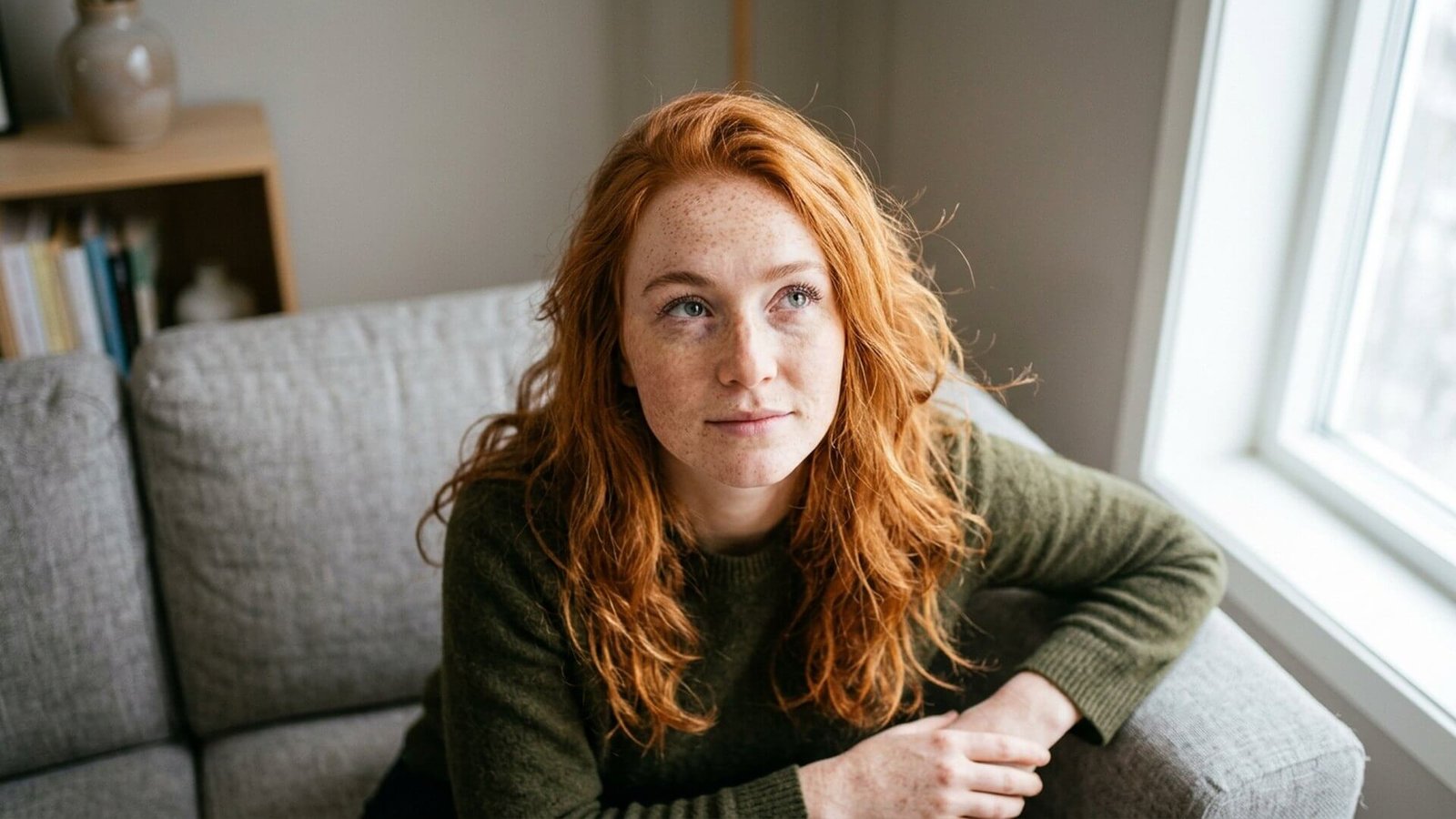
En agosto de 2007, decenas de medios de todo el mundo publicaron la misma sentencia: los pelirrojos estaban condenados a desaparecer y no quedaría ninguno hacia 2060. La fuente que se citaba una y otra vez era la Oxford Hair Foundation, presentada como un instituto de investigación. La letra pequeña contaba otra historia: esta supuesta extinción para 2060 partió de una fundación financiada por un fabricante de tintes, uno de los mayores del mundo en productos capilares. No era un laboratorio de genética publicando en una revista científica, sino comunicación con un interés comercial detrás.
El titular corrió más rápido que su verificación. Se atribuyó incluso a publicaciones de divulgación que, leídas con atención, no defendían nada parecido a una extinción. El bulo, en el fondo, se sostenía sobre una advertencia alarmista impulsada por un conflicto de interés y varias citas mal atribuidas que nadie se paró a comprobar.
La trampa lógica que engañó a medio mundo
El razonamiento que hizo creíble la profecía parece de sentido común: el pelo rojo es un rasgo recesivo y cada vez hay más mezcla entre poblaciones, así que el rojo acabará diluido hasta desaparecer. Suena razonable y es falso, porque confunde que un rasgo se vea menos con que el gen que lo produce se extinga. En realidad, los rasgos recesivos se heredan de forma oculta a través de portadores sanos, de modo que el ADN que no se expresa no se borra, se guarda y se transmite.
Por qué un gen recesivo no se extingue
La genética de poblaciones lo formalizó hace un siglo con el principio de Hardy-Weinberg: en ausencia de selección, migración o azar extremos, la frecuencia de una variante genética se mantiene estable generación tras generación. No hay ninguna fuerza que empuje a un alelo recesivo hacia su desaparición solo por ser recesivo.
Imagina el alelo pelirrojo como una carta guardada en una baraja enorme. Cuando dos personas tienen hijos, esa carta puede no salir a la mesa, pero sigue en la baraja y reaparecerá cuando dos portadores vuelvan a coincidir. Es la misma lógica de dominantes y recesivos que describió Mendel, y por eso los genes recesivos pueden saltar generaciones sin llegar a desaparecer jamás.
La mezcla de poblaciones sí puede cambiar algo: la proporción de pelirrojos que vemos en un país concreto. Si mucha gente sin la variante se suma a la población, el porcentaje visible de pelo rojo baja. Pero eso implica una simple dilución estadística que no afecta a la supervivencia del gen. El alelo sigue circulando en los portadores, listo para volver a expresarse.
Qué significa, molecularmente, ser pelirrojo
Detrás del color está un gen llamado MC1R, situado en el cromosoma 16. Su versión funcional pone en marcha una señal que ordena a los melanocitos fabricar eumelanina, el pigmento pardo oscuro que oscurece el pelo y la piel y protege frente al sol. Sin embargo, las personas con el gen MC1R mutado producen feomelanina en lugar del protector habitual, un pigmento de tono rojizo.
En 1995, el equipo de Valverde publicó en Nature Genetics la primera prueba sólida: encontró variantes de MC1R en más del 80 % de las personas con pelo rojo y piel clara. Como hacen falta dos copias variantes para el efecto pleno, el fenotipo es recesivo. Este bloqueo de la ruta original explica por qué el pelo cobrizo y la piel pálida siempre aparecen de forma conjunta en quienes portan la mutación completa.
Esquema de la ruta de pigmentación donde actúa el gen MC1R.
Por qué existe y por qué se concentra en el norte
El pelo rojo es raro a nivel global, pero se agolpa en la Europa atlántica. En Irlanda ronda el 10 % y en Escocia llega al 13 %, la mayor concentración del planeta, donde buena parte de la población lleva al menos una copia variante. Según los expertos, las latitudes altas relajaron la necesidad evolutiva de tener la piel oscura para protegerse del daño solar.
Esta es una hipótesis plausible y debatida, no un hecho cerrado: en zonas con poca radiación ultravioleta, perder la protección de la eumelanina no penaliza la supervivencia. Es más, se ha propuesto que la piel extremadamente clara facilita sintetizar vitamina D con muy poca luz solar, lo que habría permitido que estas mutaciones se acumularan en el norte de Europa.
El pelirrojo por dentro: más allá del color
Las mismas variantes que dan el color tienen efectos invisibles para el ojo humano. El más estudiado es el riesgo cutáneo: los portadores de estas variantes presentan un riesgo muy superior de sufrir cáncer de piel, incluso ajustando por lo clara que sea su tez.
Parte del motivo es que la feomelanina puede dañar el ADN por estrés oxidativo aunque no haya sol, y que MC1R influye en cómo la célula repara ese daño. Además, distintos estudios demuestran que las alteraciones en este gen modifican drásticamente la sensibilidad al dolor, obligando a usar dosis diferentes de anestésicos y analgésicos en procedimientos quirúrgicos u odontológicos.
El rojo no se va
La conclusión es tan sencilla como lo era engañoso el titular original. Un gen recesivo no desaparece por serlo, se refugia en los portadores y vuelve. Lo único que puede cambiar es cuánto se ve el pelo rojo en un lugar y un momento concretos. La ciencia confirma que el gen de los pelirrojos seguirá viajando de forma invisible en millones de personas, esperando el momento de volver a expresarse.
Referencias
Valverde, P. et al. (1995). Variants of the melanocyte-stimulating hormone receptor gene are associated with red hair and fair skin in humans. Nature Genetics, 11, 328-330.
Harding, R. M. et al. (2000). Evidence for Variable Selective Pressures at MC1R. American Journal of Human Genetics.
AIM at Melanoma Foundation: Red Hair Genetics: 5 Things You May Not Know.
Medicover Genetics: Health risks for people with red hair.